
Underground Fountain Equipment Vaults: Architectural Integration & Sub-Surface Engineering Guide
Discover how subterranean mechanical pump vaults, pre-engineered fiberglass enclosures, and flood-protected control systems dictate the lifespan, safety, and operational efficiency of commercial architectural water features worldwide.
The Sub-Surface Brain of Commercial Architectural Fountains
In modern urban planning, landscape architecture, and high-profile commercial developments, the visible beauty of dynamic water displays—jet choreography, grand cascading waterfalls, floating granite spheres, and interactive splash pads—depends entirely on an unseen mechanical core: Underground Fountain Equipment Vaults. These subterranean mechanical rooms serve as the operational nerve center, housing high-pressure pump manifolds, multi-stage filtration units, chemical sanitization systems, low-voltage LED transformers, and computerized variable frequency drive (VFD) control panels.
Designing an underground vault is not merely a matter of placing equipment inside a buried box. It represents a complex hydraulic, structural, and environmental engineering challenge. Sub-surface equipment environments operate under constant hydrostatic groundwater pressure, high relative humidity, potential flooding threats, thermal build-up from continuous motor operation, and strict municipal safety standards for confined spaces. Selecting the correct vault structure—whether a heavy-duty prefabricated fiberglass (FRP) system, modular precast concrete chamber, or a custom walk-in subterranean concrete facility—directly determines the long-term total cost of ownership (TCO) and public safety of civic assets.
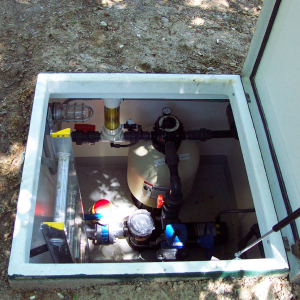
Vault Mechanical Access
Pre-engineered subterranean access hatches with gas-shock assistance, safety grates, and watertight seals for technician safety.
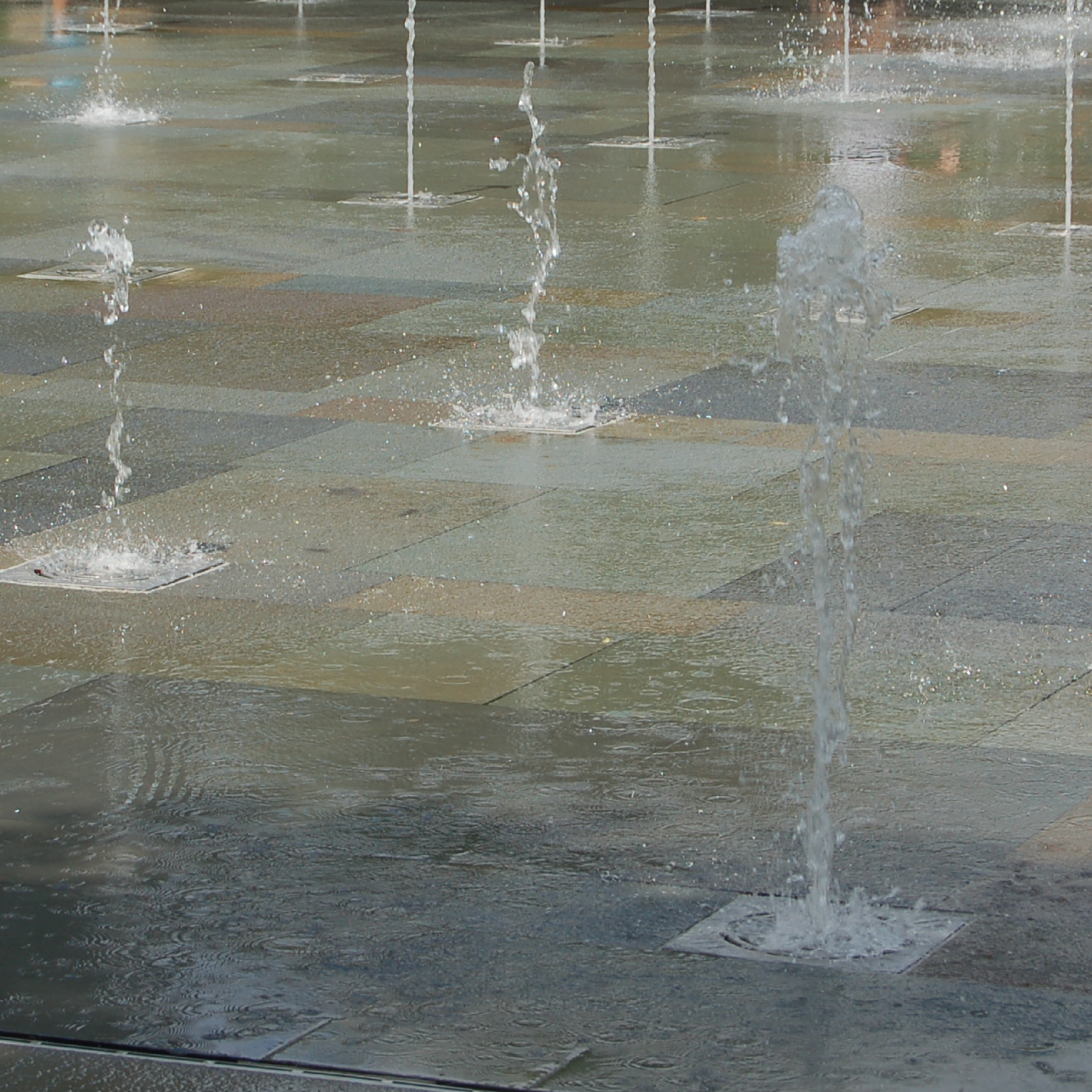
Civic Landmark Execution
St. Louis Citygarden: Complex multi-jet interactive fountain powered by high-capacity sub-grade pump and filtration vaults.
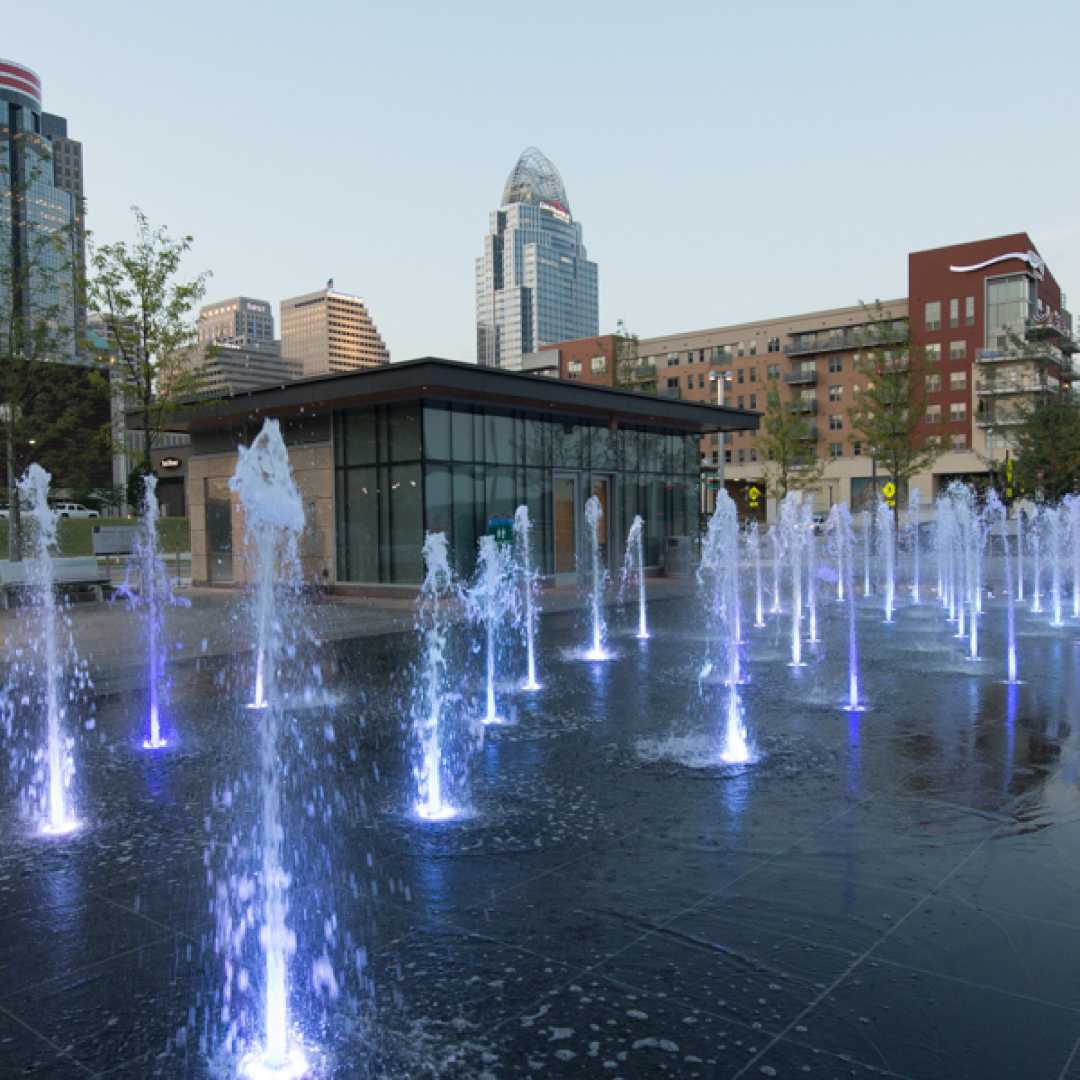
Interactive Water Features
Smale Riverfront Park: High-turnover water treatment and rapid-response pump skids housed in subterranean mechanical vaults.
Why Flooded Suction Hydraulics Dictate Subterranean Placement
From an engineering perspective, positioning mechanical equipment below the static water level of the fountain reservoir in an underground fountain equipment vault provides a crucial hydraulic advantage: absolute flooded suction. In flooded suction configurations, gravity continuously feeds water directly into the pump suctions. This eliminates the need for self-priming pumps, preventing destructive cavitation, reducing air entrainment, minimizing thermal stress on mechanical seals, and delivering instant dynamic response for programmed water show sequencing.
However, achieving optimal flooded suction requires accurate Net Positive Suction Head Available (NPSHA) calculations. Engineers must evaluate head loss through suction piping, friction coefficients, temperature-dependent vapor pressures, and atmospheric conditions to guarantee that NPSHA exceeds the pump manufacturer's Net Positive Suction Head Required (NPSHR) across all operating frequencies.
Positive Head Hydraulic Efficiency
Flooded suction eliminates dry-run hazards and pump priming delays, ensuring variable-speed pumps deliver exact dynamic pressure curves for multi-tier display nozzles.
Aesthetic & Acoustic Isolation
Housing heavy industrial pumps underground isolates mechanical noise and vibration from public plazas while keeping the surrounding landscape completely unobstructed.
Vapor & Environmental Protection
Advanced vault designs incorporate continuous forced-air mechanical ventilation and active dehumidification to prevent humidity condensation on sensitive electrical control components.
Redundant Flood Mitigation
Dual sub-grade sump pumps with independent float switches, check valves, and high-water telemetry alarms ensure subterranean equipment stays dry even during extreme storm events.
The Hydro Dramatics & Missouri Machinery Engineering Edge
Four decades of mechanical excellence, precision pre-fabrication, and heavy industrial pump heritage.
For more than 40 years, Hydro Dramatics has served as a premier authority in commercial fountain design, mechanical engineering, and subterranean water feature systems. As an operating division of Missouri Machinery & Engineering Co. based in St. Louis, Missouri, USA, our firm brings unmatched industrial pump expertise and heavy mechanical fabrication capabilities to every municipal, corporate, and civic project.
Unlike standard architectural suppliers who package third-party components, Hydro Dramatics designs, engineers, welds, assembles, and hydrostatically pre-tests complete underground equipment vault assemblies in-house. Our engineering staff collaborates directly with landscape architects, civil engineers, developers, and general contractors from schematic inception through final commissioning, ensuring every underground vault meets rigid municipal codes, OSHA safety mandates, and international mechanical standards.
Built on Proven E-E-A-T Principles
Experience, Expertise, Authoritativeness, and Trustworthiness embedded into every underground vault specification.
Underground Fountain Equipment Vault Solutions & Specifications
Hydro Dramatics engineers four primary classifications of subterranean mechanical vault systems, customized to project scale, structural load requirements, and site geography.
| Vault Classification | Primary Material | Structural Load Rating | Best Suited Applications | Key Integrated Systems |
|---|---|---|---|---|
| Prefabricated Fiberglass (FRP) Vaults | High-Density Resin & Woven Roving Fiberglass | Pedestrian / ASTM C857 Light Duty | Commercial Plazas, Retail Features, Hotel Courtyards | Pre-plumbed Pump Skids, Cartridge/Sand Filters, UV Sterilizers, UL 508A Panels |
| Heavy-Duty Precast Concrete Vaults | 5,000+ PSI Steel-Reinforced Precast Concrete | AASHTO H-20 & HS-20 Heavy Traffic | Driveway Plazas, Municipal Parks, Urban Boulevards | Heavy Cast Iron Access Hatches, Duplex Sump Systems, High-Flow Manifolds, VFD Racks |
| Self-Contained Vault & Reservoir Packages | Composite Fiberglass or Polymer Vault/Basin Combo | Pedestrian / Lawn Area Installation | Interactive Splash Pads, In-Ground Fountain Jets | Integrated Surge Tank, Automatic Chemical Feeders, Bromine/Chlorine Dosing, Backwash Controls |
| Custom Walk-In Concrete Vaults | Cast-in-Place Structural Concrete Sub-Basements | Custom Civil Architectural Rating | Major Municipal Landmarks, Waterfronts, Civic Plazas | Full Overhead Hoists, Separate Electrical Rooms, Multi-Pump High-HP Skids, Climate Control HVAC |
Detailed Breakdown of Core Vault Engineering Components
Every subterranean fountain vault designed by Hydro Dramatics integrates key sub-systems engineered for decades of low-maintenance operation:
- Industrial Fountain Pump Manifolds: Fabricated from Schedule 80 PVC, 304/316 Stainless Steel, or custom brass, featuring isolation butterfly valves, check valves, and pressure transducers for real-time diagnostic monitoring.
- Advanced Water Filtration & Sanitization: High-rate commercial sand filters or modular cartridge filtration combined with automated UV-C disinfection and automated sanitization dosing systems to maintain crystal clear water quality and comply with public health standards (such as splash pad sanitation regulations).
- Forced-Air Mechanical Ventilation Systems: Dual-fan explosion-proof or heavy-duty blowers engineered to provide 10 to 15 air changes per hour (ACH), preventing vapor accumulation and keeping heat index within safe motor operating thresholds.
- Watertight Access Hatches & Egress: Aluminum or stainless steel diamond-plate access hatches equipped with hydraulic gas shocks, lockable compression latches, safety drain channels, and OSHA-compliant egress ladders.
- UL 508A Listed Power & Control Enclosures: Custom-built NEMA 4X control cabinets featuring programmable logic controllers (PLCs), touch-screen Human-Machine Interfaces (HMIs), variable frequency drives (VFDs), wind sensors, water level controls, and remote telemetry modules.
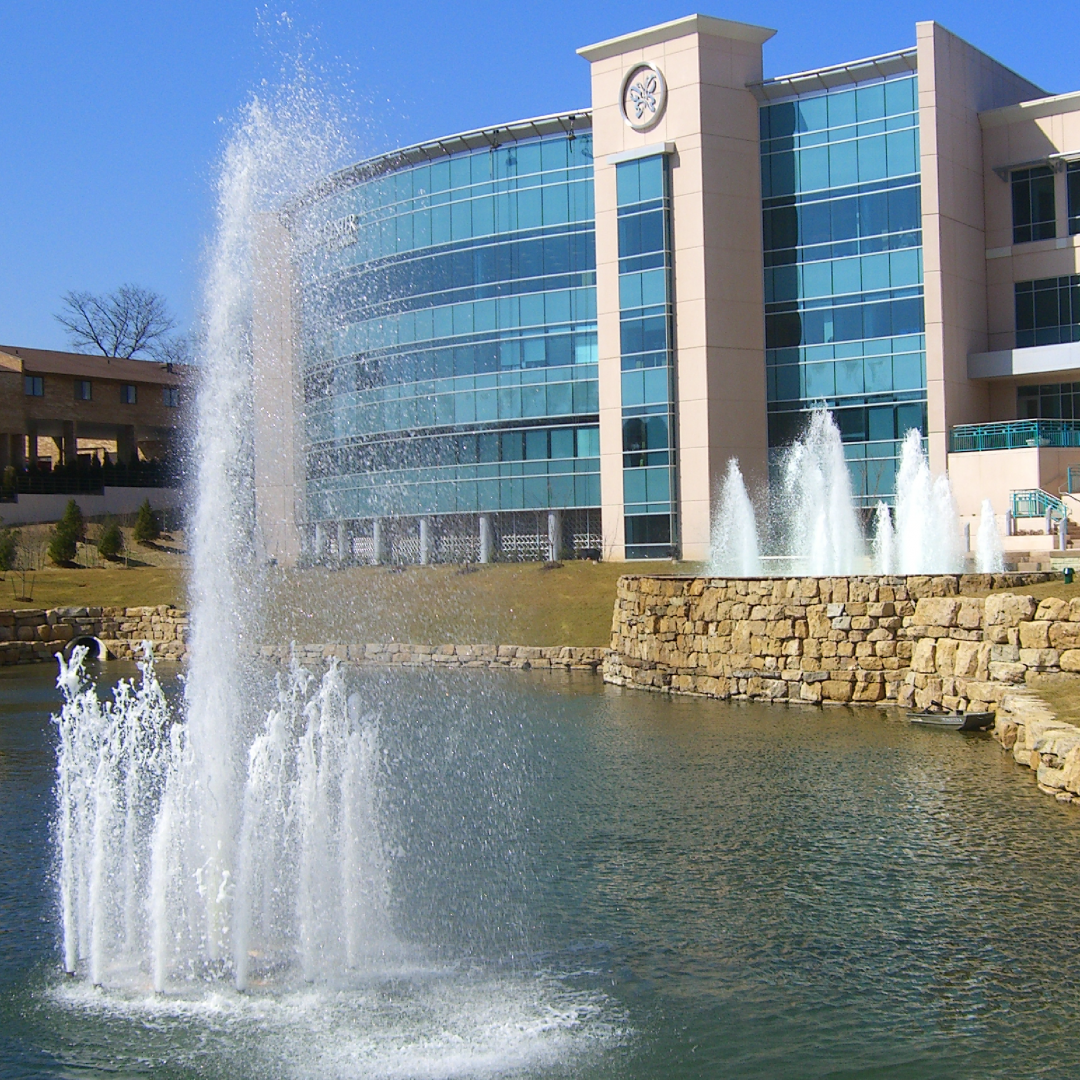
Delmar Gardens Feature
Integrated aeration and aesthetic fountain systems connected to subterranean control equipment vaults.
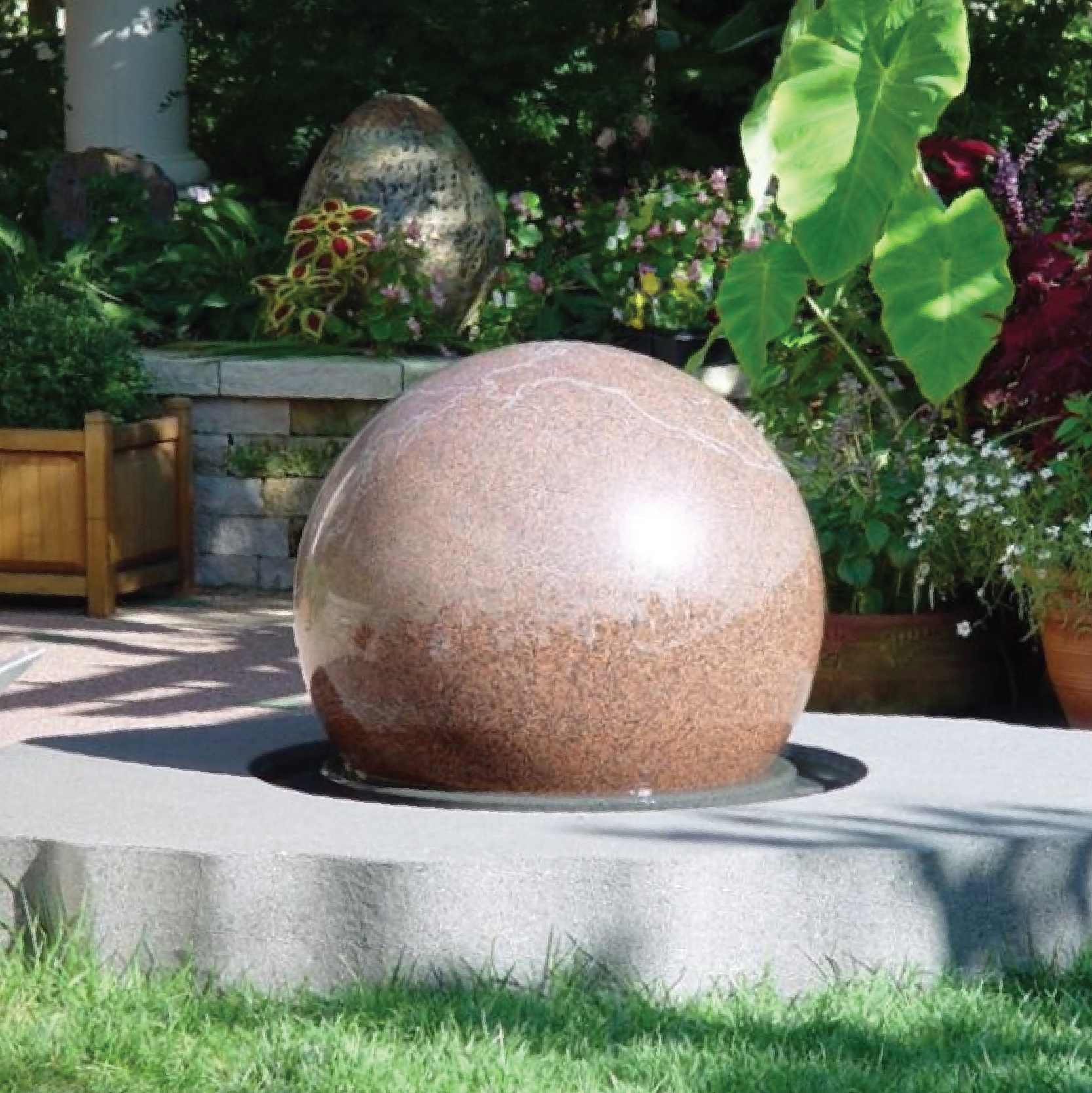
Granite Ball Sphere Fountains
Precision hydraulic pressure delivery engineered in specialized high-head underground equipment vaults.

Keiner Plaza Civic Landmark
Large-scale urban park installation utilizing robust underground pump rooms for continuous public display.
Future Trends in Underground Fountain Equipment Vault Procurement
As global urban developments prioritize sustainability, smart city integration, and reduced field installation timelines, procurement managers and municipal engineers must align their specifications with next-generation subterranean vault technologies.
1. IoT Telemetry & AI-Driven Predictive Maintenance
Modern equipment vaults are transitioning from passive mechanical rooms to intelligent IoT nodes. Sensor arrays inside the vault measure pump vibration signatures, mechanical seal temperatures, moisture accumulation, filter differential pressures, and power consumption. AI algorithms analyze these streams in real-time, predicting bearing failures or filter blockages before catastrophic downtime occurs.
2. Factory-Assembled Off-Site Plug-and-Play Manufacturing
To eliminate high on-site labor costs and technical field assembly errors, global procurement trends heavily favor 100% factory-assembled, pre-piped, and pre-wired vault skids. Off-site construction allows complete hydrostatic pressure testing and electrical loop checks prior to shipment, reducing installation timelines from weeks to hours.
3. High-Efficiency VFD Dynamics & Micro-Grid Compatibility
Energy conservation mandates require premium-efficiency IE3/IE4 pump motors controlled by Variable Frequency Drives. Modern vault control systems seamlessly modulate motor speeds based on programmed water display routines, wind velocity input, and peak electrical rate schedules. Furthermore, vaults are increasingly engineered for direct integration with municipal solar micro-grids and battery energy storage systems.
4. Sustainable Closed-Loop Filtration & Water Recovery
Water scarcity concerns worldwide are driving the adoption of high-efficiency backwash recovery systems and advanced ozone/UV-C oxidation skids within underground vaults. These closed-loop systems drastically reduce water top-off frequency and minimize chemical discharge into municipal storm sewers.
Frequently Asked Questions for Global Procurement
Detailed technical answers to critical questions asked by civil engineers, landscape architects, and municipal procurement directors when specifying underground fountain equipment vaults.
Underground fountain equipment vaults must be engineered according to their precise physical placement on the site plan. For pedestrian plazas, landscape beds, and non-vehicular park areas, vaults engineered to ASTM C857 or AASHTO H-10 standards (rated for standard soil overburden and light maintenance equipment) are sufficient.
However, when vaults are positioned beneath urban plazas, fire access lanes, service corridors, or parking areas, they must be engineered to AASHTO HS-20 or H-20 heavy vehicular loading specifications. This requires reinforced concrete structures with minimum 5,000 PSI compressive strength, heavy-duty rebar matrices, and cast iron or steel access hatches rated to support 32,000 lbs per axle load without structural deflection.
Subterranean vaults are inherently prone to moisture accumulation from groundwater seepage, rainwater runoff during hatch opening, and atmospheric condensation caused by temperature differentials between the surrounding soil and warm mechanical equipment.
Hydro Dramatics addresses moisture management through a multi-layered engineering approach: 1) Redundant automatic duplex sump pump systems situated in a dedicated subterranean sump pit, equipped with dual mechanical float switches and check valves; 2) High-water alarm telemetry linked directly to the central Building Management System (BMS); 3) Continuous forced-air mechanical ventilation calculated to provide 10 to 15 air changes per hour (ACH); 4) Internal anti-condensation coatings and vapor barriers; and 5) Mounting all electrical panels, VFDs, and motor starters on elevated equipment pads or wall-mounted unistrut channels at least 12 to 18 inches above the vault floor slab.
Placing the equipment vault underground below the static water level of the fountain pool provides absolute flooded suction (positive head pressure on the pump inlet). Flooded suction is vastly superior to above-grade self-priming pump arrangements for several reasons:
First, it eliminates the need for foot valves and priming chambers, which are common points of vacuum leaks and operational failure. Second, flooded suction maintains continuous positive pressure, preventing pump cavitation—a major cause of impeller erosion and premature mechanical seal failure. Third, for dynamic or interactive fountains with rapidly changing jet heights, flooded suction ensures instantaneous water delivery without the lag time associated with repriming long suction headers.
Commercial fountain equipment vault electrical systems operate in wet, sub-grade environments and must comply with rigorous international safety codes. In North America, all fountain control panels must be certified under UL 508A (Standard for Industrial Control Panels) and designed in strict compliance with NEC Article 680 (Swimming Pools, Fountains, and Similar Installations).
Key safety mandates include Class A Ground-Fault Circuit Interrupter (GFCI) protection for all submersible lighting and equipment, low-voltage (12V/24V DC or AC) submersible LED power supplies, isolated high-voltage motor starter sections, and NEMA 4X (IP66) stainless steel or fiberglass control enclosures to resist corrosive internal vault atmospheres.
Choosing between prefabricated fiberglass (FRP) and cast-in-place concrete depends on project schedule, budget, and structural constraints:
Prefabricated Fiberglass Vaults: Manufactured off-site under strict quality control, fiberglass vaults offer lightweight transport, 100% watertight hydrostatic integrity, natural chemical resistance against chlorine/bromine water treatment, and ultra-fast installation. The vault arrives on-site fully pre-plumbed, wired, and hydro-tested, allowing general contractors to drop the unit into an excavation pit and connect external supply/return headers in a single day.
Cast-in-Place / Precast Concrete Vaults: Ideal for large-scale municipal applications, heavy vehicular traffic zones (AASHTO HS-20), or multi-chamber walk-in mechanical rooms where the vault forms part of a larger subterranean civil infrastructure (such as underground parking garages or multi-level building basements).
Underground equipment vaults are typically classified as Permit-Required Confined Spaces under OSHA standards (29 CFR 1910.146) unless engineered with specific permanent safety amenities. To ensure technician safety and streamline maintenance compliance, specified vaults should incorporate: 1) Double-door oversized access hatches providing minimum 36" x 36" or 36" x 48" clear opening space for equipment removal; 2) Heavy-duty aluminum or fiberglass egress ladders with slip-resistant rungs and retractable safety posts extending above the hatch; 3) Continuous mechanical ventilation blowers to clear toxic or oxygen-deficient gases; 4) Permanent LED vault interior lighting delivering a minimum of 30 foot-candles; and 5) Integrated fall protection anchors near the hatch access.
For international projects across North America, the Middle East, Asia, or Europe, procurement managers should specify turnkey skid assembly and pre-commissioning testing. At Hydro Dramatics, every vault skid undergoes full hydrostatic pressure testing, electrical point-to-point continuity checks, PLC logic validation, and pump flow verification in our St. Louis factory before packaging.
Equipment skids are secured on heavy steel sub-frames, vacuum-sealed with desiccant protection, and shipped in heavy-duty export crates to guarantee plug-and-play installation upon arrival at the project site.
Ready to Engineer Your Underground Fountain Equipment Vault?
Whether you are developing schematic plans for a civic plaza, specifying a municipal splash pad, or seeking a complete turn-key subterranean pump room, Hydro Dramatics delivers four decades of engineering mastery to bring your vision to life.