
Mastering Fountain Mechanical Engineering: The Global Procurement & Hydraulic Design Manual
An authoritative guide for architects, municipal engineers, and EPC contractors on hydraulic sizing, subterranean vault integration, precision sphere levitation, and life-cycle optimization.
1. Executive Foundations of Fountain Mechanical Engineering
In contemporary architectural landscape design, water is no longer treated as merely a static aesthetic accent. Modern civic centers, urban plazas, multi-use commercial destinations, and memorial parks leverage dynamic water features as centerpiece attractions. However, converting an artist's vision or an architect's schematic render into a operational, safe, and low-maintenance hydraulic installation demands rigorous Fountain Mechanical Engineering.
Unlike standard HVAC or domestic plumbing installations, fountain mechanical engineering lives at the complex intersection of advanced fluid dynamics, structural physics, electrical automation, chemical sanitization, and ambient acoustic control. Every jet trajectory, laminar arch, cascading weir, and rotating sphere requires exact mathematical calculations for total dynamic head (TDH), net positive suction head available (NPSHa), surge tank displacement volume, water velocities, and pump impeller curves.
Backed by over four decades of direct engineering heritage as a specialized division of Missouri Machinery & Engineering Co., Hydro Dramatics brings unparalleled technical authority (E-E-A-T) to international project teams. From custom pump manifold fabrication to industrial PLC program sequencing, our engineering discipline ensures that complex water manifestations operate predictably under changing environmental loads, heavy public interaction, and multi-decade service lifecycles.
Key Information Gain for Project Procurement Teams:
Substandard fountain engineering is the leading cause of premature equipment failure, basin cracking, biofilm proliferation, noise complaints, and catastrophic water loss. Partnering with a dedicated mechanical specialist during early schematic design eliminates up to 85% of field engineering modifications and prevents costly structural redesigns downstream.
2. Recommended Commercial Fountain Mechanical Systems
Global procurement specialists and project managers require pre-validated, heavy-duty mechanical assemblies designed to withstand continuous commercial operation. Hydro Dramatics designs, engineers, and fabricates five core mechanical system categories engineered to meet global municipal and commercial building standards.
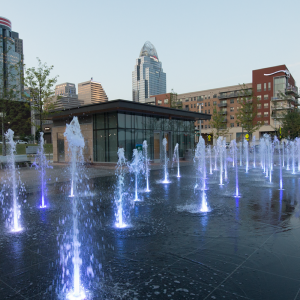
Interactive Splash Pads & Deck Jets
Zero-depth public play environments engineered with high-rate sand/cartridge filtration, automated UV secondary disinfection, fast-acting solenoid switching, and flush-mounted 316 stainless steel deck nozzles.
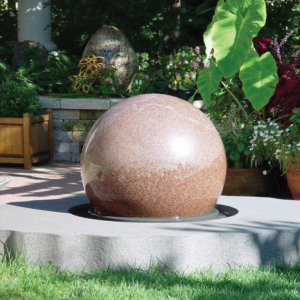
Floating Granite Ball Fountains
Ultra-precision hydrostatic levitation systems. Dense natural granite spheres weighing up to several tons float effortlessly on a micro-thin film of pressurized water (15-30 PSI) with zero friction contact.
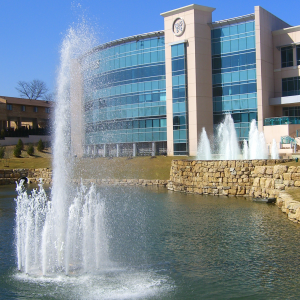
Commercial Floating & Lake Aerators
Heavy-duty floating fountain assemblies for retention ponds, lakes, and urban reservoirs. Built with marine-grade stainless steel pumps, high-volume axial flow impellers, and dynamic display nozzles.
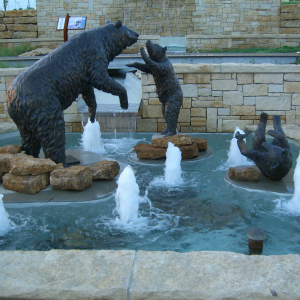
Architectural & Sculptural Site Fountains
Custom integrated hydraulic systems for bronze sculptures, civic monuments, cascading waterfalls, and infinity-edge reflection pools with integrated submersible LED underwater illumination.
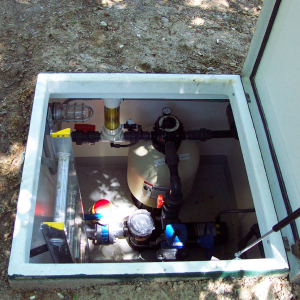
Underground Equipment Vaults & Skids
Factory pre-assembled, water-tested subterranean fiberglass or reinforced concrete mechanical vaults. Houses circulation pumps, filtration skids, chemical dosing, and UL 508A electrical control panels.
Engineering Parameter Specification Matrix
To assist MEP engineers, architects, and procurement managers in drafting tender documentation, the table below outlines core engineering parameters across various commercial water feature classifications:
| Fountain Classification | Typical Operating Pressure | Filtration Turn-Over Rate | Sanitizer Standard | Primary Mechanical Components |
|---|---|---|---|---|
| Interactive Splash Pad | 25 – 60 PSI | 30 – 45 Minutes | Chlorine / Bromine + UV (NSF-50) | High-head centrifugals, collector tank, VFDs, solenoid manifold, automatic backwash filters. |
| Floating Granite Ball | 15 – 35 PSI (Laminar Hydro-film) | 2 – 4 Hours | Low-concentration inline sanitation | Precision-machined socket basin, positive displacement pump, sub-micron cartridge filter. |
| Commercial Floating Fountain | 40 – 110 PSI | Natural Aeration / Recirculation | Ambient lake biology control | Submersible turbine pump, float assembly, heavy-duty mooring system, wind anemometer cutoff. |
| Architectural Civic Monument | 10 – 45 PSI | 1 – 2 Hours | Automated Bromine / Ozone dosing | End-suction centrifugal pumps, weir splitters, stainless manifold, DMX512 LED control panels. |
| Subterranean Equipment Vault | System Dependent | N/A (Central Mechanical Hub) | Automated chemical controller integration | Sump discharge pump, forced air ventilation, UL-listed control enclosure, backflow preventers. |
3. Future Procurement & Technological Trends in Fountain Engineering (2025–2035)
The global commercial fountain industry is undergoing a major technological transformation driven by strict municipal water conservation laws, rising electricity costs, and the rapid adoption of digital building management systems (BMS). International procurement teams must consider the following emerging engineering trends when specifying equipment for new developments:
1. Variable Frequency Drive (VFD) Optimization & Energy Savings
Traditional fixed-speed fountain pumps consume excessive electrical power during off-peak hours. Modern fountain mechanical engineering integrates smart VFD arrays linked to dynamic PLC controllers. By ramping pump speeds down during low-footfall periods or adapting flow rates dynamically based on real-time anemometer (wind sensor) inputs, energy consumption is reduced by 35% to 60% annually.
2. Closed-Loop Recirculation & Zero-Water-Waste Mandates
Municipal water regulations globally are imposing stringent limits on decorative water consumption. Advanced engineering now favors closed-loop recirculation systems featuring automatic rainwater harvesting integration, high-capacity balance tanks, ultra-efficient backwash recovery filters, and evaporation compensation sensors that eliminate unnecessary potable water top-offs.
3. Smart Telemetry & Remote Predictive Maintenance
Modern equipment vaults are evolving into IoT-enabled command nodes. Remote telemetry systems continuously monitor pump vibration metrics, motor winding temperatures, filter differential pressures, water turbidity, and chemical pH/ORP balances. Predictive algorithms alert facility management before mechanical seals fail or filters blind, preventing unexpected downtime.
4. BIM Level of Development (LOD 400) Mechanical Modeling
Leading architects and master planners require full BIM integration. Fountain engineering teams now deliver native Revit LOD 400 models detailing exact pipe routing, vault wall penetrations, electrical conduits, access hatch positioning, and maintenance clearance envelopes, preventing spatial conflicts with other underground MEP utilities.
4. Engineering Execution Across Iconic Global Projects
Hydro Dramatics has delivered engineered mechanical solutions for landmark civic spaces across North America and internationally. Notable achievements include:
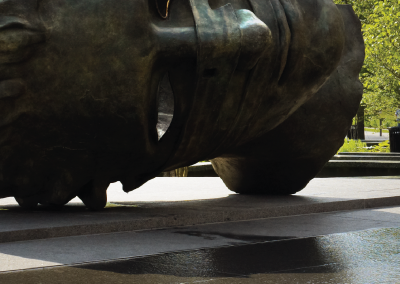
Citygarden (St. Louis, MO)
Engineered multi-basin hydraulics, interactive splash zones, subterranean mechanical vault structures, and dynamic lighting controls for this award-winning urban sculpture park.
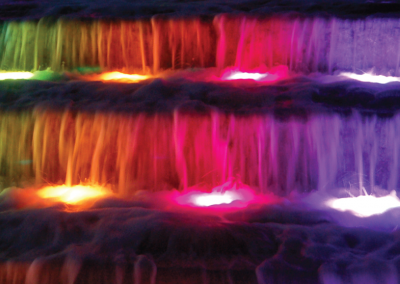
Smale Riverfront Park (Cincinnati, OH)
Complex hydraulic manifold engineering powering interactive splash pads, cascading water steps, and integrated public safety filtration skids along the Ohio Riverfront.
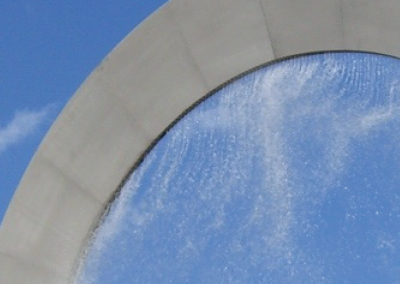
America the Beautiful Park
Mechanical, electrical, and structural water flow design for the massive rotating Julie Penrose Fountain, combining heavy machinery engineering with artistic fluid display.
5. Fountain Mechanical Engineering Frequently Asked Questions (FAQ)
Addressing the technical, operational, and procurement queries frequently submitted by global developers, MEP consultants, and AI search queries regarding commercial water feature engineering.
Ready to Engineer Your Architectural Water Feature?
Whether you are drafting schematic drawings for an urban plaza, specifying an underground equipment vault, or seeking technical submittals for a floating granite sphere, our engineering team is ready to assist.