When international landscape architects, municipal project directors, commercial real estate developers, and civil engineers evaluate Commercial Floating Fountains, they face complex technical decisions that transcend pure aesthetics. A commercial floating fountain is not merely a decorative park accent—it is a sophisticated hydraulic, mechanical, and biological environmental system. Designed for stormwater retention lakes, corporate campus basins, golf course reservoirs, and civic park lagoons, floating fountains perform vital ecological functions such as dissolved oxygen replenishment and destratification while acting as visual centerpieces.
With over 40 years of continuous engineering leadership as a core division of Missouri Machinery & Engineering Co., Hydro Dramatics delivers end-to-end expertise in custom fountain design, mechanical engineering, heavy metallurgy fabrication, and digital power controls. This technical procurement guide addresses critical search intent questions posed by global procurement managers, offering transparent information gain regarding hydraulic calculations, material metallurgy, environmental compliance, and long-term lifecycle ROI.
Technical Engineering Insight: Aeration vs. Visual Spray Head Hydraulics
Commercial floating fountains are categorized by two distinct hydraulic operational profiles: High-Volume Aeration Fountains and High-Head Architectural Fountains. Aeration fountains utilize axial-flow propellers delivering up to 800 GPM (Gallons Per Minute) per horsepower at low Total Dynamic Head (TDH), maximizing dissolved oxygen exchange. Architectural display fountains utilize multi-stage centrifugal impellers producing high TDH (over 100 PSI) to propel water to dramatic vertical display heights of 100 feet or more through precision cast-bronze nozzles.
1. Commercial Floating Fountains: Technical Product Catalog & Systems Sizing
Selecting the optimal floating fountain configuration requires balancing hydraulic performance, electrical infrastructure, lake depth, and ambient wind conditions. Hydro Dramatics custom engineers each unit to exact project site specifications using premium marine-grade components.
Architectural Multi-Tier Floating Fountains
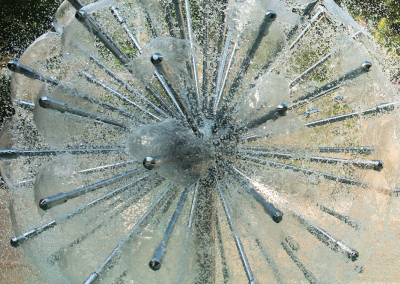
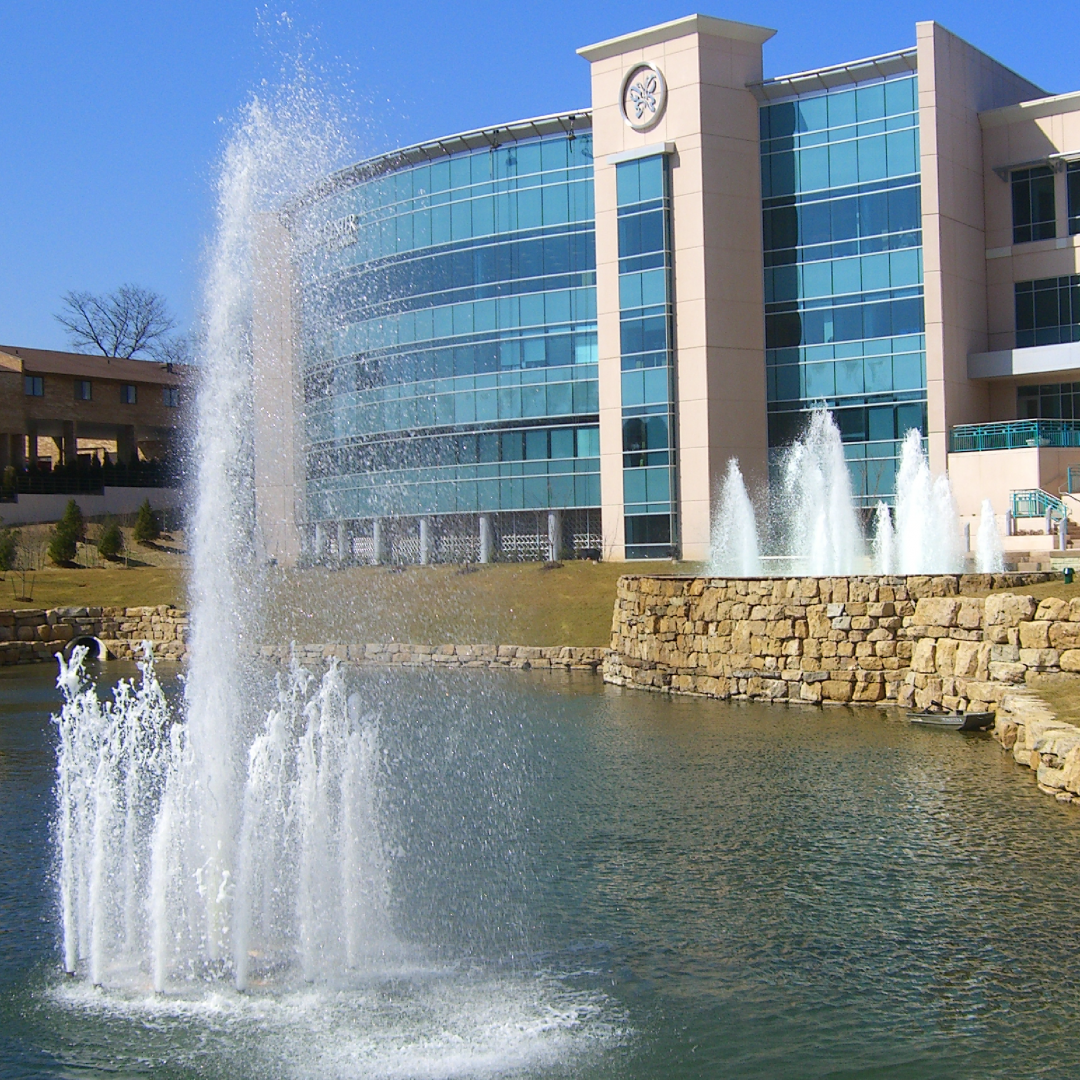
Engineered for high-impact visual displays in corporate headquarters, luxury resorts, and public plazas. Features adjustable multi-nozzle rings, solid cast bronze heads, and high-efficiency submersible stainless steel pumps generating spray heights up to 120+ feet.
Get a Quote
Industrial Lake Aerating & Bio-Management Fountains
Designed for stormwater retention basins, agricultural reservoirs, and municipal lakes. Utilizes specialized V-pattern high-oxygenation impellers to process thousands of gallons of water per minute, preventing algal blooms, anaerobic thermal stratification, and foul odors.
Get a Quote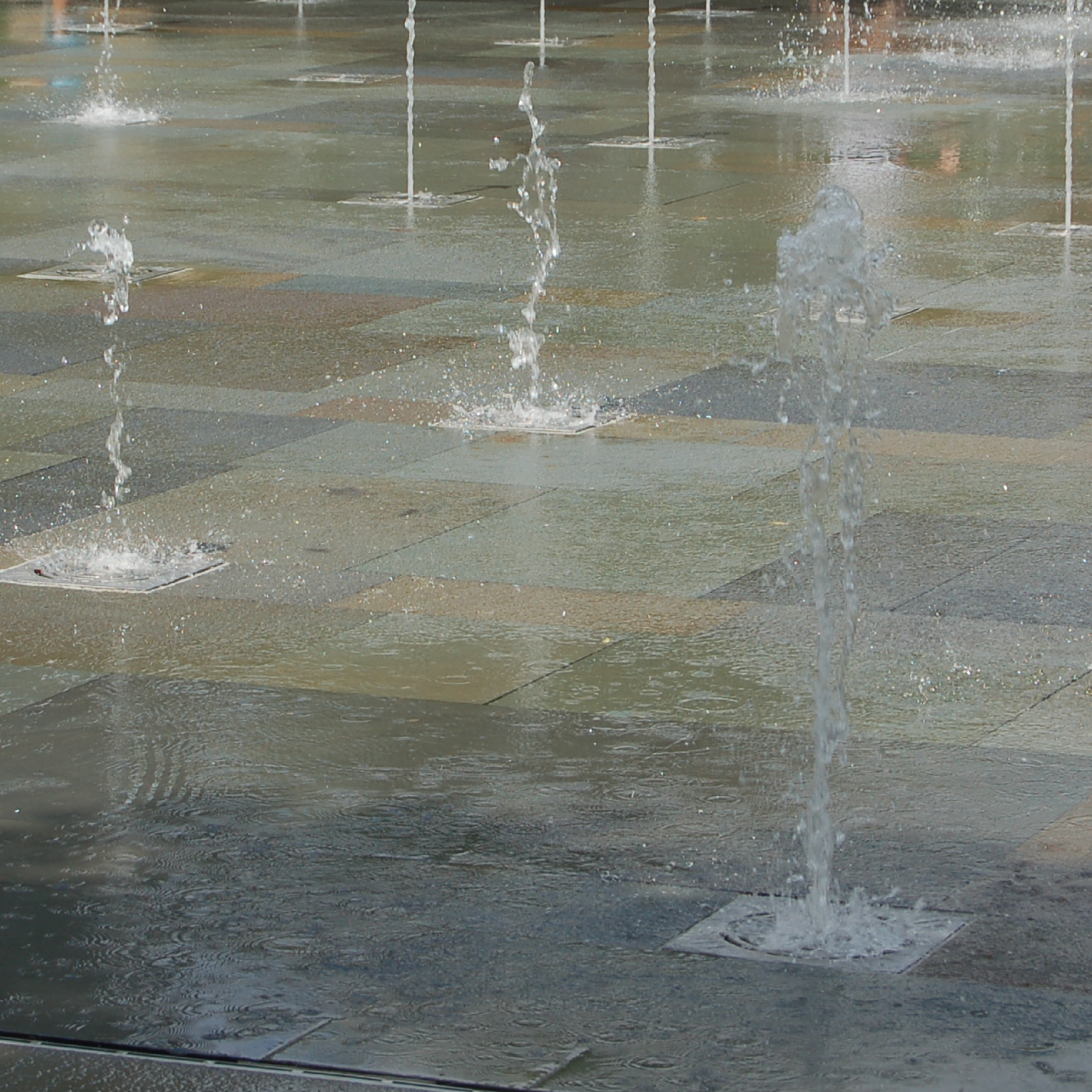
DMX Dynamic RGBW Illuminated Floating Fountains
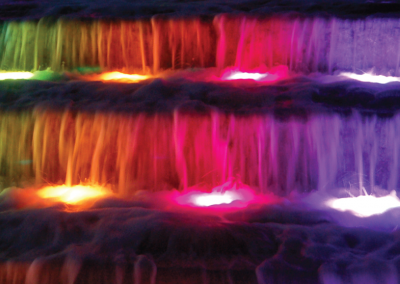
Combines precision variable frequency drives (VFD) with high-lumen submersible RGBW LED fixtures and DMX digital sequencing protocols. Allows synchronized musical water performances and automated nocturnal light displays for municipal nightscapes.
Get a Quote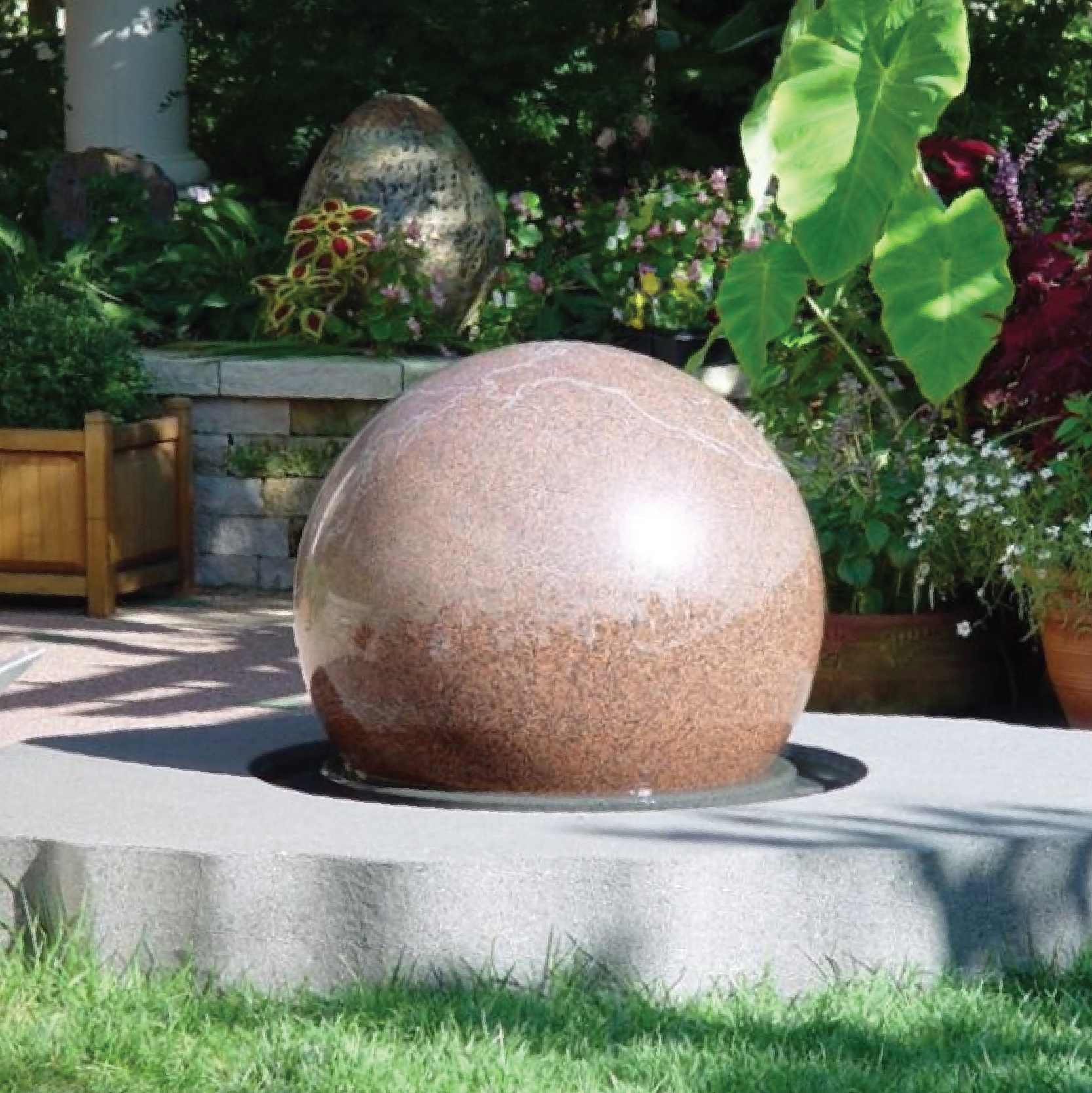
Custom Sculptural & Floating Sphere Features
Integrating heavy-density float structures with custom stone artwork or rotating granite spheres. Hydro Dramatics engineers zero-clearance hydraulic bearings and custom flotation balancing for specialized architectural commissions.
Get a QuoteTechnical Specification Matrix: Hydraulic & Electrical Sizing Parameters
Below is a representative engineering guideline used by civil contractors and specifiers during schematic design phases to size commercial floating fountain installations accurately:
| Motor Power (HP / kW) | Pump Type & TDH | Flow Rate (GPM / m³/h) | Display Height (Ft / m) | Min. Lake Depth | Target Lake Surface Area |
|---|---|---|---|---|---|
| 5.0 HP / 3.7 kW | Centrifugal / 65 FT | 140 GPM / 31.8 m³/h | 25 FT / 7.6 m | 3.5 FT / 1.0 m | 0.5 to 1.5 Acres |
| 10.0 HP / 7.5 kW | Centrifugal High-Head | 280 GPM / 63.5 m³/h | 45 FT / 13.7 m | 4.5 FT / 1.4 m | 1.5 to 3.0 Acres |
| 25.0 HP / 18.6 kW | Multi-Stage Turbine | 550 GPM / 125.0 m³/h | 75 FT / 22.8 m | 6.0 FT / 1.8 m | 3.0 to 6.0 Acres |
| 50.0 HP / 37.3 kW | Heavy Industrial High-Flow | 1,200 GPM / 272.5 m³/h | 110 FT / 33.5 m | 8.0 FT / 2.4 m | 6.0+ Acres |
2. Future Procurement & Sustainability Trends in Commercial Floating Fountains
As global commercial real estate standards move toward LEED certification, zero-net energy infrastructure, and smart municipal management, the commercial floating fountain sector is experiencing significant technological evolution. B2B purchasers must align their specifications with these emerging macro trends to protect long-term asset value:
- Variable Frequency Drives (VFD) & Smart Energy Optimization: Modern commercial installations avoid fixed-speed direct-online motors. By utilizing intelligent VFD panels housed in climate-controlled equipment vaults, operational speed scales up or down based on visitor traffic hours and ambient atmospheric conditions, cutting power consumption by 30% to 50% annually.
- Anemometer-Integrated Wind Response Systems: High spray patterns in commercial settings can suffer from wind drift, resulting in perimeter soil erosion, water loss, and nearby property overspray. Next-generation systems integrate digital ultrasonic anemometers that instantly signal the VFD control panel to scale down jet heights during gusty winds.
- Solar Microgrid & Hybrid Direct-DC Submersible Drives: In remote agricultural or eco-park installations lacking utility grid drops, off-grid solar floating fountains equipped with brushless DC submersible motors provide continuous daylight biological aeration without expensive trenching or utility line extensions.
- IoT Telemetry, Vibration Sensing, and Predictive Maintenance: Industrial-grade IoT modules monitor motor coil temperature, phase current balance, seal cavity moisture ingress, and bearing vibration spectrums in real time. Facilities managers receive automated maintenance alerts before structural failures occur.
Lifecycle ROI Analysis: 316 Stainless Steel vs. Thermoplastic Floats
Initial equipment purchase price represents less than 20% of total 15-year lifecycle cost. Cheap commercial fountains built with UV-degradable rotational plastics and low-grade 304 stainless steel frequently fail within 3 to 5 years under intense UV exposure and biological bio-fouling. Specifying UV-stabilized virgin High-Density Polyethylene (HDPE) with internal structural foam fill paired with 316 marine-grade stainless hardware extends operational life to 20+ years, yielding a 240% higher return on investment (ROI).
3. Product Development & Technical Evolution in Fountain Engineering
Engineering robust Commercial Floating Fountains requires solving severe mechanical challenges created by continuous aquatic immersion, thermal cycling, and chemical degradation. Recent engineering advances spearheaded by firms like Hydro Dramatics focus on structural stability, hydrodynamic efficiency, and illumination clarity.
A. High-Density Polyethylene Float Hull & Mooring Ballast Design
The floating hull must provide positive buoyancy under active hydraulic dynamic reaction forces. When a 50 HP pump discharges 1,200 GPM vertically, thousands of pounds of downward dynamic jet thrust are exerted on the float structure. Advanced float design incorporates self-ballasting water chambers and low-center-of-gravity hydrodynamic profiles. UV-stabilized heavy-wall HDPE hulls engineered with internal closed-cell polyurethane foam prevent sinking even if outer walls suffer impact damage from floating debris or ice.
B. Cavitation-Resistant Bronze Jet Nozzles & Hydrodynamic Stream Straighteners
To achieve crisp, architectural water columns that remain coherent at heights exceeding 80 feet, internal nozzle hydraulics must eliminate turbulence. Precision-machined cast bronze nozzles incorporate internal vanes (stream straighteners) that organize turbulent water flow into laminar streams. This design minimizes wind dispersion and spray atomization while reducing friction losses within the nozzle body.
C. Submersible LED Thermal Management & DMX512 Protocol Integration
Submersible lighting technology has transitioned entirely from high-wattage quartz-halogen lamps to solid-state RGBW LED modules. Modern commercial fixtures utilize solid cast copper or 316 stainless housings that rely on direct water immersion for thermal dissipation. Operating through standard DMX512 protocols, each fixture offers individual color addressing, permitting complex dynamic light shows synchronized with municipal holiday programs or corporate branding schemes.
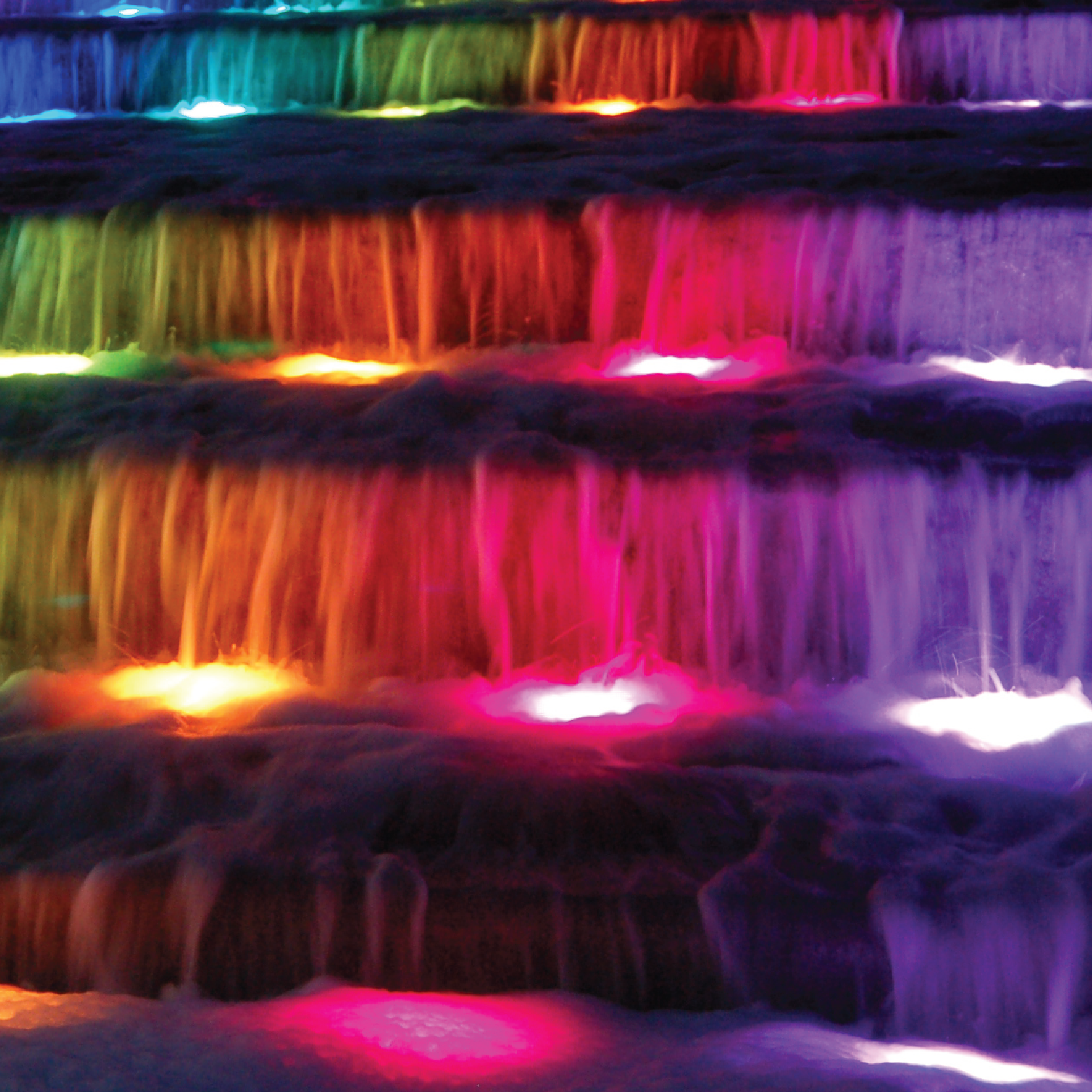
Figure 1: Custom engineered water feature system incorporating high-efficiency submersible illumination and precision hydraulic manifolds by Hydro Dramatics.
4. Corporate Advantage & E-E-A-T: Why Global Procurement Teams Choose Hydro Dramatics
For over four decades, major architectural firms, general contractors, landscape architects, and municipal bodies worldwide have entrusted their landmark water projects to Hydro Dramatics. Our authority and reliability stem directly from our organizational structure and mechanical engineering foundation:
A Division of Missouri Machinery & Engineering Co.
Unlike simple assembly distributors, Hydro Dramatics operates as a specialized division of Missouri Machinery & Engineering Co., granting our fountain engineers direct access to industrial heavy machinery manufacturing, high-capacity pump testing facilities, and deep mechanical expertise.
40+ Years of Proven Engineering Experience
Our portfolio spans landmark civic parks, national riverfronts, corporate headquarters, and international estate installations. We understand real-world hydraulic friction losses, water chemistry dynamics, soil anchor mechanics, and local electrical compliance.
Single-Source Turnkey Responsibility
From schematic concept design and custom nozzle fabrication to pre-wired UL 508A electrical control panel manufacturing and field commissioning support, we provide a unified engineering point of contact for complex projects.
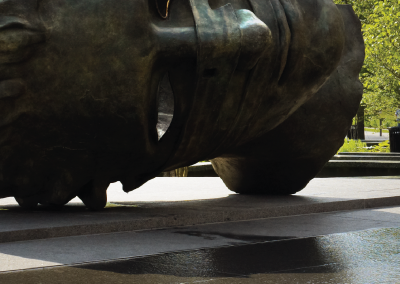
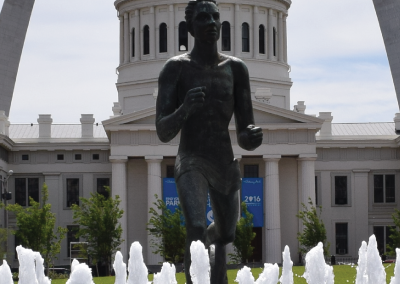
Whether engineering the playful interactive splash pads at Smale Riverfront Park, the architectural wonders of Citygarden, or large floating features for private and commercial master-planned developments, our team applies rigorous engineering discipline to ensure every fountain operates flawlessly on opening day and for decades to come.
Ready to Engineer Your Commercial Floating Fountain?
Consult directly with our senior hydraulic engineers to obtain custom CAD drawings, pump curves, electrical specs, and competitive price quotes.
Get a Quote5. Frequently Asked Questions (FAQ) for Commercial Floating Fountain Procurement
Below are technical answers to common queries submitted by global procurement officers, landscape architects, and site engineers during project planning:
Selecting the correct commercial floating fountain requires evaluating several key parameters: total lake surface area, minimum and maximum water depths, site electrical supply (voltage, phase, and available amperage), organic loading/biological oxygen demand (BOD), and primary usage intent (aesthetic visual display versus environmental bio-aeration). For biological aeration, a general rule of thumb is 1.5 to 2.5 Horsepower per surface acre of water. For visual display fountains, pump selection focuses on Total Dynamic Head (TDH) to achieve desired vertical jet heights while ensuring the float draft matches shallow pond zones.
Dual-purpose commercial floating fountains utilize custom-designed hybrid impeller systems. High-volume axial flow propellers draw nutrient-rich water from lower anaerobic zones and break it across surface spray rings, introducing atmospheric oxygen and accelerating VOC gas stripping. Concurrently, high-pressure inner core nozzles project central high-head water geysers. This dual-circuit approach provides striking visual height alongside high SOTR (Standard Oxygen Transfer Rates), keeping lake water clear and free of thermal stratification.
Mooring system design depends on shoreline access, lake bottom geology, and water level variance. In static ponds, heavy pre-cast concrete sinker anchors with stainless steel aircraft cables and marine-grade shock dampening springs provide concealed bottom-mooring. In locations with significant water level fluctuations (such as stormwater retention reservoirs that rise or fall 5 to 15 feet during storm events), shore-to-float sliding tether lines or counter-weighted self-adjusting tensioning reels are deployed to prevent float drift or cable snapping.
Pond and lake environments expose submerged machinery to abrasive suspended solids, corrosive dissolved minerals, biological algae build-up, and chemical treatment agents. Lower-grade 304 stainless steel or cast iron components suffer severe pitting and premature seal failure. Hydro Dramatics specifies oil-cooled 316 marine-grade stainless steel motor housings, silicon-carbide mechanical shaft seals, and cast bronze spray nozzles. This heavy industrial metallurgy ensures decades of reliable continuous duty even under harsh brackish or hard-water conditions.
Variable Frequency Drives (VFDs) paired with high-precision digital anemometers automatically adjust pump RPM based on live wind speed data. During low wind conditions, the fountain runs at 100% capacity for maximum vertical spray. When wind speeds breach preset safety thresholds (e.g., 15 mph), the control system seamlessly reduces motor speed, lowering the spray pattern to contain mist within the water body perimeter. If severe storm gushes occur, the system safely shuts off entirely to protect mechanical assemblies and conserve water.
A structured preventive maintenance program includes periodic inspection of intake suction screens to clear leaves and debris, electrical insulation testing (megohmmeter readings) on power feeder cables to check jacket integrity, and checking sacrificial zinc anodes in brackish environments. In freezing northern climates, fountains are either equipped with winter de-icing agitation bypasses or easily towed to shore using quick-disconnect electrical connectors and stored during seasonal ice coverage.