Seattle Market Dynamics: Engineering Architectural Water Features for the Pacific Northwest
The Greater Seattle commercial real estate landscape—spanning King, Snohomish, and Pierce Counties—demands a sophisticated approach to municipal and commercial aquatic architecture. From vibrant urban plazas in Bellevue and downtown Seattle to family-centric community developments in Redmond, Kirkland, and Renton, commercial splash pads (zero-depth aquatic play areas) have transitioned from luxury amenities to essential public infrastructure. However, designing, manufacturing, and deploying splash pads in the Pacific Northwest (PNW) presents distinct hydrological, environmental, and regulatory challenges that off-the-shelf equipment suppliers cannot address.
As an direct manufacturing facility and industrial engineering powerhouse—operating as a specialized division of Missouri Machinery & Engineering Co.—we bring over four decades of mechanical engineering, heavy-duty hydraulic system design, and custom water feature fabrication to the Seattle market. Our systems are specifically engineered to endure the wet, maritime climate of Puget Sound, withstand seasonal freeze-thaw cycles, and strictly comply with Washington State Department of Health codes (WAC 246-260).
Information Gain Insights for Seattle Developers & Municipal Engineers: Unlike standard pool facilities, zero-depth commercial splash pads in Washington State require closed-loop filtration vaults operating with automated secondary disinfection (UV or Ozone) combined with rapid hydraulic turnover rates (typically 30 minutes or less). Our direct-factory modular subterranean equipment vaults integrate automated PLC-driven backwash sequences, preventing urban runoff contamination and preserving water resources during PNW dry summer windows.
Localized Commercial Application Scenarios in Greater Seattle
Commercial splash pads serve diverse architectural functions depending on site placement, target demographics, and municipal planning priorities. As a direct factory manufacturer and technical consultant, we engineer aquatic hardware customized for five key Seattle application scenarios:
1. Municipal Parks & Regional Waterfront Rec Complexes
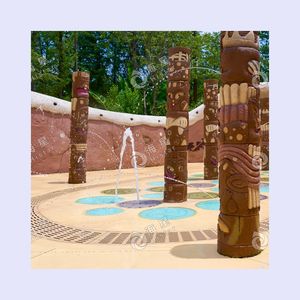
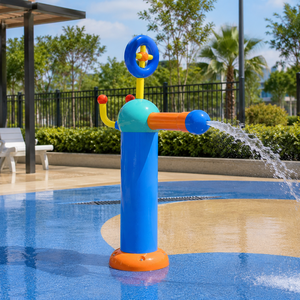
Public developments—such as riverfront developments, civic plazas, and regional parks across Seattle, Tacoma, and Everett—require indestructible, vandal-resistant hardware. Our municipal-grade splash pads utilize heavy-wall 316L stainless steel structural columns, subsurface concrete anchor flanges, and tamper-proof brass or stainless nozzles. Features like dump buckets, spray rings, and blooming fountains foster high-capacity interactive play while withstanding constant high-volume foot traffic.
2. Mixed-Use Commercial Real Estate & Lifestyle Plazas
Modern urban developments in South Lake Union, Bellevue Town Center, and Redmond Central Connector utilize architectural water features to drive foot traffic, extend dwell time, and enhance retail property valuation. We manufacture dual-mode splash pads that function as dynamic, LED-lit architectural fountain displays during evening hours or shoulder seasons, converting instantly into interactive play areas for families during summer peak hours.
3. Commercial Childcare, Private Schools & Educational Campuses
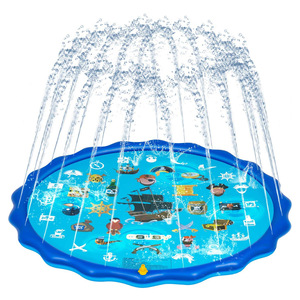
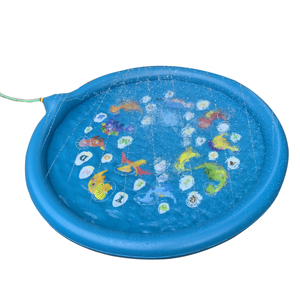
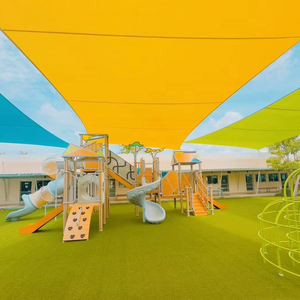
Early learning facilities and private educational institutions prioritize absolute zero-depth safety, zero standing water hazards, non-toxic eco-friendly materials, and gentle spray dynamics. Our low-pressure water play features, tactile water tables, and custom OEM inflatable sprinkler mats offer controllable hydraulic pressures that protect toddlers while encouraging sensory water exploration.
4. Hospitality, Resort Amenities & Regional Water Parks
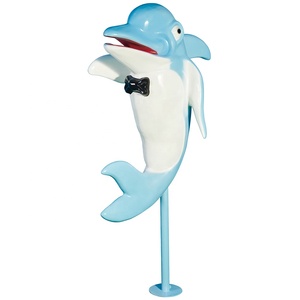
Destination resorts in the Pacific Northwest require show-stopping aquatic structures to attract summer tourism. Our engineering group designs integrated water play complexes featuring multi-tiered water buckets, interactive water cannons, dynamic sequencing spray jets, and custom thematic elements tailored to Northwest maritime or alpine aesthetics.
5. High-Density HOA Communities & Urban Apartment Complexes
Multi-family residential developments in fast-growing suburbs like Sammamish, Meridian, and Ridgefield utilize zero-depth splash pads to provide high-amenity value without the high liability, continuous lifeguard staffing overhead, and insurance costs associated with traditional swimming pools.
Enterprise Advantage: 40+ Years of In-House Hydraulic & Fabrication Heritage
Why do landscape architects, municipal project directors, and general contractors across Washington State partner with Hydro Dramatics? Because we are not merely distributors or assemblers of third-party plastics. We are a direct division of Missouri Machinery & Engineering Co., bringing deep industrial manufacturing capabilities directly to your construction site.
In-House Mechanical & Electrical Engineering
Our staff hydraulic engineers calculate flow rates, head pressure losses, pipe sizing, and electrical load requirements in-house, delivering stamped construction drawings ready for Seattle permit submittal.
Turnkey Subterranean Equipment Vaults
We pre-fabricate fully integrated fiberglass or concrete equipment vaults housing pumps, commercial sand/cartridge filters, UV sterilizers, chemical dosing controllers, and SCADA monitoring panels under factory-controlled precision.
Architectural CAD & BIM Integration
We collaborate seamlessly with architectural firms during schematic design, providing 3D Revit models, CAD details, and hydraulic schedules that eliminate costly field retrofits during construction.
Custom OEM & Stainless Steel Fabrication
From custom-branded spray features with laser-cut municipal logos to complex interactive blooming fountains, our master welders work with 316L marine-grade stainless steel and UV-inhibited polymers built for decades of operation.
Frequently Asked Questions for Seattle Commercial Splash Pad Procurement
Navigating commercial aquatic project requirements in King County and Washington State requires transparent technical guidance. Here are answers to common inquiries from developers, general contractors, and park directors:
What Washington State Health Codes apply to commercial splash pad installations?
+
Commercial splash pads installed in public or semi-public spaces across Washington must comply with WAC 246-260 (Water Recreation Facilities). This mandates specific automated water sanitation filtration turnover times (typically 30 minutes or less), continuous automated chlorine and pH regulation, secondary UV or Ozone disinfection to eradicate Cryptosporidium, and ADA-compliant non-slip surfacing.
Should a Seattle commercial splash pad use a recirculating or flow-through system?
+
While flow-through (single-use) systems send water directly to storm/sewer drains, municipal utility rates and water conservation policies in Greater Seattle make closed-loop recirculating systems the industry standard. Recirculating systems capture, filter, sanitize, and reuse water, cutting municipal water utility bills by up to 90% annually, despite higher initial equipment vault investment.
How do Hydro Dramatics splash pad systems handle winterization in Western Washington?
+
Our hydraulic systems feature engineered gravity-drain piping slopes and high-volume blowout ports built into the subterranean vault manifold. Before sub-zero freeze events occur, maintenance crews simply activate the auto-drain valve sequence and purge remaining lines using compressed air—protecting underground headers and above-grade nozzles from frost heave or cracking.
At what stage of project design should we consult a splash pad manufacturing specialist?
+
We strongly recommend involving our engineering team during the Schematic Design (SD) or Design Development (DD) phase. Early consultation allows us to properly size subterranean equipment vaults, determine electrical service requirements (3-phase power vs single-phase), establish surge tank volumes, and coordinate hydraulic plumbing penetrations before concrete slabs are poured.
What materials are used to ensure long-term durability in PNW coastal environments?
+
We utilize exclusively 316L marine-grade stainless steel for structural nozzles and spray features, combined with high-density polyurethane (HDP) aquatic elements and marine-grade epoxy coatings. This prevents rust, galvanic corrosion, and degradation caused by exposure to atmospheric moisture, salt air near Puget Sound, and harsh water sanitizing chemicals.