
Executive Intelligence Summary for Global Procurement Officers: Searching for Top China Floating Aerators Factories & Factory Capabilities requires navigating complex engineering specifications beyond basic price-per-unit metrics. Modern municipal water treatment, commercial aquaculture, structural lake management, and architectural water feature engineering demand aerators engineered with high Standard Oxygen Transfer Efficiency (SOTE), robust SS316L/SS304 metallurgical compositions, and variable pitch hydro-impellers. This comprehensive whitepaper evaluates top-tier Chinese manufacturers through rigorous mechanical engineering filters, lifecycle cost analysis, and IoT-integrated operational paradigms.
When sourcing industrial floating aerators and specialized floating fountain systems from China's manufacturing hubs, procurement engineers must look beyond cosmetic housing design. The core value of an aeration system lies in its fluid dynamics efficiency, dissolved oxygen (DO) saturation potential, and continuous-duty mechanical longevity.
Leading Chinese factories utilize advanced Computational Fluid Dynamics (CFD) modeling to sculpt impeller blades. Premium floating aerators achieve SOTE ratings exceeding 2.2 to 3.8 kg O₂/kWh, directly lowering long-term kilowatt-hour operating expenditures in municipal lagoons and industrial wastewater reservoirs.
Top-tier factories feature custom-built IE3/IE4 high-efficiency motors sealed within AISI 304 or 316L stainless steel enclosures. Dual silicon carbide mechanical seals coupled with thermal overload relays ensure continuous 24/7 operation even under high thermal or brackish conditions.
The float structural chassis must endure constant UV exposure, biological fouling, and mechanical stress. Tier-1 manufacturers utilize virgin High-Density Polyethylene (HDPE) shell technology rotomolded with closed-cell polyurethane foam cores to prevent sinking upon hull puncture.
Selecting the optimal floating aerator configuration depends on water depth, organic load (BOD/COD), thermal stratification, and visual aesthetic requirements. Below is a engineering comparison matrix developed by our fluid dynamics engineering team:
| Aerator Type | Primary Mechanism | Effective Depth | SAE Rating (kg O₂/kWh) | Best Suited Application |
|---|---|---|---|---|
| High-Speed Surface Aerator | Axial flow impeller spraying water droplets into atmosphere | 1.0 - 3.0 meters | 1.8 - 2.6 | Wastewater lagoons, shallow municipal ponds, emergency de-stratification |
| Floating Jet / Aspirating Aerator | Venturi injection forcing air-water micro-bubbles downward | 2.5 - 6.0 meters | 1.5 - 2.2 | Deep retention basins, high-BOD industrial effluent, directional circulation |
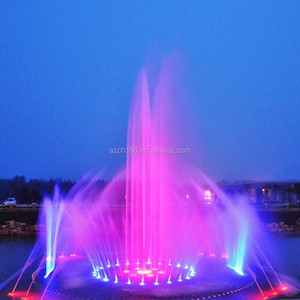
| Architectural Floating Aerating Fountain | Combined decorative spray nozzle with high-volume aerating pump | 1.5 - 4.5 meters | 1.2 - 1.9 | Golf courses, luxury resorts, urban parks, commercial real estate basins |
| Submersible Paddlewheel Aerator | Multi-stage rotating paddle blades creating surface turbulence | 0.8 - 2.0 meters | 2.2 - 3.0 | Aquaculture shrimp/fish farming ponds, shallow agricultural canals |
| Solar-Powered Hybrid Floating Aerator | Off-grid MPPT DC/AC brushless motor driving sub-surface impellers | 1.0 - 4.0 meters | N/A (Grid-Free) | Remote ecological lakes, off-grid water conservation zones, nature reserves |
China's industrial landscape contains hundreds of equipment manufacturers, but fewer than 15% possess in-house dynamic balancing rigs, fluid mechanics testing laboratories, and certified metallurgical casting facilities. To eliminate supply chain risks, B2B procurement teams must audit prospective factories against the following four-stage qualification framework:
Verify if the factory operates a dedicated ISO 9906 compliant pump and aerator test tank. Top factories provide certified test reports verifying Flow Rate (m³/h), Standard Oxygen Transfer Rate (SOTR), and absorbed motor power under full head conditions.
Unbalanced impellers induce high-frequency vibrations that destroy mechanical seals and motor bearings within 6 to 12 months. Premier factories enforce ISO 1940 Grade G2.5 dynamic balancing for all stainless steel and bronze impellers prior to final assembly.
Insist on IP68 waterproof enclosure certification validated by third-party agencies such as TÜV, SGS, or CE. Motor windings should feature Class H insulation vacuum-impregnated with epoxy resin to withstand ambient water temperatures up to 55°C.
Building upon over 40 years of continuous engineering heritage (originating from foundational divisions like Missouri Machinery & Engineering Co.), top industrial floating aerator manufacturers bridge the gap between creative water architecture and heavy-duty mechanical engineering. Whether designing custom underground equipment vaults, high-pressure floating fountain manifolds, or municipal-grade surface aerators, true OEM authority stems from in-house foundry access, precision CNC machining, custom panel automation, and direct hydraulic testing.
When sourcing complex floating aerator systems, elite vendors do not simply assemble off-the-shelf components. They engineer complete fluid systems—optimizing pump head curves, sizing submersible power cables for voltage-drop mitigation, and embedding smart PLC controls capable of reacting to real-time weather and dissolved oxygen sensors.
The global aeration industry is undergoing a structural transition driven by decarbonization mandates, energy cost volatility, and smart municipal infrastructure updates. Procurement directors evaluating long-term factory partnerships must align with manufacturers investing in the following three key technological vectors:
Next-generation floating aerators integrate optical Dissolved Oxygen (DO) sensors directly into the float chassis. Paired with Variable Frequency Drives (VFD) and Modbus/RS485 telemetry, these systems automatically scale motor RPM up or down based on real-time biological oxygen demand, reducing annual electricity consumption by up to 35%.
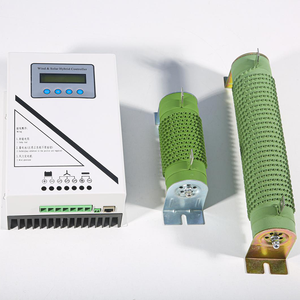
With advancements in Permanent Magnet Synchronous Motors (PMSM) and Maximum Power Point Tracking (MPPT) controllers, solar-powered floating aerators operate seamlessly without inverter loss or heavy grid reliance. Factories supplying integrated PV-float arrays are capturing dominant market share in remote agricultural and environmental restoration projects.
Bio-fouling and mineral scaling present major operational bottlenecks in estuarine and industrial wastewater applications. Advanced Chinese manufacturing facilities are introducing physical vapor deposition (PVD) titanium coatings and hydrophobic fluoropolymer surface treatments to impellers, doubling maintenance intervals.
Sizing is dictated by water body surface area, depth profile, organic loading rate (BOD/COD), ambient water temperature, and target Dissolved Oxygen levels (typically minimum 5.0 mg/L for aquatic life). As a baseline rule of thumb, commercial lakes require approximately 1.5 to 2.5 HP of high-efficiency surface aeration per surface acre (0.4 hectares) for effective thermal de-stratification and biological oxidation.
Leading export-oriented OEMs customize submersible motor windings for worldwide grid standards, including 110V/220V/380V/440V/460V/480V at both 50Hz and 60Hz single-phase or three-phase power. Control panels are designed to meet NEMA 4X or IP66 standards and incorporate UL/CE certified contactors, breakers, and variable speed drives.
When manufactured with SS316L/SS304 sub-components, dual mechanical seals, and UV-stabilized virgin HDPE floats, high-quality floating aerators deliver a continuous service life of 8 to 12 years. Routine maintenance typically involves mechanical seal inspection and oil chamber fluid changes every 18 to 24 months of continuous operation.
Standard production lead times for standard catalog models range from 10 to 15 business days. Custom engineered solutions involving specialized nozzle manifolds, high-power submersible pumps (above 50 kW), or custom PLC vault control panels require 25 to 35 business days, including full hydro-dynamic factory testing prior to container loading.
Tier-1 factories utilize modular float designs that nest efficiently within standard 20ft/40ft HQ shipping containers. Submersible motors and precision impellers are vacuum-sealed and crated in fumigated ISPM-15 compliant wooden cases with rust-inhibiting VCI film packaging to withstand ocean freight humidity.
Connect with top-tier engineering experts for custom hydraulic quotes, full product catalogs, and factory audit documentation customized to your project specifications.