
Precision-engineered DMX512 controllers, IP68 submersible illumination, dynamic laminar jump jets, and multi-stage filtration hardware designed for high-end commercial fountains and municipal splash pads.
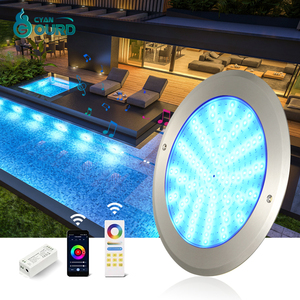
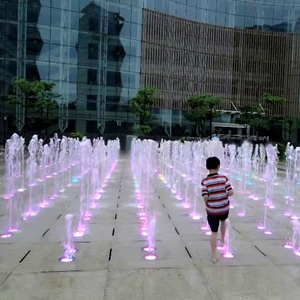
In the specialized realm of architectural fountain automation and DMX512 control engineering, structural durability must seamlessly synthesize with millisecond-accurate electrical execution. Operating as a premier division of Missouri Machinery & Engineering Co. (headquartered in St. Louis, MO, USA), Hydro Dramatics has established the definitive global benchmark for commercial water feature design, hydraulic calculations, and subterranean vault engineering for over four decades.
Unlike standard component re-sellers or surface-level assembly vendors, top-tier DMX fountain control factories engineer control logic from the ground up. Whether integrating complex Art-Net to DMX512-A signal distribution, high-frequency Pulse-Width Modulation (PWM) dimming modules for IP68 underwater fixtures, or Variable Frequency Drive (VFD) speed-ramp loops for dynamic musical water displays, true manufacturing authority is forged through rigorous electro-hydraulic co-design.
Direct coupling of high-speed pneumatic water solenoids with DMX512 timing clocks, eliminating latency between musical score signals and water kinetic response.
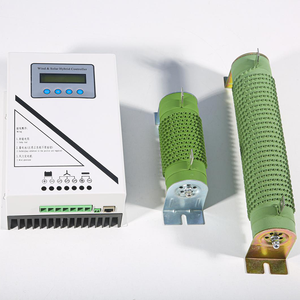
Pre-packaged, climate-controlled equipment vaults engineered with IP68 junction boxes, optical signal isolation, and integrated water treatment skids.
Remote Device Management (RDM) telemetry for monitoring voltage drops, operational temperatures, and driver health across hundreds of submerged LED nodes.
Evaluating enterprise-grade DMX fountain control systems requires analyzing signal isolation protocols, output channel density, VFD response curves, and physical ingress protection.
Standard architectural lighting controllers often fail when exposed to the harsh electrical noise and continuous humidity of fountain pump vaults. A specialized DMX fountain controller factory designs hardware featuring galvanic isolation (minimum 2.5kV ESD protection) on all RS-485 communication lines. This prevents ground loops caused by heavy submersed pump motors from corrupting delicate DMX512-A data frames.
| Performance Parameter | Standard Lighting Controller | Industrial DMX Fountain Controller | Hydro Dramatics Custom OEM Spec |
|---|---|---|---|
| Communication Protocol | Unidirectional DMX512 | DMX512-A / Art-Net 4 / sACN | Bi-Directional RDM + sACN Redundant Ring |
| Signal Line Isolation | 500V Opto-isolated (Basic) | 1.5kV Optical & Galvanic Shielding | 2.5kV Industrial ESD & Surge Suppression |
| Refresh Rate & Frame Rate | 30 Hz (Standard FX) | 44 Hz (Full Universe Max) | Up to 100 Hz High-Speed Synchronization |
| Submersible Actuation | Relay Switch Only (>200ms lag) | High-Speed Solid State PWM (20ms) | Direct Solenoid Drive (<5ms Response) |
| Vault Ingress Protection | NEMA 3R / IP54 (Indoor/Covered) | NEMA 4X / IP66 Enclosures | IP68 Hermetically Sealed Vault Packages |
| Thermal & Voltage Telemetry | None | Basic Alarm Contact | Real-time RDM Feedback + Modbus Cloud API |
Furthermore, high-speed musical fountains require tight coupling between Variable Frequency Drives (VFDs) and DMX intensity channels. Standard Modbus RTU polling over RS-485 introduces latency (often 100ms–300ms), creating a noticeable visual disconnect between music beats and water jet height. Modern industrial DMX controllers utilize dedicated analog 0-10V fast-response cards or direct digital sACN-to-VFD gateways, reducing dynamic response times to under 10 milliseconds.
As municipal spaces, luxury resorts, and theme parks demand hyper-interactive, eco-conscious water installations, DMX automation hardware is undergoing four major evolutionary shifts.
Traditional musical fountain programming required painstaking manual frame-by-frame timeline editing in specialized software. Next-generation DMX fountain controllers integrate edge-computing AI algorithms capable of analyzing live audio feeds in real-time. By extracting acoustic spectrums, beat transients, and emotional cadence, these systems automatically generate synchronized sequences for DMX jet solenoids and RGBW fixtures without manual choreography.
Modern commercial fountain operators can no longer afford unexpected downtime or costly manual water feature inspections. The industry standard has shifted decisively toward Remote Device Management (RDM) over DMX. Advanced controllers constantly query submersed light engines for junction temperature, LED diode degradation, voltage drops, and moisture ingress. Operators receive automated alerts before a fixture fails, dramatically lowering lifecycle maintenance costs.
Public splash pads and interactive dry-deck fountains demand strict compliance with international safety codes (such as NEC Article 680 and IEC 60364-7-702). Future procurement trends show a rapid phase-out of line-voltage (120V/240V) underwater fixtures in favor of concentrated DC 24V and DC 48V power distribution grids. Modern DMX controllers integrate dynamic power factor correction (PFC) and digital bus monitoring to prevent line-loss across extended cable runs.
Water conservation and energy efficiency are now central to urban landscape procurement. Advanced DMX controllers feature intelligent power-shedding logic that modulates pump VFD speeds based on real-time anemometer wind sensor data. When ambient wind speeds exceed safety thresholds, the controller dynamically caps the maximum DMX output value to prevent water over-spray and wasted municipal water volume.
When evaluating the Top 10 DMX Fountain Controller Factories and Suppliers, global procurement teams must look far beyond unit cost. Cheap component assembly leads to catastrophic failures in field conditions—such as water ingress into controller housings, fried DMX transceivers from voltage surges, and dynamic desynchronization between jets and lights.
To mitigate project risk, landscape architects, municipal developers, and EPC contractors must enforce a strict supplier auditing matrix:
Require suppliers to provide pre-shipment FAT certification, including 72-hour thermal burn-in tests, full-universe DMX signal integrity analysis, and IP68 pressure chamber testing.
Leading factories build control panels utilizing standardized DIN-rail modularity. This ensures that field technicians can replace individual DMX driver cards or relay modules in minutes without rewiring the entire panel.
Verify that supplier systems hold UL 508A, CE, and RoHS certifications. Ensure the manufacturer provides remote commissioning support and comprehensive DMX patch list documentation.
Expert answers to critical technical and procurement questions regarding DMX fountain control systems, signal transmission, and installation best practices.
Under the standard USITT DMX512-A protocol, the maximum theoretical distance for a single daisy-chained RS-485 cable run is 1,200 meters (approx. 3,900 feet). However, in high-moisture fountain environments with nearby high-voltage pump VFDs, we recommend limiting direct copper DMX runs to 300 meters (1,000 feet) and utilizing opto-isolated DMX splitters/repeaters or Art-Net/sACN fiber-optic transceivers for longer distribution lines.
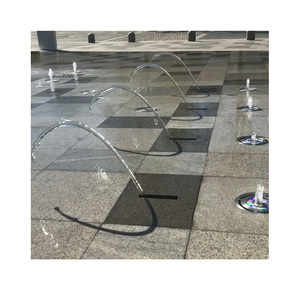
High-speed laminar jumping jets require rapid pneumatic or mechanical solenoid firing with response times under 10ms. Standard DMX relay cards are mechanically too slow and wear out quickly. Industrial DMX fountain controllers use Solid-State Relay (SSR) driver blocks or high-speed MOSFET switching matrices controlled via specific DMX channels, allowing instantaneous water cutting and precise pulse length control without mechanical degradation.
Engaging an experienced fountain engineering specialist like Hydro Dramatics during early schematic design ensures that pump sizing, hydraulic pipe routing, filtration turnover rates, DMX control universe planning, and underground equipment vault dimensions are calculated holistically. This prevents extremely expensive retrofits or redesigns during later construction phases.
Standard DMX512-A is a one-way communication protocol: the master controller sends control data to the lighting fixtures, but receives no feedback. RDM (Remote Device Management) is an extension that enables two-way bi-directional communication over the same DMX cable pair. With RDM, the central controller can remotely set DMX addresses, monitor operational temperature, detect LED diode open-circuits, and read power supply voltages inside submerged IP68 light fixtures.
Yes. Hydro Dramatics routinely designs, engineers, and fabricates custom turn-key subterranean equipment vaults and control panel packages for international projects across North America, Europe, the Middle East, and Asia. Systems are built to global electrical standards (UL, CE) and are pre-commissioned and bench-tested prior to export shipping.
Whether you are designing a landmark municipal park, a dynamic resort splash pad, or a high-speed music fountain show, our engineering team provides complete support from schematic design through final commissioning.
Contact Us