
Explore our state-of-the-art water feature components, custom fountain nozzles, floating aeration features, and subterranean vault assemblies built for commercial project reliability.
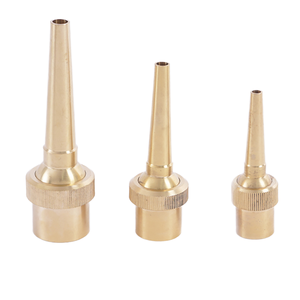
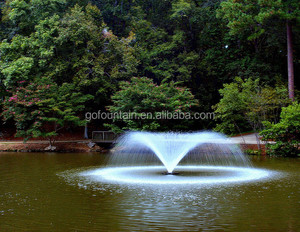
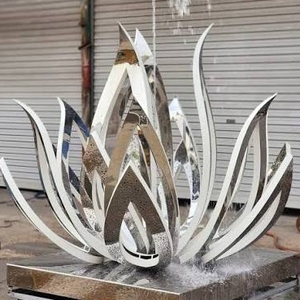
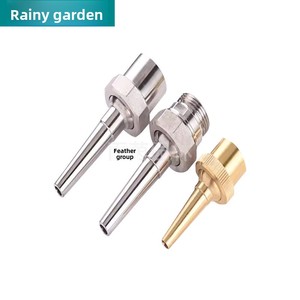

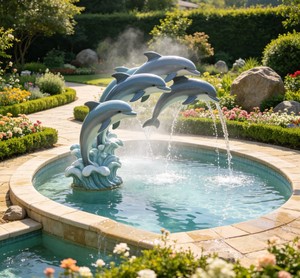
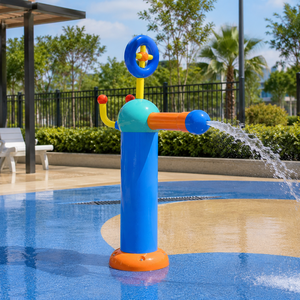
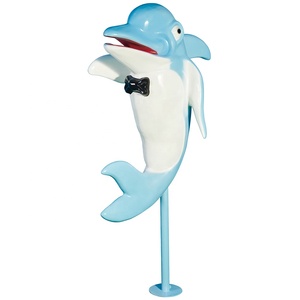
Architectural fountains, dry-deck splash pads, and large-scale municipal aquatic features rely entirely on the silent efficiency of their subterranean mechanical heart: the Fountain Drainage Equipment Vault. As China's premier manufacturer and exporter of commercial water feature equipment, our engineering facility bridges international hydraulic standards with advanced industrial modular manufacturing.
A fountain equipment vault serves a dual critical purpose. First, it acts as the centralized housing for high-pressure recirculation pumps, filtration manifolds, UV disinfection loops, chemical dosing systems, and DMX512 dynamic light controllers. Second, and most crucially, it functions as the master drainage hub, mitigating storm surge volume, preventing hydrostatic head pressure damage, and housing automatic high-capacity bilge pump drainage systems.
Key Engineering Insight: Conventional cast-in-place concrete vaults suffer from micro-cracking, long installation lead times, and potential liquid seepage. Our factory-engineered prefabricated 316L Stainless Steel and Heavy-Duty Composite Vaults reduce site installation labor by up to 70% while guaranteeing structural impermeability and resistance to corrosive pool chemicals.
When specifying infrastructure for municipal plazas, commercial developments, or amusement water parks, project engineering teams must weigh long-term operational expenditure (OPEX) against initial capital outlay (CAPEX). Below is an engineering evaluation comparison:
| Evaluation Parameter | Factory Prefabricated Stainless Steel Vaults | Traditional Cast-in-Place Concrete Vaults |
|---|---|---|
| Structural Integrity & Sealed Shell | 100% Hermetically Sealed (304/316L SS or FRP Construction) | Prone to cold-joint leaks, dynamic settling cracks, and water ingress |
| Installation & Lead Time | Plug-and-Play drop installation (1 to 3 days on site) | Extensive rebar framing, pouring, curing, & testing (4 to 8 weeks) |
| Internal Mechanical Integration | Pre-plumbed, pre-wired, pressure-tested before export shipment | Field installation requiring multiple fragmented sub-contractors |
| Drainage & Bilge Safety | Integrated dual-redundant automatic float-switch sump systems | Requires custom manual trenching and field-assembled sump pits |
| Service Life & Chemical Resistance | 50+ Years superior resistance to Chlorine, Acid, and Ozone | Degrades over time under constant chemical washdown and dampness |
Backing architectural vision with heavy industrial manufacturing capability, rigorous hydraulic engineering, and comprehensive B2B export compliance.
As an integrated manufacturing power, our team utilizes computational fluid dynamics (CFD) modeling to accurately calculate total dynamic head (TDH), pipe friction losses, and optimal nozzle spray velocities, ensuring flawlessly executed water displays.
Our production floor features high-precision CNC fiber lasers, multi-axis robotic welders, and automated tube benders to process marine-grade 316L stainless steel, brass, and composite materials to exact millimeter tolerances.
Every equipment vault undergoes strict 72-hour hydrostatic pressure testing, electrical dielectric insulation verification, and IP68 water immersion validation prior to export packing and global logistics dispatch.
We work in direct partnership with landscape architects, developers, and municipal contractors, customizing pump flow capacities, vault footprint dimensions, hatch access structural ratings, and dynamic water controls.
Our engineered solutions strictly conform to international safety standard certifications including CE, ISO9001, UL pump requirements, and EN 124 load ratings for subterranean access hatches installed in public traffic zones.
From initial schematic review to final commissioning advice, we supply complete turnkey aquatic equipment packages—vaults, nozzles, manifolds, strainers, underwater lighting, and power control cabinets under one roof.
As urban architectural projects prioritize environmental sustainability, reduced maintenance overhead, and intelligent automation, the procurement landscape for fountain equipment vaults and drainage matrixes is undergoing a dramatic technological shift. International buyers, municipal developers, and EPC contractors must adapt to these emerging trends:
Modern commercial fountain vaults are evolving from passive mechanical spaces into smart, connected infrastructure hubs. Intelligent sensors embedded within subterranean vaults monitor ambient humidity, temperature, pump vibration signatures, and motor winding heat in real time. Remote telemetry units (RTUs) instantly transmit performance data to facility management software, predicting pump seal failures or strain clog events before catastrophic flooding occurs.
Energy consumption remains a major operational cost for commercial aquatic features. Advanced procurement specifications now mandate the use of IE4/IE5 ultra-high-efficiency submersible and dry-installed pumps driven by localized VFD controllers. Furthermore, modern drainage vault designs incorporate dual-chamber settling matrixes and micro-screen filtration to reclaim 98%+ of splash-pad runoff, dramatically minimizing municipal water top-up demands.
Site construction delays and escalating field labor costs in North America, Europe, and the Middle East are accelerating the shift toward factory-assembled equipment vaults. Specifiers are demanding pre-engineered modules that arrive on-site fully equipped with internal piping, valve manifolds, electrical panels, ventilation blowers, and automatic bilge pumps, requiring only primary inlet/outlet connections and mains power hookup.
Extreme weather events require fountain drainage systems to handle flash rainfall surges without compromising subterranean electrical infrastructure. Future vault designs incorporate elevated internal mounting racks, double-seal gas-tight hatches, and dual-redundant high-volume submersible trash pumps equipped with battery-backed auxiliary power units to handle emergency water evacuation during grid outages.
The global fountain and architectural water feature industry has evolved significantly over the past three decades. Historically, commercial water installations were simple static display pools utilizing standard industrial water pumps housed in rudimentary concrete pits. Today, urban public spaces demand interactive splash pads, high-frequency music fountains, and zero-depth water plazas that require highly sophisticated hydraulic engineering.
The transformation of nighttime urban landscapes has driven rapid innovation in fountain lighting technology. High-output, low-voltage RGBW LED lights featuring native DMX512 and RDM (Remote Device Management) protocols are now standard. These lighting assemblies require centralized signal distribution panels housed inside climate-controlled equipment vaults, protected against voltage spikes and moisture condensation through dynamic anti-condensation vault heating modules.
Corrosion resistance is the single most critical factor determining the longevity of aquatic infrastructure. Industry manufacturing standards have migrated from cast iron and standard 304 stainless steel to heavy-wall 316L marine-grade stainless steel and high-density fiber-reinforced polymer (FRP) composites. These materials resist pitting corrosion caused by high chlorine concentrations, saline environments, and chemical water treatment additives used in public splash parks.
Technical clarity on vault sizing, drainage safety, factory customization, export logistics, and international project execution.
Proper vault sizing requires calculating the total displacement volume of system equipment (pumps, filters, manifolds), maintaining minimum air clearance for technician serviceability (recommended minimum 2.0m clear interior height), establishing adequate Net Positive Suction Head (NPSH) for pumps, and sizing the emergency drainage sump pit based on maximum potential surge water volume and local rainfall intensity metrics.
Our engineered vaults feature integrated dual-redundant automatic bilge pump systems equipped with dual mechanical float switches and high-water alarm telemetry. Drainage piping incorporates inline silent check valves and backflow preventers. Furthermore, critical electrical panels and control VFDs are elevated on structural support racks above maximum flood threshold heights.
Yes. We engineer stainless steel and hot-dip galvanized access hatches engineered to match precise EN 124 load classifications—from A15 pedestrian ratings up to C250 and D400 heavy-traffic vehicular load capacities. Access hatches can also be equipped with recessed stone-infill trays to seamlessly integrate into granite or paved plaza surfacing.
Standard custom prefabricated equipment vaults require 3 to 5 weeks for engineering shop drawing approval, CNC fabrication, assembly, and testing. Finished units are secured in export-grade reinforced sea-worthy wooden crates or custom steel shipping frames for containerized ocean freight (FCL) delivery direct to global port destinations.
Absolute technical backing is a core pillar of our E-E-A-T commitment. We provide complete BIM/CAD installation drawings, 3D pipe layout schematics, wire termination schedules, and detailed operations & maintenance (O&M) manuals. Remote engineering consultation and on-site commissioning technicians are available for major international project sites.