

Executive Summary: Navigating CE Certified Fire Water Fountain Procurement
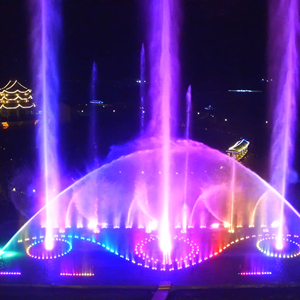
Architectural landscape design has undergone a paradigm shift over the past decade. The merging of conflicting natural elements—specifically pressurized ignited gas (fire) and high-velocity hydraulic water jets—has evolved from bespoke art installations into standard marquee features for municipal parks, casino plazas, luxury resorts, and high-end commercial developments worldwide. However, the engineering complexity of deploying simultaneous fire and water displays introduces stringent compliance, life-safety, and operational challenges.
For municipal buyers, EPC (Engineering, Procurement, and Construction) contractors, and commercial developers, sourcing from **CE certified fire water fountains factories and exporters** is no longer merely a regulatory check-item; it is a fundamental pillar of risk mitigation. CE certification confirms compliance with the European Union's rigorous directives, including the Machinery Directive (2006/42/EC), Low Voltage Directive (2014/35/EU), Electromagnetic Compatibility Directive (2014/30/EU), and the Gas Appliances Regulation (EU 2016/426).
1. Technical Engineering Architecture of Fire-Water Fountains
Understanding how a commercial fire-water fountain functions at a systemic level requires analyzing three interconnected engineering subsystems: the Hydro-Dynamic Assembly, the Gas Ignition & Combustion Module, and the Central Automated Logic Controller (PLC/DMX512).
1.1 Hydro-Dynamic & Submersible Piping Systems
Unlike standard static fountains, fire-water systems feature concentric or adjacent nozzles where liquid propane (LPG) or compressed natural gas (NG) is discharged through the center of a hollow water column or surrounding an ascending aquatic jet. The plumbing architecture utilizes schedule 40 or schedule 80 AISI 316L stainless steel pipes. 316L is specifically selected over standard 304 stainless steel due to its molybdenum content, which provides superior resistance to pitting and crevice corrosion caused by chlorinated basin water elevated to high temperatures by adjacent flames.
1.2 Precision Ignition & Flame Safety Controls
The core safety barrier in any CE-certified fire water fountain is its automated flame monitoring unit. Qualified manufacturers incorporate a dual-redundancy sensing protocol:
- Ionization Flame Detection Probes: Measuring the electrical conductivity of ionized gas flames to verify ignition within milliseconds.
- Submersible UV Flame Sensors: Sealed inside IP68 stainless steel housings, these optical sensors detect ultraviolet radiation specific to hydrocarbon combustion, ruling out false signals from ambient lighting or water reflection.
If a sudden gust of wind or unexpected water splash extinguishes the flame, the system logic triggers a pneumatic or electromagnetic valve shutdown in under 50 milliseconds, preventing the accumulation of unburned fuel in the basin or surrounding public atmosphere.
Fast-Cut Solenoids
Dual-stage fail-safe gas valves rated for over 1,000,000 continuous open/close cycles without seat degradation.
IP68 Ignition Vaults
Hermetically sealed high-voltage spark generators engineered to spark consistently even while completely submerged in 2 meters of water.
DMX512 Integration
Full synchronization with underwater RGBW LED illumination, variable-frequency pump drives, and musical audio tracks.
2. CE Certification Directives: What International Buyers Must Inspect
When evaluating international factories and exporters of fire-water fountains, asking for a generic "CE Certificate" is insufficient. A valid CE audit report for hydro-combustion equipment must explicitly cite compliance with multiple European harmonized standards:
| Directive / Standard | Technical Scope | Engineering Compliance Criteria |
|---|---|---|
| EN 746-2:2010 | Industrial Thermoprocess Equipment - Safety Systems for Combustion | Mandates dual solenoids, pre-purge air sequences, and gas pressure monitoring switches. |
| 2006/42/EC (Machinery) | Overall Mechanical & Integrated System Safety | Risk analysis for moving water effect mechanisms, high-pressure pumps, and structural integrity. |
| EN 60529 (IP Ratings) | Ingress Protection for Submersible Components | Strict IP68 testing for all submerged electrical junctions, spark plugs, and low-voltage control lines. |
| EN 61000-6-2 / 6-4 | Electromagnetic Compatibility (EMC) | Ensures high-voltage ignition sparks do not corrupt DMX control signals or nearby electronic hardware. |
3. Enterprise Manufacturing Strengths & The Hydro Dramatics Advantage
Building world-class architectural fire water fountains requires a convergence of heavy industrial machinery engineering and nuanced aesthetic water artistry. Backed by over **40 years of specialized experience** through its division heritage under Missouri Machinery & Engineering Co., our manufacturing framework bridges the gap between artistic landscape design and heavy-duty mechanical reliability.
3.1 In-House CNC Precision Machining & Custom Fabrication
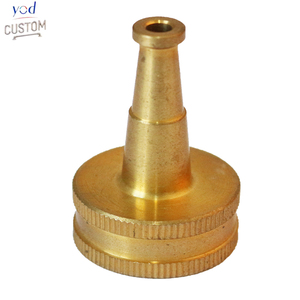
Every fire jet nozzle, brass connector, and specialized flame head requires micro-tolerance machining to ensure uniform fuel distribution and stable flame columns. Utilizing 5-axis CNC machining centers, our factory manufactures custom nozzle components in solid brass and marine-grade stainless steel. This precision eliminates burner clogging, fluid turbulence, and uneven flame height under varying wind shear conditions.
3.2 Subterranean Fountain Vaults & Skid Modularization
To simplify international installation and reduce field labor costs, our facility specializes in producing pre-engineered, factory-tested **underground equipment vaults and skid-mounted pump packages**. These stainless steel or fiberglass (FRP) vaults house:
- High-efficiency submersible and dry-pit centrifugal pumps.
- Automated sand filtration and UV/Ozone water sterilization systems.
- Gas valve trains featuring integrated pressure regulators, flash-back arrestors, and leak-detection sensors.
- Programmable Logic Control (PLC) electrical cabinets equipped with touchscreen Human-Machine Interfaces (HMI) and remote IoT diagnostic access.
4. Future Global Procurement Trends (2025–2030)
The global market for commercial water features and fire fountains is experiencing rapid technological evolution driven by sustainability demands, smart city automation, and enhanced safety expectations. Procurement directors must anticipate the following trends when specifying equipment for upcoming multi-year projects:
4.1 Shift Toward Eco-Friendly Bio-Ethanol & Clean-Burn Hydrogen Blends
While LPG and Natural Gas remain dominant, strict urban carbon-neutrality goals in European and North American metropolitan areas are accelerating the adoption of clean-burning eco-fuels. Advanced fire water fountain factories are developing specialized vapor-injection nozzles compatible with bio-ethanol and up to 20% green hydrogen-gas blends, producing zero soot, minimal carbon emissions, and vibrant color-tunable flames.
4.2 Artificial Intelligence & Computer Vision Safety Monitoring
Modern mega-developments are moving beyond traditional probe sensors toward AI-assisted thermal imaging and computer vision cameras integrated directly into the fountain layout. These smart cameras continuously monitor public wind drift, human proximity boundaries, and flame geometry, dynamically scaling down flame heights during elevated wind speeds or instantly disabling combustion if spectators breach designated safety perimeters.
4.3 Skid-Mounted Prefabrication & Plug-and-Play Export Modules
High international field labor rates have shifted buyer preference heavily toward 100% pre-fabricated skid systems. Leading exporters now pre-assemble, wire, and hydro-test complete fire-water fountain control vaults at the factory before shipping them inside standardized ISO containers. Upon arrival on site, project contractors only need to connect main power, water supply, and gas fuel feeds, drastically shortening commissioning timelines from months to days.
5. Comprehensive B2B Procurement & Supplier Evaluation Guide
Sourcing directly from overseas factories requires rigorous verification to avoid project delays, compliance failures, or catastrophic equipment malfunctions. B2B buyers should implement the following four-stage qualification framework:
Stage 1: Factory Certification & Standard Operating Procedure (SOP) Audit
Verify that the exporting factory maintains ISO 9001:2015 Quality Management certification, ISO 14001 Environmental Management, and true third-party CE certificates issued by accredited Notified Bodies (e.g., TÜV, SGS, Intertek). Ensure certification covers the entire dynamic fire-water system rather than individual off-the-shelf electrical relays.
Stage 2: Factory Acceptance Testing (FAT) Protocols
Insist on a mandatory Factory Acceptance Test prior to shipment release. A comprehensive FAT for a CE-certified fire water fountain must include:
- Hydrostatic Pressure Testing: Piping networks tested at 1.5x working pressure for a minimum of 4 hours to verify zero weld or joint leakage.
- Continuous Flame Sequence Testing: 50 consecutive automated ignition cycles under simulated wet conditions to confirm 100% ignition reliability.
- Fail-Safe Simulation: Intentionally cutting fuel pressure, electrical power, and flame sensors to measure exact gas valve shut-off latency.
- Electrical Insulation & Dielectric Withstand Test: Ensuring all submersible circuits prevent stray currents in the water basin.
Stage 3: Logistics & Hazardous Material Component Handling
Gas ignition modules, solenoid valves, and specialized electronic controllers must be packaged in IP67 shock-resistant shipping cases with moisture-absorbent desiccant matrixes. Stainless steel surfaces must undergo acid pickling and passivation prior to ocean freight shipping to prevent salt-air atmospheric corrosion during transit.