
0%

Why choose Architectural Fountain Design for your project? A well-planned fountain can transform an unused plaza into a memorable public destination. It adds movement, sound, and reflected light without overwhelming the surrounding architecture. From practical experience, successful water features begin with the site, not a decorative sketch. Sun direction, wind, soil conditions, pedestrian flow, and water availability all shape the final design. A narrow courtyard may need a quiet wall fountain. A civic square may support broad, programmable jets.

Architectural Fountain Design combines architecture, hydraulics, electrical planning, lighting, and landscape strategy. Experienced teams assess pump capacity, filtration demand, splash control, and drainage before construction. They also consider slip resistance, child safety, maintenance access, and efficient water treatment. These details matter when leaves enter a basin or a nozzle loses pressure after a busy weekend. The spectacle is half. Maintenance remains real. Reliable documentation, qualified contractors, and clear commissioning procedures help owners control operational risks and long-term costs.

Strong projects reflect recognized safety practices and project-specific engineering review. They use durable materials suited to freezing temperatures, mineral-rich water, or heavy public use. Still, no design is perfect. A dramatic spray may create wind drift, while an intricate control system may confuse staff. That possibility deserves honest discussion. Details decide longevity. By balancing visual identity with practical upkeep, a fountain can serve visitors for many years. It should attract attention today and remain manageable tomorrow. The best design is not simply impressive; it is thoughtfully engineered, carefully maintained, and responsive to real human use.
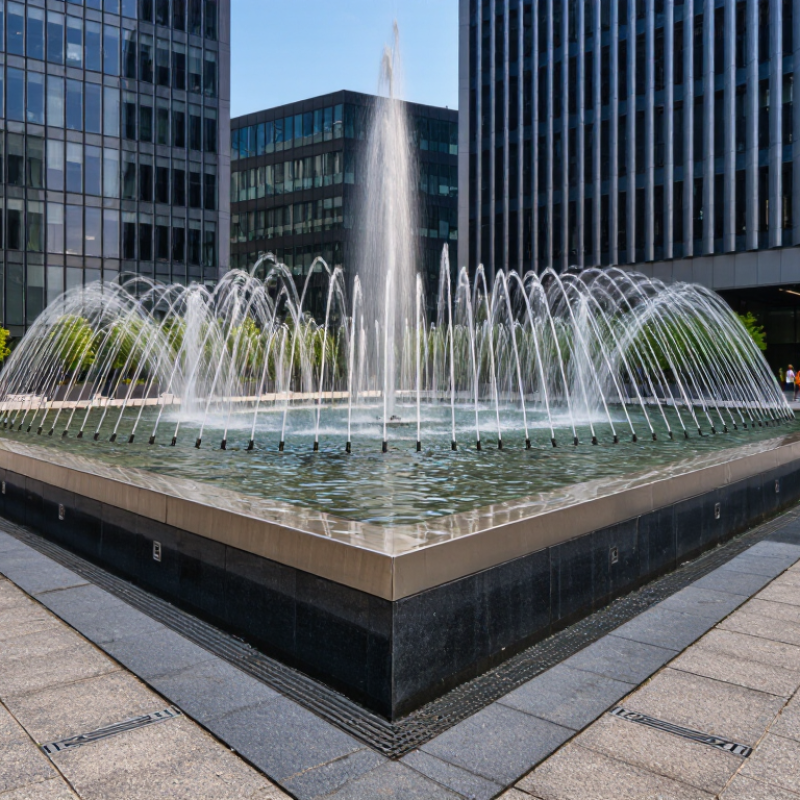
Why Choose Architectural Fountain Design for Your Project?

Classify Fountain Types by Site Goals, Visitor Flow, and Visual Scale

Why Choose Architectural Fountain Design for Your Project?

Classify Fountain Types by Site Goals, Visitor Flow, and Visual Scale

Architectural fountain design should begin with the site’s purpose, not decoration. A civic plaza may need a calm centerpiece for gathering and orientation. A hotel entrance may require a narrow, linear feature that guides arrivals. A family destination could benefit from interactive jets, but safety, drainage, and supervision must shape the layout.

UN DESA reports that 55% of people lived in urban areas in 2018, rising to 68% by 2050. Public spaces will face heavier visitor pressure. Flow matters.

Tips:

Map entrances, pauses, queues, and sightlines before selecting the fountain type. Keep moving water away from narrow paths. Use lower profiles where people need clear views. Match the water surface to the site’s visual scale. A small courtyard may need a quiet basin, not a monumental cascade. A wide plaza can absorb stronger height and movement. Details matter.

The World Health Organization’s 2016 review connects quality green spaces with physical activity, social contact, and mental wellbeing. Water cannot create these benefits alone, but it can strengthen sensory character and comfort.

Recirculating systems also deserve attention. The U.S. Environmental Protection Agency states that outdoor water use exceeds 9 billion gallons daily in the United States. Efficient pumps, leak monitoring, and smart controls are practical necessities.

I have seen visually impressive fountains feel misplaced because sound overwhelmed nearby seating. A fountain can still fail. Design review should test noise, maintenance access, seasonal use, and visitor behavior before construction.

Engineer Closed-Loop Circulation to Reduce Water Makeup by 30–50% (EPA)

Why Choose Architectural Fountain Design for Your Project?

Architectural fountain design does more than shape water; it manages flow, sound, energy, and long-term maintenance. A properly engineered closed-loop system can reduce water makeup by 30–50% in suitable applications. EPA water-efficiency guidance supports reuse strategies that limit unnecessary discharge and refilling. The actual saving depends on climate, splash loss, filtration, and operating hours.

Tips: Specify a balanced collection basin beneath the fountain. Select pumps for measured flow, not maximum capacity. Add level sensors and automatic makeup controls. Use filtration that matches debris levels and public exposure. Keep access panels clear for routine inspection. Small leaks matter.

In practice, performance begins with accurate water-loss calculations. Designers should measure evaporation, wind drift, cleaning losses, and overflow separately. A shaded basin may reduce evaporation, but surrounding trees can increase filter loading. That trade-off is easy to miss. I have seen attractive installations lose efficiency because the pump was oversized. Lowering speed later helped, but the original design had already increased energy use. Record makeup water monthly and compare it with runtime data. This creates reliable evidence instead of relying on visual impressions. A closed loop is not maintenance-free. It is a controlled system that rewards careful engineering and honest review.

Use Variable-Speed Pumps to Cut Pump Energy by Up to 50% (DOE)

Architectural fountains often run for long hours, so pump choice can shape both operating costs and the water display. Variable-speed pumps adjust flow to match changing conditions instead of running constantly at full speed. DOE guidance indicates that properly applied variable-speed controls can reduce pump energy use by up to 50%. The actual savings depend on the system.

For example, a fountain may need strong flow during daytime hours but less at night. A speed controller can lower pump output during quieter periods while preserving the intended water pattern. Lower speed can also reduce turbulence and mechanical stress. Small changes matter.

Designers should coordinate pump selection with nozzle pressure, pipe diameter, lift height, and filtration needs. Reducing speed too far may distort a jet or leave water poorly circulated. That is not the whole story. A site assessment and measured operating data help set realistic targets. The DOE figure is a potential, not a guarantee, and every fountain behaves differently. Builders should test several operating settings before finalizing schedules, then check energy use and visual quality after installation. A slightly imperfect first adjustment is normal; careful monitoring often reveals where the design can improve.

Specify 50,000-Hour LEDs and DMX Controls for Efficient Night Displays

Architectural fountain design should make the water, lighting, and surrounding space feel connected. For night displays, specify LED fixtures rated for 50,000 hours and DMX controls that let operators adjust brightness, color, and timing by zone. A narrow cascade might use a cool, steady wash, while jets near a plaza edge shift gently through warmer tones. Keep the effect legible, not theatrical for its own sake.

A long-rated LED can reduce replacement frequency, but 50,000 hours is not a guarantee of maintenance-free service. Heat, moisture, driver quality, and operating conditions all affect useful life. Ask for documented ratings and plan access to fixtures before the basin and stonework are finalized. Small details matter. A sealed access hatch can save hours when a light needs attention.

DMX programming can coordinate lighting changes with pump sequences, creating distinct scenes for quiet evenings and busier events. Use dimming schedules to limit output when full brightness is unnecessary, and keep manual controls simple for staff. Test scenes on site after dark; water reflects differently than a drawing suggests. One honest caveat: complex effects can become harder to maintain than expected. Fewer, well-planned cues may serve the project better.

Verify ADA’s 36-Inch Clear Route and GFCI Protection Requirements

Why Choose Architectural Fountain Design for Your Project?

A fountain should invite people in, not narrow the path around it. When planning an accessible route, use 36 inches of clear width as a baseline under ADA standards, then confirm applicable exceptions and local requirements. Measure the usable space, not just the gap shown on a drawing. A projecting basin edge, planter, or maintenance panel can quietly reduce that width. Small details matter.

Electrical safety needs equal attention. ADA standards address accessibility; GFCI protection is generally governed by electrical codes and project requirements. Have a qualified electrical professional specify suitable protection for pumps and nearby equipment, considering wet locations, wiring, and access for maintenance. A GFCI reduces shock risk, but it does not make poor installation safe. Plans can look complete and still miss a service outlet or a realistic cable route.

Tips: Mark the 36-inch route on site before fixing the fountain footprint. Check GFCI locations and equipment details with the electrical professional and local code officials. Then walk the route. A tape measure catches some problems; a real walkthrough catches others.

FAQS

Why specify LED fixtures rated for 50,000 hours?

A longer rating may reduce replacements. It does not promise maintenance-free service. Heat, moisture, and driver quality still matter.

How should fountain lighting be planned?

Match light to the water and surrounding space. A narrow cascade might use a cool, steady wash, while nearby jets shift gently to warmer tones. Keep it readable.

What can DMX controls manage?

They can adjust brightness, color, and timing by zone. They can also coordinate lighting with pump sequences for different evening scenes.

How can lighting be easier to maintain?

Plan fixture access before finalizing the basin and stonework. A sealed access hatch can save time. Small details matter.

Do complex lighting scenes always improve a display?

Not necessarily. Too many effects can be harder to maintain than expected. Fewer cues may work better, though it is easy to underestimate what staff will need.

How much clear width should an accessible route have?

Use 36 inches as a baseline, then check applicable standards and local requirements. Measure usable space, including around basin edges, planters, and maintenance panels.

Why check the route on site?

Drawings may miss a projecting edge or panel. Mark the route with tape, then walk it. Test after dark.

What should be considered for electrical protection?

Ask a qualified electrical professional to specify suitable GFCI protection for pumps and nearby equipment. Account for wet locations, wiring, and maintenance access. It reduces shock risk, but cannot fix poor installation.

Conclusion

Architectural Fountain Design helps transform a project’s goals into a water feature that fits its setting, scale, and visitor experience. Selecting a fountain type should account for the site’s purpose, how people move through the space, and the visual impact desired. Thoughtful planning also considers practical needs, from circulation and lighting to safe, accessible routes.

A closed-loop circulation system can reduce the need for makeup water by 30–50%, while variable-speed pumps can cut pump energy use by up to 50%. Long-life, 50,000-hour LED fixtures paired with DMX controls support efficient, adaptable night displays. For public spaces, the design should also provide a 36-inch clear route and include appropriate GFCI protection. Together, these choices can make a fountain more efficient, engaging, and suitable for its surroundings.

Evelyn

Evelyn

Evelyn is a professional marketing specialist with a deep understanding of the company’s products and the needs of the customers they serve. Through ongoing research and close collaboration with colleagues across the business, Evelyn turns product knowledge into clear, practical information that......