
Custom Sculptural Fountains combine water movement, architectural form, and artistic expression in one designed installation. Unlike standard fountains, they are developed for a specific site, purpose, and visual identity. Their shapes may resemble folded metal, carved stone, flowing glass, or abstract natural forms. Water can fall, sheet, mist, or gently circulate through hidden channels.
A reliable design begins with the site. Professionals study available space, sunlight, drainage, wind exposure, viewing angles, and maintenance access. They also consider pump capacity, filtration, lighting, surface finishes, and long-term material performance. A fountain may look simple from the outside. Inside, however, precise engineering controls water levels, pressure, sound, and energy use. That detail matters.
The best results connect artistic intention with practical experience. For example, a polished surface may create beautiful reflections, but it can reveal water spots and require frequent cleaning. A narrow water stream may appear elegant, yet wind can easily disturb it. These compromises deserve honest discussion before fabrication begins. No design is perfect. Even experienced teams may revise the basin depth, nozzle placement, or lighting after testing a physical model.
Understanding what a custom sculptural fountain involves helps property owners make informed decisions. It is not merely a decorative object with moving water. It is a coordinated system involving sculpture, hydraulics, electrical planning, safety, installation, and ongoing care. When these elements work together, the fountain can become a memorable landmark rather than an expensive visual distraction.
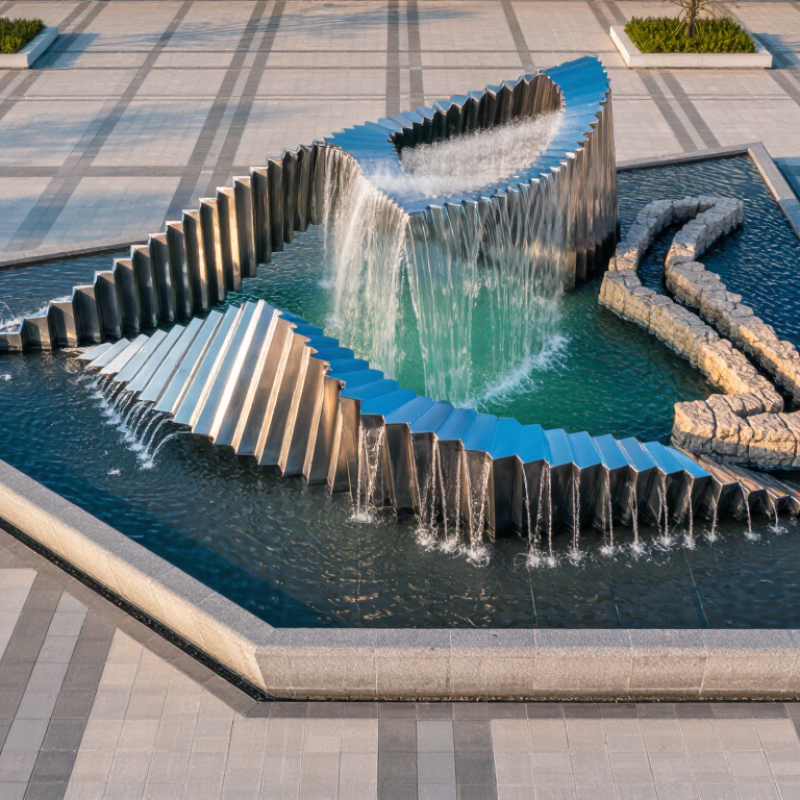
A custom sculptural fountain is a water feature designed for one specific site, purpose, and visual story. It combines sculpture, hydraulic engineering, lighting, and landscape planning. Unlike a standard basin, its form may respond to a building entrance, courtyard axis, or irregular garden edge. Designers often develop the artwork, water flow, pump capacity, drainage, and maintenance access together.
Core characteristics include original form, controlled circulation, material durability, and sensory movement. Stone, metal, glass, or concrete can shape the structure. Narrow jets may create a quiet veil, while stepped channels produce a stronger sound. The system should recirculate water through filtration and include safe overflow routes. The U.S. Environmental Protection Agency’s WaterSense program reports that outdoor water use can exceed 30% of household consumption. That figure makes leak control and evaporation planning practical design concerns, not decorative details.
Scale matters greatly. A small courtyard fountain may need hidden service panels and low-noise pumps. A civic installation requires stronger structural calculations, public-safety planning, and easier cleaning access. The 2024 United Nations World Water Development Report notes that agriculture uses roughly 70% of global freshwater withdrawals. A fountain does not solve water scarcity. It should, however, avoid careless replenishment and unnecessary waste.
A polished appearance can hide weak engineering. That is the uncomfortable part. Custom work also needs routine inspection, because mineral deposits, clogged filters, and uneven water levels can quickly change the intended effect.
A custom sculptural fountain combines functional water engineering with a one-of-a-kind artistic form. It must look compelling when dry and perform reliably when operating. Every project begins with the site. Designers study sunlight, viewing angles, wind, drainage, available utilities, and pedestrian movement. These details shape the fountain’s scale, sound, and water pattern.
Concept development usually starts with sketches, material samples, and small three-dimensional models. A useful concept considers how people will experience the sculpture from different distances. Metal may create crisp reflections, while stone can add weight and visual warmth. The team then develops technical drawings, structural calculations, pump specifications, and filtration plans. Water pressure must remain balanced across every nozzle. Small errors become obvious quickly.
In practice, the first idea is rarely perfect. One early model may appear elegant but create unwanted splashing near a walkway. Another may have beautiful curves but offer poor access for maintenance. Designers should accept these weaknesses and revise them before fabrication. Full-scale templates, sample finishes, and water-flow tests reveal problems that computer images often hide. The final sculpture is cut, formed, assembled, sealed, and tested on site. Careful leveling and drainage checks help protect the artwork, surrounding surfaces, and visitors for years.
A custom sculptural fountain combines artistic form with demanding water engineering. Stone, cast metal, glass, and reinforced concrete each behave differently outdoors. Porous stone may absorb water and develop staining. Metal needs protection against corrosion, especially near treated water. Concrete requires careful curing to limit cracking and surface leakage. Material joints should allow movement during temperature changes. Small details matter.
The water system usually includes a collection basin, pump, filter, pipework, valves, and adjustable nozzles. The pump must match the required flow, pressure, lifting height, and operating schedule. Undersized equipment creates weak streams. Oversized equipment wastes energy and may produce excessive splash. A balanced design also controls evaporation, overflow, drainage, and make-up water. Access panels are essential for inspection and cleaning.
Safety requires more than attractive water movement. Electrical components need suitable protection from moisture. Wet walking surfaces should include effective drainage and slip-resistant finishes. Filtration reduces debris, but it cannot replace regular maintenance. Water treatment must suit the materials and local environmental requirements. Even well-engineered fountains may need adjustment after installation. Wind can distort the spray pattern. Pump noise may become noticeable at night. A design can look perfect on paper, yet real site conditions often reveal something overlooked.
A custom sculptural fountain combines water movement with a site-specific artwork. Its shape, scale, basin, and circulation system are designed for one location. In a hotel entrance, it can create a memorable arrival without blocking pedestrian flow. A low, wide form suits a public plaza, where visitors need clear sightlines and easy movement. In a garden, textured stone and gentle spillways can support a quieter atmosphere. Indoor installations often use controlled splash zones, concealed drainage, and softer pumps. These details matter more than decoration alone. Water can expose mistakes.
Commercial courtyards use sculptural fountains to organize space and soften traffic noise. Restaurants may place one near outdoor seating, but spray must stay away from tables and electrical fixtures. Healthcare campuses often prefer calm, predictable water patterns and accessible edges. Residential projects can use a smaller fountain as a focal point beside an entry path or pool terrace. Functional planning includes lighting, filtration, water treatment, winter protection, and safe maintenance access. Experienced designers study wind, sunlight, local climate, and material aging before fabrication. The first design is rarely perfect. A pump may sound louder than expected, or evening light may flatten the sculpture. Testing on site allows practical adjustments. Good fountains serve people, not just photographs.
| Common Setting | Typical Sculptural Form | Typical Overall Size | Primary Water System | Main Functional Use | Key Planning Considerations |
|---|---|---|---|---|---|
| Hotel and Resort Entrance | Vertical abstract sculpture, monolith, or cascading centerpiece | Approximately 2–6 m high; basin or footprint commonly 3–10 m wide | Recirculating basin with submersible or dry-pit pump | Creates a focal point, reinforces arrival experience, and masks background traffic noise | Provide visible access for maintenance, slip-resistant surrounding surfaces, and adequate clearance from vehicle routes |
| Corporate Plaza | Geometric panels, engraved stone forms, or architectural metal sculpture | Approximately 1.5–4 m high; footprint commonly 2–8 m wide | Closed-loop wet deck or shallow reflecting basin | Adds identity to a public-facing space and provides a visual gathering landmark | Coordinate structural loads, electrical service, pedestrian circulation, and water treatment requirements |
| Shopping Center Courtyard | Interactive centerpiece, sculptural column, or low bubbling installation | Approximately 0.8–3 m high; footprint commonly 2–7 m wide | Low-flow recirculating system with concealed nozzles | Improves ambience, encourages dwell time, and supports pedestrian orientation | Control splash, design for safe public interaction, and keep access panels outside primary walking paths |
| Museum or Cultural Venue | Concept-driven sculpture using stone, glass, ceramic, bronze, or stainless steel | Approximately 1–5 m high; footprint commonly 2–9 m wide | Controlled sheet-flow, weeping-wall, or recirculating basin system | Combines public art, sensory experience, and architectural storytelling | Specify durable finishes, manage glare and reflections, and integrate lighting without damaging the artwork |
| Public Park | Naturalistic stone composition, habitat-inspired sculpture, or broad cascade | Approximately 1–4 m high; footprint commonly 4–15 m wide | Open-looking feature with concealed recirculation and filtration | Provides visual interest, cooling perception, and a destination within the landscape | Plan for stormwater separation, vandal resistance, child safety, drainage, and seasonal shutdown |
| Residential Garden | Small urn, carved stone, abstract bowl, or wall-mounted feature | Approximately 0.4–1.8 m high; footprint commonly 0.8–4 m wide | Compact recirculating basin or reservoir hidden below the feature | Adds sound, movement, and a personalized visual accent to an outdoor living area | Confirm power and refill access, limit overspray, and select materials suited to local weather conditions |
| Healthcare Campus | Calm vertical panel, gentle cascade, or rounded natural form | Approximately 0.8–3 m high; footprint commonly 2–8 m wide | Quiet, low-splash recirculating system | Supports a calming environment and visually separates waiting or garden zones | Prioritize hygiene, quiet pump operation, accessible maintenance, and avoidance of standing water |
| Restaurant or Hospitality Terrace | Table-height vessel, linear water wall, or compact sculptural bowl | Approximately 0.5–2.2 m high; footprint commonly 1–6 m wide | Low-flow recirculating system with adjustable water output | Enhances atmosphere and provides gentle ambient sound without dominating conversation | Control sound levels, prevent splash near dining areas, and protect nearby electrical and flooring systems |
| Memorial or Civic Space | Inscribed stone, symbolic sculpture, or still reflecting pool with a central element | Approximately 1–4 m high; footprint commonly 3–12 m wide | Still or gently moving recirculating water system | Expresses remembrance, civic meaning, and a sense of permanence | Use weather-resistant materials, provide universal access, and design lighting and inscriptions for long-term legibility |
A custom sculptural fountain combines artistic form with pumps, pipework, lighting, and water treatment. Its appearance may seem permanent, but every component needs practical care. In field reviews, small leaks often reveal larger installation problems. Water hides problems.
Inspect pump seals, spray nozzles, drains, and electrical connections on a scheduled basis. Remove leaves, mineral deposits, and sediment before they restrict water flow. Test water quality regularly, especially in warm weather. Balanced treatment helps limit algae, odors, and surface damage. However, chemical levels should follow professional guidance and the equipment manufacturer’s instructions.
Safety requires more than a stable sculpture. Use slip-resistant surfaces around splash zones, secure access covers, and suitable ground-fault or residual-current protection. A qualified electrician should inspect wet-area wiring. Check sharp edges, loose stones, unusual vibration, and standing water after storms. Small leaks matter.
Long-term performance also depends on climate and material movement. Freeze-thaw cycles can crack concealed pipes, while salt and hard water may corrode fittings. Keep inspection records with dates, photographs, repairs, and water readings. These details help identify gradual changes before failure becomes expensive. No maintenance plan is perfect. Owners should review it after each season, because actual weather, visitor behavior, and cleaning demands may differ from the original assumptions.
It is a water feature created for one site, purpose, and visual story. It combines sculpture, hydraulics, lighting, and landscape planning. Its shape may follow an entrance, courtyard axis, or curved garden edge. It is not merely a decorative basin.
Stone, metal, glass, and reinforced concrete are common choices. Porous stone can absorb water and develop stains. Metal may corrode near treated water. Concrete needs careful curing to reduce cracks and leakage. Small joints matter.
A typical system includes a basin, pump, filter, pipes, valves, and adjustable nozzles. The pump must match flow, pressure, lifting height, and operating hours. Weak pumps create poor streams. Oversized pumps waste energy and increase splashing. The balance can be imperfect.
Recirculation, filtration, leak control, and planned overflow routes reduce unnecessary loss. Designers should consider evaporation and replacement water. Wind can carry fine spray beyond the basin. A fountain does not solve water scarcity. It should avoid careless replenishment.
Yes. A small courtyard fountain may need quiet pumps and hidden service panels. A civic installation needs stronger structural calculations and easier cleaning access. Public areas also require careful surface and access planning. Scale changes everything.
Splash zones should use slip-resistant surfaces and effective drainage. Access covers must remain secure and easy to inspect. Wet-area wiring needs suitable electrical protection. A qualified electrician should review these connections. Standing water needs attention.
Inspect pump seals, nozzles, drains, and electrical connections regularly. Remove leaves, sediment, and mineral deposits before flow decreases. Test water quality, especially during warm weather. Keep dated records, photographs, repairs, and water readings. Small leaks matter.
Freeze-thaw cycles may crack concealed pipes. Salt and hard water can damage fittings and surfaces. Nighttime operation may reveal unexpected pump noise. Seasonal reviews are necessary because real weather differs from design assumptions. The original plan may miss something.
Custom Sculptural Fountains are individually designed water features that combine artistic sculpture, architectural character, and carefully planned water movement. Unlike standard fountains, each piece is developed to reflect a specific space, theme, scale, and visual identity. The process typically begins with concept development, sketches, and proportion studies before advancing to material selection, structural planning, fabrication, and final installation. Designers must consider how the sculpture will interact with light, sound, surrounding architecture, and the movement of visitors.
Materials may include stone, metal, concrete, glass, or other durable finishes, supported by suitable foundations and internal engineering. Pumps, filters, reservoirs, pipes, lighting, and water-control systems work together to create reliable performance. Custom Sculptural Fountains can enhance public plazas, gardens, hotels, commercial properties, memorial spaces, and private landscapes while providing atmosphere, visual focus, and gentle sound. Long-term success depends on regular cleaning, water treatment, pump inspections, surface protection, electrical safety, and seasonal adjustments. Thoughtful maintenance and accessible system design help preserve both the fountain’s artistic qualities and its dependable operation.