
0%

Choosing Underground Fountain Equipment Vaults requires more than comparing dimensions and prices. The vault must protect pumps, filters, valves, control panels, and wiring beneath wet, demanding conditions. A well-selected enclosure keeps maintenance practical while reducing damage from groundwater, condensation, soil pressure, and accidental surface loads.

Begin with the fountain’s actual equipment layout. Measure pump clearances, pipe bends, cable routes, and the space needed for a technician to kneel or work safely. Small details matter. A narrow hatch can turn a simple filter replacement into a frustrating excavation. Consider waterproof construction, drainage, ventilation, corrosion resistance, structural strength, and secure access. Each feature should match the site, not merely appear impressive in a brochure.

These seven tips focus on decisions that affect performance over many seasons. They draw on installation experience, manufacturer specifications, and practical maintenance concerns. Water finds weakness. Poor drainage, poorly sealed penetrations, or undersized access points may remain unnoticed until the first heavy storm. Selecting Underground Fountain Equipment Vaults also means checking load ratings, compatible materials, service access, and installation requirements with qualified professionals. Local construction and electrical requirements deserve attention as well.

There is no perfect vault for every project. A compact model may save space but restrict future repairs. A larger unit may simplify servicing but require stronger foundations and better site planning. Measure twice. Review the equipment list again. Careful choices now can prevent muddy repairs, damaged components, and unnecessary replacement costs later.
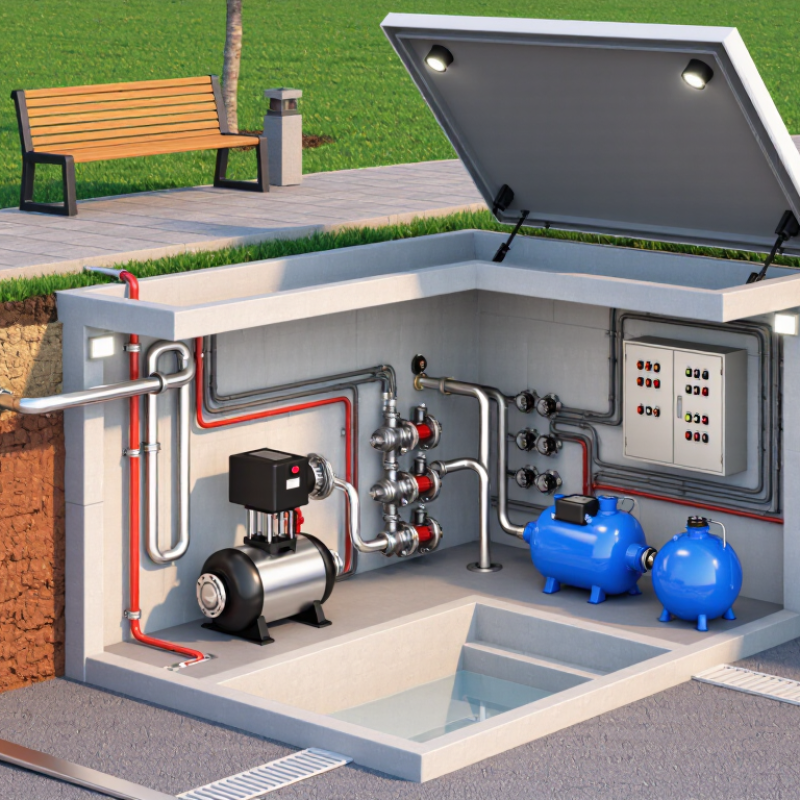
7 Tips for Choosing Underground Fountain Equipment Vaults

Define the Purpose and Requirements of the Fountain Equipment Vault

Before selecting an underground fountain equipment vault, define what the space must accomplish. Is it serving a small decorative basin or a large public water feature? The answer affects pump capacity, filtration, control systems, drainage, and service access. Measure the required equipment, then add working clearance around every component. Technicians need room to remove a pump without dismantling the vault wall. A tight layout may look efficient, but it often creates expensive maintenance problems.

Site conditions also deserve careful attention. Check the water table, soil stability, surface loads, and likely flood paths. A vault below a paved plaza may need stronger covers and reliable sump drainage. Ventilation helps control heat and moisture, especially near electrical controls. Use corrosion-resistant materials where constant humidity is expected. Electrical connections should be planned by qualified professionals and meet applicable local requirements. Keep noise in mind near hotels, homes, or quiet gardens.

During site reviews, I have found that drawings often miss hose routes and hand clearance. That is an avoidable mistake. Leave space for tools, lighting, and safe movement. Access matters. A removable cover may be practical, but only if lifting equipment and personnel can reach it. Requirements can change after installation, so reserve modest space for future upgrades. Perfect planning is rare. Honest inspection and written maintenance needs produce a more dependable vault.

Define the Purpose and Requirements of an Underground Fountain Equipment Vault

This planning chart ranks the main requirements that should be defined before selecting an underground fountain equipment vault. Access, drainage, ventilation, waterproofing, and maintenance space are practical design priorities; final dimensions must be confirmed against the equipment layout, local building codes, and site conditions.

Evaluate Vault Size, Layout, and Equipment Accessibility

Choosing an underground fountain equipment vault starts with the daily work around it. Measure pumps, filters, valves, control panels, and cable bends, not just their labels. A vault that fits today may fail after one upgrade. Leave clear service paths around heat-producing equipment. Water and electricity need disciplined separation. In field inspections, cramped corners often turn simple filter cleaning into an awkward, wet task. That detail matters.

Tip 1: Plan the layout around maintenance movements. A technician should reach isolation valves without removing another component. Keep removable panels aligned with lifting points. Place drains at the lowest practical area, with enough slope for rinse water. Mark pipe directions and cable routes inside the lid. Small labels help during night repairs. They also reduce guessing.

Tip 2: Check accessibility from above and below grade. Confirm that the opening clears tools, replacement motors, and a technician’s shoulders. Test the lid with gloves on. It sounds minor. It is not. Include ventilation, lighting provisions, safe standing space, and a dry storage corner for temporary covers. Review flood levels and groundwater pressure with a qualified engineer. I would not rely on a perfect drawing alone; site conditions shift, and my early layouts have sometimes missed a hinge swing or drain connection. Recheck the vault after installation, then photograph every access point for future crews.

7 Tips for Choosing Underground Fountain Equipment Vaults - Evaluate Vault Size, Layout, and Equipment Accessibility

Tip Evaluation Dimension Practical Recommendation Useful Data or Target What to Check Before Selection
1 Vault Size and Working Clearance Select a vault that accommodates the pump, filters, valves, control equipment, piping, and safe service routes rather than only the initial equipment footprint. Allow approximately 750–900 mm of clear working space in front of components that require routine servicing. Add space for pipe bends, unions, cable routing, and future replacement access. Measure the largest removable component, access opening, lifting path, and required technician standing area. Confirm that equipment can be removed without excavating the vault.
2 Internal Layout and Service Zones Separate wet hydraulic equipment from electrical controls and organize components in the order of water flow. A typical sequence is suction line, strainer or filter, pump, treatment equipment, discharge manifold, and return line. Keep electrical controls away from locations where leakage is most likely. Review a scaled plan showing pipe direction, valve handles, drain points, control panels, lighting, and unobstructed walkways. Avoid placing serviceable parts behind fixed pipework.
3 Equipment Accessibility Use a large, lockable cover or access hatch that supports safe entry, inspection, lifting, and replacement procedures. The clear opening should be larger than the largest component that may need removal. Provide lifting points or a rated lifting arrangement when pumps or motors cannot be safely handled by one person. Check hatch weight, gas-assisted opening features, anti-slip surfaces, drainage around the cover, emergency access requirements, and whether tools can be used comfortably inside the vault.
4 Structural Load Rating Match the vault and cover to the actual surface loading, including pedestrians, maintenance vehicles, or occasional traffic. Pedestrian areas generally require a different load classification from driveways or roadways. The final rating must be determined from the site location, traffic type, span, and applicable local standards. Confirm certified load documentation, cover deflection limits, installation depth, soil conditions, reinforcement details, and whether the finished paving system transfers loads correctly.
5 Waterproofing and Drainage Choose a watertight vault with a reliable method for removing groundwater, condensation, and accidental leaks. Provide a low-point drain or sump where permitted, with an appropriately sized pump, float control, check valve, and discharge route. Do not rely on an unprotected floor drain where groundwater pressure is present. Inspect wall joints, penetrations, pipe seals, sump access, pump redundancy needs, high-water alarms, and the effect of seasonal groundwater on the installation.
6 Ventilation and Operating Environment Control heat, humidity, and air quality to protect motors, controls, wiring, and service personnel. Use passive or mechanical ventilation based on vault size, heat generation, climate, and applicable confined-space requirements. Prevent moist air from condensing on electrical enclosures. Verify vent locations, weather protection, insect screening, corrosion resistance, fan controls, lighting, and whether entry is classified as a confined-space operation.
7 Piping, Electrical Safety, and Future Expansion Plan for isolation, testing, replacement, and possible capacity increases before finalizing the vault dimensions. Include isolation valves, unions or flanged connections, pressure gauges where needed, cable supports, grounding, protected conduit, and spare wall or panel capacity for future controls. Confirm voltage and current requirements, local electrical clearances, bonding and grounding provisions, emergency shutoff access, pipe support spacing, and maintenance isolation points.
Selection Note: Final vault dimensions, structural rating, electrical installation, ventilation, drainage, and confined-space provisions should be verified by qualified professionals against local building, plumbing, electrical, and site-safety requirements.

Compare Materials, Waterproofing, and Structural Durability

Choosing an underground fountain equipment vault requires more than comparing price and dimensions. Material selection affects service life, maintenance, and installation risk. Reinforced concrete offers excellent compression strength and stable performance beneath walkways. However, it can crack when soil movement, poor curing, or uneven backfill creates stress. Fiberglass and high-density polyethylene are lighter, corrosion-resistant options. They still need proper anchoring to resist buoyancy.

Waterproofing deserves close inspection. Look for continuous membranes, sealed joints, and gaskets designed for repeated wet conditions. A small gap around a pipe can admit surprising amounts of water. Internal drainage, a sump, and an accessible pump reduce damage after heavy rainfall. Ask for documented water-testing procedures, not only a verbal guarantee. A controlled flood test can reveal weak corners before pumps and controls are installed.

Structural durability depends on details people often overlook. Check wall thickness, access-cover loading, ventilation, lifting points, and space for safe maintenance. A technician should be able to remove a filter without standing in pooled water. In my field experience, cramped vaults create more maintenance problems than weak equipment. I once accepted a well-built enclosure with poor cable routing; the mistake slowed every later repair. That experience changed my checklist. Review soil conditions, groundwater levels, drainage paths, and local construction requirements with a qualified engineer. Stronger is not always better. Poorly matched materials can still fail.

Check Ventilation, Drainage, Safety, and Maintenance Features

7 Tips for Choosing Underground Fountain Equipment Vaults

Check Ventilation, Drainage, Safety, and Maintenance Features

An underground fountain vault should control heat, moisture, and restricted airflow. I have seen compact rooms become dangerously humid after only a few operating hours. Choose a vault with high and low ventilation openings, corrosion-resistant grilles, and enough airflow for installed equipment. Fans may help, but they require reliable controls and regular cleaning. Do not trust a beautifully sealed room without testing its air movement.

Drainage deserves equal attention. The floor should slope toward a reachable sump or drain, with a backup pump for heavy rain. Keep electrical components above the highest expected water level. A small leak can become expensive when nobody notices it overnight. Test the drainage system under realistic conditions, not only with a bucket. That shortcut can hide poor discharge capacity.

Safety features must support real maintenance work. Provide non-slip flooring, secure ladders, guarded moving parts, and bright, low-glare lighting. A lockable access cover should resist accidental opening and remain easy for trained workers to remove. Electrical isolation, moisture protection, and clear labeling are essential. Follow applicable local requirements and involve qualified professionals for electrical installation. Maintenance access is often underestimated. Leave space around pumps, filters, valves, and control panels. Record inspection dates and replace damaged seals promptly. I once favored a smaller vault to save space, then regretted the cramped repairs. Bigger is not always better, but usable access matters.

Review Installation Costs, Regulations, and Long-Term Reliability

Choosing an underground fountain equipment vault begins with site evidence, not attractive drawings.

Measure pump capacity, pipe routes, groundwater levels, and maintenance clearance before requesting quotes. Installation costs can rise when excavation meets rock, buried utilities, or unstable soil. Ask contractors to separate excavation, concrete, drainage, electrical work, ventilation, and equipment installation. This exposes hidden allowances. Request several site-based estimates. The cheapest quote may age badly.

Confirm local building, electrical, plumbing, drainage, and accessibility requirements before construction.

Requirements can vary by site and municipality. Have qualified professionals verify permits, protective devices, emergency access, and water discharge methods. A vault needs reliable drainage, especially where groundwater or heavy rain is common. Include a sump pump, high-water alarm, and safe cable routing. Regulations are not paperwork alone. They shape daily safety.

Long-term reliability depends on details people often overlook.

Select corrosion-resistant materials, sealed penetrations, washable surfaces, and doors wide enough for pump removal. Check load ratings for covers and surrounding paving. Leave working space around valves and controls. Field inspections often find cramped access and poor ventilation after installation. That mistake is expensive.

I sometimes undervalue inspection records, yet monthly checks can reveal humidity, vibration, or leaking seals early. Record pump readings, drainage tests, and replacement dates. Compare lifetime maintenance costs, not only the initial installation price.

FAQS

How much space should an underground equipment vault provide?

Measure pumps, filters, valves, control panels, and cable bends. Leave clear paths for cleaning and repairs. A tight vault becomes difficult after one upgrade.

How should the vault layout support maintenance?

Place isolation valves where technicians can reach them directly. Align removable panels with lifting points. Keep drains at the lowest practical area. Small labels reduce guessing.

What access opening size is practical?

The opening should clear tools, replacement motors, and a technician’s shoulders. Test the lid while wearing gloves. It sounds minor. It is not.

How should water and electricity be arranged?

Maintain disciplined separation between water paths and electrical equipment. Provide ventilation, lighting provisions, and dry standing space. Mark cable routes inside the lid.

Which vault materials are suitable for underground conditions?

Reinforced concrete handles compression well beneath walkways. Fiberglass and high-density polyethylene reduce weight and corrosion concerns. Each material still needs proper soil and installation planning.

What waterproofing details deserve close inspection?

Look for continuous membranes, sealed joints, and durable gaskets. Inspect every pipe penetration carefully. A tiny gap can admit considerable water.

How can flooding risk be reduced?

Include internal drainage, a sump, and an accessible drainage pump. Review groundwater pressure and flood levels with a qualified engineer. A controlled flood test can expose weak corners.

What structural details are often overlooked?

Check wall thickness, cover loading, ventilation, lifting points, and safe maintenance space. The strongest enclosure can still fail with poor cable routing. I learned that late.

Conclusion

Choosing the right Underground Fountain Equipment Vaults begins with clearly defining the fountain’s purpose, operating conditions, and equipment needs. Consider the vault’s dimensions, internal layout, and access points to ensure pumps, controls, filters, and other components can be reached safely for inspection or replacement. A well-planned design should provide enough working space without creating unnecessary construction costs.

Material selection is equally important. Compare structural strength, waterproofing performance, corrosion resistance, and expected service life before making a decision. Effective ventilation can help control heat and humidity, while reliable drainage reduces the risk of standing water and equipment damage. Safety features, secure covers, lighting, and convenient maintenance access should also be included. Finally, review installation expenses, site requirements, applicable regulations, and long-term reliability. Evaluating these factors together will help create a practical, durable, and cost-effective vault that supports dependable fountain performance over time.

Charlotte

Charlotte

Charlotte is a professional marketing specialist with a deep understanding of the company’s products, their features, and the practical needs they are designed to meet. She combines product knowledge with a clear, customer-focused approach, helping readers understand how the company’s offerings can......