
Finding a Fountain Mechanical Engineering supplier requires more than comparing prices or browsing polished catalogs. A fountain combines pumps, pipework, filtration, controls, lighting, and water treatment in a wet, exposed setting. If pump head or nozzle flow is poorly matched, jets may look weak, equipment may become noisy, and maintenance can rise. Small details matter.
The U.S. Department of Energy and Hydraulic Institute’s 2006 report, Improving Pumping System Performance: A Sourcebook for Industry, identifies pumping systems as accounting for nearly 20% of global electricity demand. That figure covers pumping broadly, not fountain installations. Still, it makes lifecycle efficiency worth checking alongside purchase cost. Ask potential suppliers for pump curves, material specifications, control-system details, installation references, and commissioning records. Confirm that their proposed design suits your site’s water quality, climate, operating hours, and maintenance capacity. A detailed drawing helps reveal whether pumps, filters, valves, and access points work together. Request clear warranty terms and an itemized list of recommended spare parts, too. These checks cannot guarantee trouble-free operation. They can expose gaps before equipment arrives. A supplier’s brochure is not proof of performance; independent references and project-specific calculations matter more. Compare proposals against the same operating requirements, not just headline flow rates. And leave room for review: fountain designs often change after site conditions become clear.
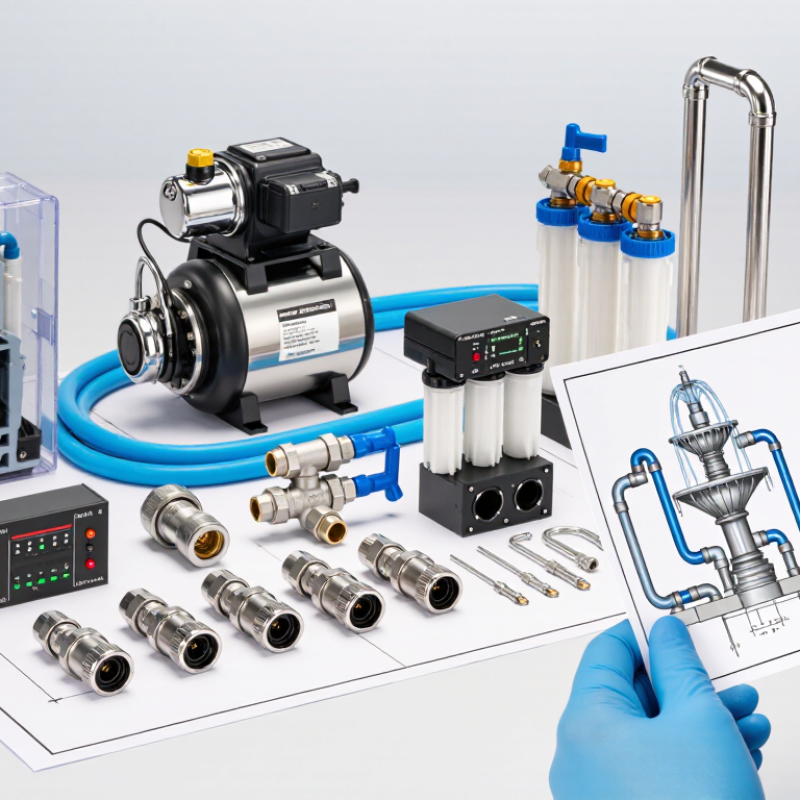
How to Find Fountain Mechanical Engineering Suppliers?
Define the Mechanical Engineering Requirements for the Fountain Project
Before contacting suppliers, describe how the fountain should perform. Specify the display height, approximate flow rate, operating hours, and whether jets must run together. Include basin dimensions, available power, water source, and drainage. A 3-meter jet needs different pump pressure from a low bubbler. Record site conditions, including wind exposure, debris, freezing temperatures, and nearby foot traffic. Small details matter.
Tips: Request a preliminary pump and pipe schedule, along with a simple hydraulic layout. Ask who calculates pressure loss and checks the required flow. Keep assumptions visible.
Set practical requirements for materials, controls, and maintenance access. For example, state whether components need corrosion-resistant finishes and whether pumps must be reachable without draining the basin. Define how the system will be tested, such as checking flow at each nozzle and observing operation for a set period. Some requirements may change after a site survey; note that rather than pretending every measurement is final. Clear drawings and acceptance criteria help suppliers quote comparable equipment and reduce costly guesswork.
Fountain suppliers fall into several useful groups: pump and hydraulic designers, nozzle and valve specialists, filtration providers, control-system integrators, and fabricators of wet-side components. The U.S. Department of Energy’s Improving Pumping System Performance sourcebook reports that pumping systems consume nearly 20% of global electricity demand. That figure covers pumping broadly, not fountains specifically, but it shows why pump efficiency and correct sizing deserve attention. Ask suppliers to document flow, total head, operating range, and expected maintenance needs.
Industry specialty matters as much as supplier type. A pump seller may not be equipped to model changing water patterns or balance several branches. Nozzle specialists should explain spray height, wind sensitivity, and clogging risks. Filtration suppliers should match equipment to debris load and water turnover. For outdoor installations, check material compatibility, drainage, vibration, and access to valves beneath grates. Request pump curves, layout drawings, and commissioning procedures. Paper specifications can still miss site conditions.
Tips: Share the basin dimensions, water depth, desired effect, and operating hours before requesting a proposal. Ask who performs startup testing and adjusts flow on site. Compare lifecycle service requirements, not just purchase price. If a supplier cannot explain its assumptions, pause. That gap is easy to overlook.
Trade directories are a practical starting point, not a final endorsement. Search for firms with fountain, water-feature, or hydraulic engineering experience, then check whether they handle mechanical design, equipment selection, and installation support. Look beyond broad categories. A useful listing should mention pump sizing, filtration, piping, controls, or commissioning. Details matter. Compare several suppliers and note gaps in their stated capabilities.
Industry networks can help you find specialists who rarely advertise widely. Ask landscape architects, aquatic contractors, facility managers, or engineers who have worked on similar projects. Describe your site conditions clearly, including basin dimensions, water flow, local climate, and maintenance needs. Their recommendations are more useful when they explain why a supplier performed well. A familiar name alone is not enough.
Project references show how a supplier works under real conditions. Request examples involving similar fountain scale, operating hours, and environmental exposure. Ask for redacted drawings or equipment schedules, where available, and speak with a past client about communication, delays, and aftercare. A polished case study can leave out the awkward parts. Ask what changed during construction and how problems were handled. No reference replaces a technical review, but several consistent accounts can help you judge reliability.
Choosing a fountain mechanical engineering supplier means checking more than polished drawings. Ask which systems the team has designed, such as pump assemblies, filtration lines, or control panels. Look for engineers who can explain material choices, flow requirements, and maintenance access in plain language. Ask for evidence. A sample calculation or inspection record can reveal more than a broad capability statement.
Review certifications relevant to the supplier’s work, and confirm their scope, issuing body, and current validity. Certificates expire. They also do not prove that every project is well managed. Request quality procedures, calibration records, and examples of how design changes are documented. If the supplier proposes stainless steel components, for example, ask how material grades are traced from purchase records to final inspection. This practical detail helps test whether written procedures match actual work.
Service coverage matters after installation, too. Confirm who handles commissioning, troubleshooting, spare parts, and scheduled maintenance, and whether support is available near the site. Ask for response-time commitments in writing, then check references from projects with similar operating conditions. A tidy service map can still hide gaps during holidays or urgent breakdowns. Discuss those scenarios directly. Compare suppliers using the same questions, but leave room for judgment: a smaller team may offer close technical attention, yet have limited backup capacity.
Compare proposals on the same operating brief. Require each supplier to state flow rate, total head, nozzle arrangement, pipe materials, control logic, and commissioning scope. A low price may omit access panels, filtration, or winterization details. Those omissions matter when technicians open a wet, cramped pump room. Request a line-item schedule, delivery milestones, warranty terms, and a clear list of exclusions. I would still leave room for judgment; a spreadsheet cannot reveal every site constraint.
Check whether the supplier has delivered fountains with similar dimensions, water features, and duty cycles. Ask for two or three client references, then discuss startup problems, spare-part availability, and response times. The U.S. Department of Energy’s Improving Pumping System Performance sourcebook reports that pumping systems use nearly 20% of global electricity demand. It also notes that pumps can account for 25–50% of energy use in some industrial facilities. Ask suppliers to show estimated energy use at your expected operating points, not only at peak flow. Compare lifecycle costs alongside purchase price. Estimates can be imperfect.
Tips: Request a sample maintenance plan and a written performance test. Confirm who attends commissioning, and ask references about actual service delays.
| Evaluation Dimension | What to Compare in Proposals | Evidence to Request and Verify | Practical Selection Check |
|---|---|---|---|
| Project scope and interfaces | Confirm whether design, hydraulic calculations, pump selection, pipework, filtration, controls, installation, commissioning, and operator training are included or excluded. | Request a scope matrix, design responsibility schedule, exclusions list, and interface plan covering electrical, civil, architectural, and controls work. | Prefer a proposal that clearly assigns every system and interface to a responsible party; resolve exclusions before comparing prices. |
| Hydraulic design and performance | Compare design flow, total dynamic head, operating points, water-feature effects, pipe sizes, filtration requirements, and stated performance tolerances. | Ask for pump curves, calculation assumptions, system diagrams, and the method for testing flow and pressure during commissioning. | Check that the proposed duty point is supported by the selected pump curve and that the design accounts for actual elevation and pipe losses. |
| Equipment suitability | Review pump and motor efficiency, materials, seals, corrosion resistance, service access, noise expectations, and availability of replacement parts. | Request manufacturer-neutral equipment schedules, technical datasheets, material specifications, warranty terms, and recommended spares lists. | Confirm that wetted materials suit the water chemistry and operating environment; do not compare equipment on purchase price alone. |
| Energy and operating costs | Compare estimated electrical demand, duty hours, variable-speed control assumptions, maintenance intervals, and consumables over the expected operating period. | Request the calculation basis, motor and pump efficiency data, control sequence, and a clearly itemized operating-cost estimate. | Use the same operating hours, energy tariff, and design conditions for every proposal so lifecycle costs can be compared consistently. |
| Water treatment and maintenance | Check filtration approach, water-quality monitoring, chemical dosing (if applicable), backwash or cleaning provisions, access, and routine service requirements. | Ask for a process description, maintenance schedule, consumables list, and written confirmation of responsibilities for water-quality compliance. | Verify that treatment provisions match the intended use of the fountain and applicable local public-health and environmental requirements. |
| Controls and electrical coordination | Compare control-panel scope, operating modes, interlocks, alarms, remote monitoring, emergency shutdown, and coordination with the site electrical design. | Request a control narrative, preliminary input/output list, panel documentation, and applicable electrical and enclosure specifications. | Confirm that control interfaces, power requirements, and responsibility for field wiring are explicitly defined. |
| Safety and compliance | Review the proposed approach to machinery risks, electrical safety, safe access, lockout, and relevant local codes and permits. | Request a risk assessment, compliance statement, inspection records, and certificates that apply to the specific equipment and jurisdiction. | Check that stated standards and certifications are relevant to the supplied work; verify certificates with the issuing body when needed. |
| Schedule and delivery plan | Compare design-submittal dates, approval periods, equipment lead times, installation sequence, testing, commissioning, and schedule assumptions. | Request a project schedule showing dependencies, required client decisions, long-lead items, and planned site resources. | Look for realistic milestones and clear treatment of delays caused by approvals, site access, or changes in project scope. |
| Price and commercial terms | Compare itemized equipment, engineering, installation, testing, freight, taxes, provisional sums, exclusions, payment milestones, and change rates. | Request a priced bill of quantities or cost breakdown, validity period, warranty conditions, and written clarification of assumptions. | Normalize the proposals to the same scope and currency; investigate unusually low allowances or missing cost categories. |
| References and completed work | Seek experience with comparable fountain scale, hydraulic complexity, operating conditions, and commissioning requirements. | Request at least two relevant client references, project descriptions, completion dates, and permission to discuss performance and aftercare. | Contact references directly and ask about schedule reliability, workmanship, response to defects, documentation, and ongoing support. |
| Quality assurance and documentation | Compare inspection and test plans, equipment traceability, drawing control, installation checks, and handover documentation. | Request sample inspection records, commissioning forms, as-built drawing requirements, operating manuals, and quality-management credentials where relevant. | Ensure the contract identifies the documents and test results required before practical completion and final payment. |
| After-sales support and warranty | Review warranty duration and coverage, response process, service availability, spare-parts support, and exclusions for wear or water chemistry. | Ask for written warranty terms, service contact procedures, escalation routes, and parts lead-time information. | Compare the actual remedy and response commitments, not just the stated warranty period. |
Comparison note: The checks above are general procurement guidance. Applicable codes, permits, water-quality requirements, and technical acceptance criteria depend on the project location and intended use. Obtain and verify project-specific evidence before appointment.
Common specialists include pump designers, nozzle and valve providers, filtration suppliers, control integrators, and wet-side fabricators. One supplier may not cover every need.
Ask for flow, total head, operating range, and expected maintenance needs. Request the pump curve, too. Sizing assumptions matter.
Ask nozzle specialists about spray height, wind sensitivity, and clogging risks. Filtration providers should match equipment to debris levels and water turnover. Small details matter.
Provide basin dimensions, water depth, desired water effect, and operating hours. Include local climate and maintenance needs. Missing details can skew a proposal.
Trade directories offer a starting point. Look for experience with pump sizing, piping, filtration, controls, and commissioning. A listing is not an endorsement.
Talk with landscape architects, aquatic contractors, facility managers, or engineers who know similar projects. Ask why a supplier performed well. A familiar name alone proves little.
Seek projects with similar scale, operating hours, and weather exposure. Ask past clients about communication, delays, and aftercare. Ask what changed during construction.
Compare lifecycle service needs, not just purchase prices. Confirm who tests the system and adjusts flow on site. Paper drawings can miss real conditions. I may trust them too much.
Finding the right Fountain Mechanical Engineering supplier begins with clearly defining the project’s requirements. Outline the fountain’s design, operating conditions, performance goals, installation environment, schedule, and expected maintenance needs. Then identify the supplier types best suited to the work, such as firms specializing in hydraulic systems, mechanical components, controls, or integrated fountain engineering.
Build a shortlist through trade directories, professional networks, and references from comparable projects. Assess each supplier’s technical capabilities, relevant certifications, service coverage, and ability to support the project through installation and ongoing maintenance. Compare proposals carefully, checking that their scope, timelines, and costs address the same requirements. Finally, verify references and past project experience before selecting a supplier whose expertise, communication, and support align with the fountain’s needs.