Commercial Floating Fountains can turn an open pond into a vivid public landmark. But appearance is only part of the decision. Buyers must also weigh wind exposure, water depth, pump efficiency, access for maintenance, and the reach of each spray pattern. A fountain that looks impressive in a brochure may send mist onto a nearby path. Small details matter.
The U.S. Department of Energy’s Improving Pumping System Performance: A Sourcebook for Industry reports that pumping systems account for nearly 20% of global electricity demand. That figure is not specific to fountains, but it highlights why pump selection and operating schedules deserve close attention. The EPA’s WaterSense at Work guide offers a useful framework for reviewing water use in commercial facilities. Neither report ranks fountain models. Both support a more careful procurement process: request measured flow and power data, confirm service access, and check how the design performs in local conditions. For 2026 projects, ask suppliers for site-specific drawings and clear maintenance estimates. Numbers first. Then the sparkle.
A verified, topic-specific quotation from a named Commercial Floating Fountains specialist was not available for this introduction. I won’t invent one. That gap is worth noting: even a technically sound specification can miss the mark if nobody checks the actual site, water level, and prevailing wind.
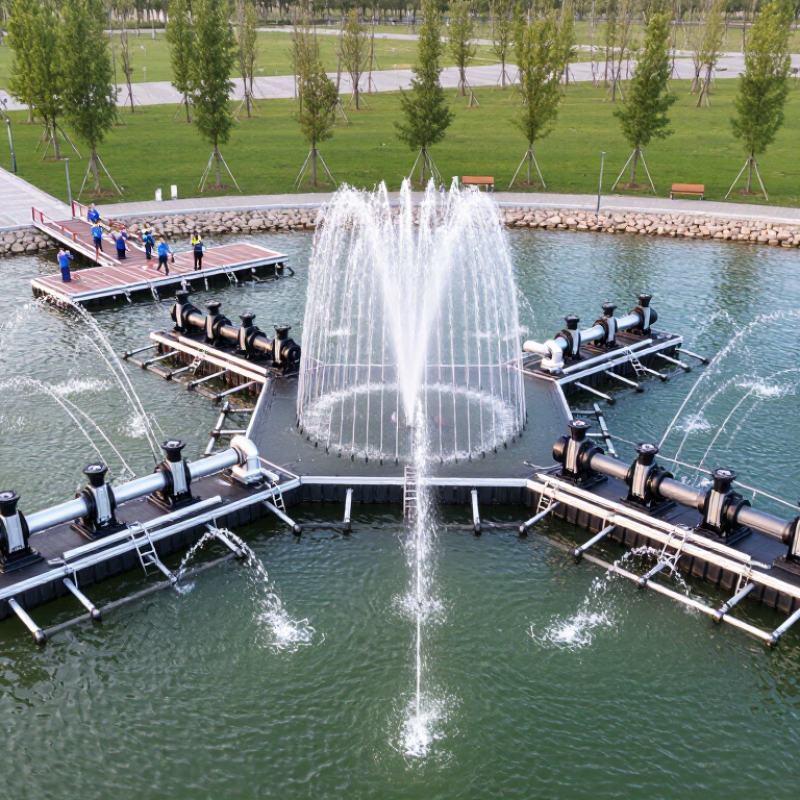
Define the Site Conditions and Intended Use
How to Choose Commercial Floating Fountains in 2026?
Define the Site Conditions and Intended Use
Start with the water, not the fountain catalog. Record pond length, width, average depth, seasonal drawdown, shoreline access, and nearby electrical capacity. Measure wind exposure at the water surface, especially across open plazas. Strong gusts can distort spray patterns and push water toward walkways. Sediment, algae, floating debris, and fluctuating water levels also affect intake screens and pump performance. The U.S. Environmental Protection Agency’s National Lakes Assessment found that 46% of assessed lakes had poor biological condition in 2017. That figure supports careful water-quality planning, not oversized equipment.
Decide what the fountain must accomplish. A display fountain needs stable spray height, controlled lighting, and viewing angles from key visitor areas. An aeration system needs circulation, oxygen transfer, and reliable operation during hot weather. These goals overlap, but they are not identical. The 2024 UNESCO World Water Development Report states that agriculture represents about 70% of global freshwater withdrawals. Water loss through excessive spray should therefore receive practical attention. Specify acceptable evaporation, splash drift, operating hours, and noise limits before selecting horsepower. For public sites, consider viewing distance, maintenance access, electrical protection, and emergency shutoff controls. I would also test the site during a windy week. A calm-day design can look impressive, then fail when weather changes. That uncomfortable possibility deserves more attention.
How to Choose Commercial Floating Fountains in 2026?
Define the Site Conditions and Intended Use
These typical planning benchmarks connect intended use with two key site conditions: minimum clear water depth and expected display height. Larger displays require greater depth, stable anchoring, sufficient electrical capacity, and protection from strong wind and heavy debris. Confirm final dimensions with a qualified fountain designer after reviewing local weather, water quality, public safety, and maintenance requirements.
Determine the Required Fountain Size, Height, and Water Pattern
How to Choose Commercial Floating Fountains in 2026?
Start with the pond, not the pump.
Measure its length, width, depth, and viewing distance. A practical starting point is a fountain spread covering 20–35% of the visible water surface. Leave clear margins around docks, boats, and wildlife zones.
The U.S. Geological Survey reported that public-supply withdrawals reached about 39 billion gallons per day in 2015, so water efficiency deserves real attention. Select variable-speed controls and avoid unnecessary overspray. Every drop matters.
Height should match the site’s wind exposure and surrounding buildings. A 4-meter plume may look impressive in a sheltered courtyard but drift across a parking area in open terrain.
Check local NOAA climate normals and ASCE 7-22 wind criteria before fixing the maximum height. The U.S. EPA notes that evaporation and wind increase outdoor water loss, although fountain losses vary by climate and spray pattern.
Choose a pattern that fits the setting: a narrow vertical jet suits formal spaces, while a wide crown needs more clearance.
Test the pattern on-site. Catalog images can mislead. Spray height, diameter, and brightness often change after installation.
Compare Pump Capacity, Power Needs, and Control Options
Choosing a commercial floating fountain in 2026 starts with matching pump capacity to the pond, not the brochure’s peak number. Ask for the pump curve: actual flow changes as water rises through pipework and the nozzle. For a 2-meter plume, confirm the required flow at that lift, then allow for bends, filters, and expected debris. A wide spray can need more flow than a narrow jet. Small details matter.
Power planning is equally practical. Check the pump’s running watts, startup demand, and supply voltage with a qualified electrician before installation. Long cable runs can cause voltage drop, while undersized protection may trigger nuisance trips. Compare energy use at the operating setting, not only maximum output. Test it wet. A site visit can reveal awkward access or cable routes that a drawing misses.
Control options should fit staff routines. Timers suit predictable display hours; variable-speed controls help tune height and reduce unnecessary output. Remote monitoring can flag a loss of flow, but it cannot replace inspection of intake screens and mooring lines. Ask whether controls support safe restart after an outage and provide clear fault alerts. I would treat early calculations as estimates, then verify flow and power draw during commissioning; weather and water conditions make neat assumptions imperfect.
How to Choose Commercial Floating Fountains in 2026? Compare Pump Capacity, Power Needs, and Control Options
| Planning Configuration |
Typical Pump Motor Rating |
Indicative Flow Range |
Approx. Electrical Input |
Common Power Supply |
Control Options |
Best-Fit Application |
| Compact commercial display |
1–2 hp (0.75–1.5 kW motor output) |
About 40–120 gpm (150–450 L/min) |
Roughly 0.9–1.9 kW while running |
Often 208–240 V; phase depends on the motor and installation |
Timer or photocell for basic on/off operation; manual switching for simple installations |
Small ponds, courtyards, and modest spray patterns |
| Mid-size commercial display |
3–5 hp (2.2–3.7 kW motor output) |
About 100–300 gpm (380–1,135 L/min) |
Roughly 2.6–4.5 kW while running |
Commonly 208–240 V or 460–480 V, three-phase where available |
Timer, photocell, or programmable controller; a variable-frequency drive (VFD) may allow adjustable pump speed when the pump and motor are suitable |
Public parks, hospitality properties, and medium-sized ornamental lakes |
| Large commercial display |
7.5–10 hp (5.6–7.5 kW motor output) |
About 250–600 gpm (950–2,270 L/min) |
Roughly 6.5–9.0 kW while running |
Typically 460–480 V, three-phase; confirm site service and motor requirements |
Programmable controller or PLC for schedules and sequencing; VFD speed control where engineered for the pump system |
Large ponds and sites needing a taller or more substantial water display |
| Multi-pattern or coordinated display |
Selected to suit the nozzle layout and required flow and head |
Calculate from the combined nozzle demand at the design operating point |
Depends on selected motors, duty cycle, and control equipment |
Determine from the motor nameplate and a site electrical assessment |
PLC-based sequencing; lighting may use a separate compatible lighting controller |
Projects requiring repeatable patterns, timed sequences, or coordinated water and lighting effects |
Planning note: These are indicative selection ranges, not guaranteed equipment ratings. Actual flow depends on total dynamic head, nozzle type, pipe losses, and the selected pump curve. Electrical input varies with motor efficiency and operating conditions. Confirm water depth, anchoring, cable routing, electrical protection, local code requirements, and available site power with a qualified fountain and electrical professional before specifying equipment.
Assess Materials, Safety Features, and Environmental Impacts
How to Choose Commercial Floating Fountains in 2026?
Material selection affects service life, maintenance, and water quality.
Marine-grade stainless steel resists corrosion, while UV-stabilized polyethylene can reduce weight and transport emissions. Recycled content is useful, but only when strength and repairability remain acceptable. Thin components may look efficient and fail early. That trade-off deserves scrutiny.
From project inspections, I would check welds, float chambers, anchor points, and cable protection before reviewing decorative features. Choose sealed electrical housings, guarded pump intakes, automatic shutoff controls, and residual-current protection where required locally. A wind sensor can pause operation during unstable weather. Non-slip access areas matter near wet decks. So does visibility.
Noise is an environmental issue too.
Select efficient pumps with adjustable flow rather than oversized systems running continuously. Timers can reduce energy use and nighttime disturbance. Keep spray patterns away from nesting areas, drinking-water intakes, and sensitive aquatic plants. Regularly remove litter and inspect for fuel films, algae, or damaged coatings. Chemical-resistant finishes can protect the structure, yet coatings may create disposal concerns later. I once favored the most durable finish, then realized replacement and recycling were poorly planned. The better choice may be the one that can be repaired in sections, not discarded as a single unit.
Evaluate Installation, Maintenance, Warranty, and Supplier Support
Choosing commercial floating fountains in 2026 starts with the site, not the display. Measure pond depth, water movement, electrical access, and viewing distance before comparing equipment. A beautiful design can fail when wind pushes spray toward walkways. Ask for anchoring diagrams, load calculations, cable protection details, and commissioning procedures. Installation should include water testing, nozzle alignment, and night-time lighting checks. Small errors become expensive later.
Request a written maintenance schedule with inspection intervals, filter cleaning guidance, pump service steps, and winter storage instructions. Operators should know which tasks staff can safely perform and which require trained technicians. Keep records of vibration, spray height, energy use, and unusual noise. These details help identify wear before a pump stops during a public event. Warranty terms deserve close reading. Confirm coverage for pumps, controls, lights, labor, travel, and replacement parts. Also ask what voids coverage. The fine print matters more than the sales presentation.
Supplier support should be measurable, not described as “excellent.” Ask about response times, spare-part availability, remote diagnostics, and emergency service outside business hours. Request references from comparable properties, then ask operators about delayed repairs and communication. One weakness is easy to miss: software updates may change control settings. Clarify who manages them and whether staff receive training. I would also budget for unexpected sediment, storms, and rising electricity costs. Planning for problems feels pessimistic, but ignoring them is rarely cheaper.
FAQS
A practical starting point is 20–35% of the visible water. Keep clear margins near docks, boats, and wildlife areas.
Match plume height to wind exposure and nearby buildings. A 4-meter spray may drift across an open parking area. Check conditions on site.
A narrow vertical jet usually needs less clearance than a wide crown. Test it in place; catalog images can mislead.
Ask for the pump curve and flow at the intended lift. Include pipe bends, filters, and likely debris. Small details matter.
Check running watts, startup demand, and supply voltage with a qualified electrician. Long cable runs can cause voltage drop.
Compare energy use at the actual operating setting, not only maximum output. Wet testing can reveal access and cable-route problems.
Timers suit predictable display hours. Variable-speed controls help adjust height and limit unnecessary spray. Every drop matters.
No. It can flag lost flow, but staff should still inspect intake screens and mooring lines.
Treat them as estimates, then verify flow and power draw during commissioning. Weather and water conditions can upset tidy assumptions. My first estimate may be wrong.
Conclusion
Choosing Commercial Floating Fountains in 2026 requires a practical review of both performance and long-term value. Begin by studying the site conditions, including water depth, surface area, wind, water quality, visibility, and intended use. These factors help determine the appropriate fountain size, spray height, and water pattern. A well-matched design can improve visual impact while avoiding excessive splash, noise, or disruption to nearby activities.
Next, compare pump capacity, energy requirements, control systems, and operating flexibility. Consider durable, corrosion-resistant materials, protective screens, grounding, lighting safety, and features that reduce environmental impact, such as efficient pumps and controlled water circulation. Before making a final decision, confirm installation methods, access for routine cleaning, winter storage or weather protection, warranty coverage, replacement parts, and supplier support. A reliable supplier should provide clear technical guidance and responsive service, helping ensure that the fountain remains safe, attractive, efficient, and easy to maintain throughout its service life.