
Interactive Fountain Splash Pads are becoming vivid anchors for resorts, public parks, family entertainment centers, and mixed-use developments. Their appeal is immediate: children chase ground jets, parents find shaded seating, and operators create memorable spaces without deep swimming pools. Yet visual excitement alone does not guarantee long-term value. Not every colorful installation performs well.
The TEA/AECOM Theme Index and Museum Index 2023 reported 244.6 million visits across the world’s top 25 theme parks. This recovery highlights stronger demand for shared leisure experiences and outdoor attractions. The report does not measure splash pads directly, but it signals a broader opportunity for interactive water play. Meanwhile, the World Health Organization reports approximately 236,000 annual drowning deaths worldwide. That figure makes thoughtful depth control, slip resistance, supervision, and emergency planning essential design considerations. Safety cannot be decorative.
This guide evaluates 10 Best Interactive Fountain Splash Pads for Global Buyers through a practical purchasing lens. It considers spray variety, accessibility, climate suitability, maintenance access, water treatment, energy use, documentation, and supplier support. ASTM F2461 guidance for aquatic play equipment also offers useful reference points during specification and inspection. Real projects reveal uncomfortable truths: intricate nozzles can increase maintenance, while oversized features may waste water and reduce visibility. A quieter design may serve families better. Buyers should compare certified components, lifecycle costs, and local operating conditions instead of trusting impressive renderings. These selections are intended to support informed decisions, not replace engineering review, site assessment, or qualified safety consultation.
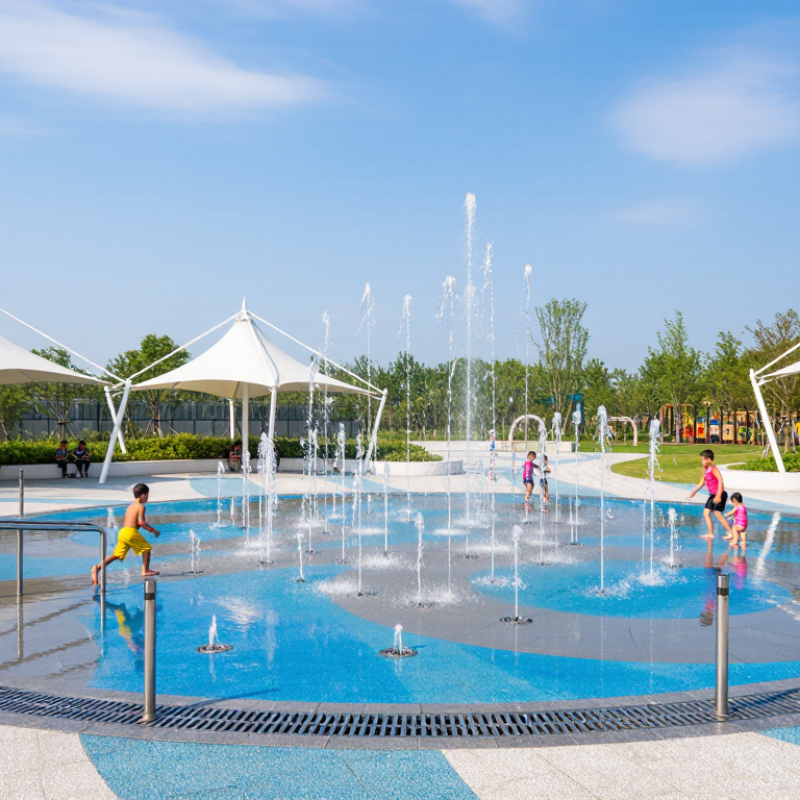
Interactive splash pads generally fall into three types: flush-mounted ground jets, raised spray features, and combination layouts. Ground jets leave open sightlines and suit compact plazas. Raised arches and water curtains add visual play but need careful spacing. Combination pads create varied zones, though they can complicate supervision and maintenance.
For global buyers, ASTM F2461-23 offers a useful framework for evaluating aquatic play equipment. Check how the proposed design addresses equipment construction, installation, operation, and maintenance. Ask suppliers for documentation showing which provisions apply to the specific project. Review drain placement, water circulation, access around moving parts, and the surface underfoot. Confirm the plan also meets local requirements; one standard does not replace every jurisdiction’s rules.
Look closely at the wet surface. A smooth finish may appear elegant on a dry rendering, but wet feet change the picture. Request relevant test records and inspect transitions around drains and spray zones. Check that operating instructions cover routine cleaning and equipment checks. Details matter. A well-drawn plan can still miss how children cross a busy pad, so review sightlines and walking routes with the people who will operate it.
This planning guide compares ten common interactive splash-pad configurations. “Best” indicates a strong fit for the stated use case, not a product ranking or a certification claim.
| No. | Splash Pad Type | Definition and Typical Features | Best-Fit Setting | Interaction and Accessibility | ASTM F2461-23 Safety Review Focus | Operational Checks |
|---|---|---|---|---|---|---|
| 1 | Ground-Level Spray Plaza | Flush-mounted spray nozzles release vertical, arcing, or fan-shaped water streams from a level paved surface. | Public parks, civic plazas, and community recreation areas. | Offers open circulation and can be planned for users with varied mobility; spray patterns can be grouped by intensity. | Review equipment layout, installation, water discharge, surface transitions, and the safe operation of interactive water-play equipment. | Check nozzle condition, surface drainage, standing water, and the operating sequence before opening. |
| 2 | Programmable Choreographed Fountain | Multiple jets operate in timed patterns, with changes in height, direction, or sequence controlled by a programmed system. | Destination plazas and parks where scheduled shows are part of the visitor experience. | Creates group participation and visual play; clear paths should remain available around active spray zones. | Review operating controls, foreseeable user interaction, equipment construction, and procedures for safe start-up, shutdown, and maintenance. | Test programmed cycles, emergency shutoff procedures, and access controls; inspect for unexpected jet direction or pressure changes. |
| 3 | Interactive Sensor-Activated Pad | Sensors detect movement or presence and trigger selected sprays, lights, or water effects. | Play areas where responsive effects and varied user-controlled experiences are desired. | Encourages cause-and-effect play; activation zones should be understandable and reachable by intended users. | Review sensor placement, control behavior, equipment response, and how the system operates during faults or maintenance. | Verify sensor response, fail-safe behavior, and that inactive or faulted effects do not create unexpected hazards. |
| 4 | Water-Play Archway | Overhead or curved pipes create walk-through curtains, arches, or intermittent streams of water. | Family parks and splash zones designed for walk-through play. | Supports social play and movement through water; provide suitable clearances and routes around the feature. | Review structural stability, anchoring, openings, exposed components, water delivery, and the equipment’s intended operating conditions. | Inspect supports and connections; check spray coverage, water direction, and any areas where users could collide or become caught. |
| 5 | Interactive Water Cannons | Manually aimed or controlled water devices allow users to direct streams toward targets or other play features. | Older children’s zones and play areas with supervised, active group games. | Provides direct user control; positioning and operating limits should discourage aiming at faces or users at close range. | Review moving parts, water-stream characteristics, mounting, accessible controls, and foreseeable misuse during play. | Check handles, pivots, restraints, and spray direction; confirm that damaged or loose units are taken out of service. |
| 6 | Water-Play Tunnel or Mist Zone | A low-pressure misting area or walk-through tunnel creates a cooling experience using distributed fine sprays. | Hot-weather parks, promenades, and mixed-age recreation spaces. | Offers lower-intensity sensory play; routes should remain visible and easy to enter and exit. | Review the equipment arrangement, water delivery, drainage, maintenance access, and safe operation under expected conditions. | Monitor drainage and surface wetness; clean and maintain spray outlets as required by the operating plan. |
| 7 | Water-Table and Channel Play | Shallow elevated or ground-level channels, basins, and gates let users redirect flowing water through a play route. | Early-childhood play areas and settings focused on collaborative, exploratory play. | Encourages shared, hands-on play; consider reach, transfer routes, and access for users with different abilities. | Review component stability, edges, openings, flow paths, water handling, and the equipment’s maintenance and operating procedures. | Check for obstructions, leaks, damaged edges, and unwanted pooling; clean water-contact surfaces according to the site plan. |
| 8 | Interactive Splash Pad with Lighting | Ground sprays combine with water-compatible lighting effects, which may respond to programmed sequences or user input. | Public spaces that operate in the evening or use lighting to support themed play. | Combines visual and water-based interaction; lighting should not obscure routes, spray locations, or changes in surface level. | Review equipment integration, electrical installation by qualified professionals, controls, and safe operation of the complete play system. | Inspect lights and protective enclosures; remove faulty electrical components from service and follow the site’s electrical inspection plan. |
| 9 | Low-Profile Bubblers and Floor Geysers | Flush or low-profile outlets create bubbling effects, short water bursts, or vertical sprays at surface level. | Compact pads, accessible play areas, and zones intended for younger children. | Supports close-up discovery and movement through the spray field; clear, unobstructed paths can be incorporated into the layout. | Review outlet placement, surface integration, water output, equipment installation, and potential trip or impact concerns. | Inspect flush-mounted fittings and surrounding pavement; check for blocked outlets, uneven surfaces, and unexpected discharge. |
| 10 | Mixed-Intensity Multi-Zone Splash Pad | A coordinated layout combines several features, such as gentle sprays, interactive controls, and more energetic jets in distinct zones. | Large parks and community sites serving a broad range of ages and play preferences. | Allows visitors to choose among different experiences; thoughtful circulation and clear transitions support inclusive use. | Review the complete system and its individual features, including construction, layout, installation, operating procedures, and maintenance planning. | Use documented opening inspections, routine maintenance, water-system checks, and clear procedures for isolating faulty zones. |
Keep water between pH 7.0 and 7.8, while checking local requirements. This range supports comfort and disinfectant performance. Small range.
Use a calibrated meter or suitable test kit. Follow its instructions and operating plan. Sample away from return jets. Freshly treated water may distort readings.
Record the time, sampling location, result, and corrective action. Review changes after rain, crowded afternoons, or heavy spray use. Records may still be imperfect.
No. A dashboard provides useful information, but it cannot replace a properly collected sample. Confirm who checks the water and how often.
The facility should follow a written response procedure. Identify the cause, correct the condition, and record the action taken. Local rules may differ.
Calculate flow for the nozzles operating together. Request each nozzle’s flow at its specified pressure. Include pipe friction and elevation. The largest feature alone misleads.
It may waste energy and produce harsh spray. Match pump duty with filtration, treatment, and usable surge-tank volume. Exact sizing matters.
Review local rainfall data, paving falls, overflow routes, and cleanout access. Test the site with a hose. Water can linger beside a grate. Drawings are not always convincing.
This guide evaluates Interactive Fountain Splash Pads for parks, resorts, community centers, and family recreation sites worldwide. It first explains key splash pad types, including ground-level spray areas, themed interactive zones, and accessible designs, then applies ASTM F2461-23 safety principles to assess layout, equipment placement, slip resistance, water exposure, supervision, and user protection. Ten leading model configurations are compared by spray variety, user capacity, age suitability, accessibility, durability, and operational flexibility, helping buyers identify solutions that fit different public and commercial environments.
The guide also examines water-system performance against the CDC Model Aquatic Health Code’s recommended pH range of 7.0–7.8. It shows how to align pump flow, filtration, recirculation, drainage, and maintenance access with site conditions and expected attendance. Final rankings consider safety and compliance readiness, installation and lifecycle costs, energy and water efficiency, replacement-part availability, training, warranties, and after-sales support, giving global buyers a practical framework for selecting reliable, maintainable, and inclusive splash pad systems.