
The 2026 Best Architectural Water Features guide examines how water can shape memorable commercial and residential spaces. Architectural Water Features now combine visual drama, controlled sound, lighting, and responsible water management. Global buyers need more than attractive photographs. They need reliable specifications, proven materials, and practical maintenance plans.
A reflective pool may mirror a hotel façade beautifully at sunrise. However, dust, algae, wind, and hard water can quickly change that impression. Designers should assess local climate, water quality, energy use, drainage, and access for servicing. Stainless steel, stone, glass, and engineered composites each offer different performance advantages. No material is perfect. Even an expensive installation may disappoint without accurate detailing and professional commissioning.
The strongest projects usually involve architects, landscape designers, hydraulic engineers, lighting specialists, and experienced installers. Their combined knowledge helps buyers compare circulation pumps, filtration systems, nozzles, controls, safety features, and replacement-part availability. Regional building requirements and water restrictions also deserve careful review before purchase. Supplier documentation matters. So does after-sales support.
Quietly impressive details matter.
This guide highlights adaptable solutions for hotels, offices, public plazas, luxury residences, and cultural venues. It considers appearance, durability, operating costs, sustainability, and long-term user experience. Some recommendations may require adjustment after site testing. That is not a weakness; it reflects the reality of water feature design. A successful feature should look exceptional on opening day and remain dependable years later.
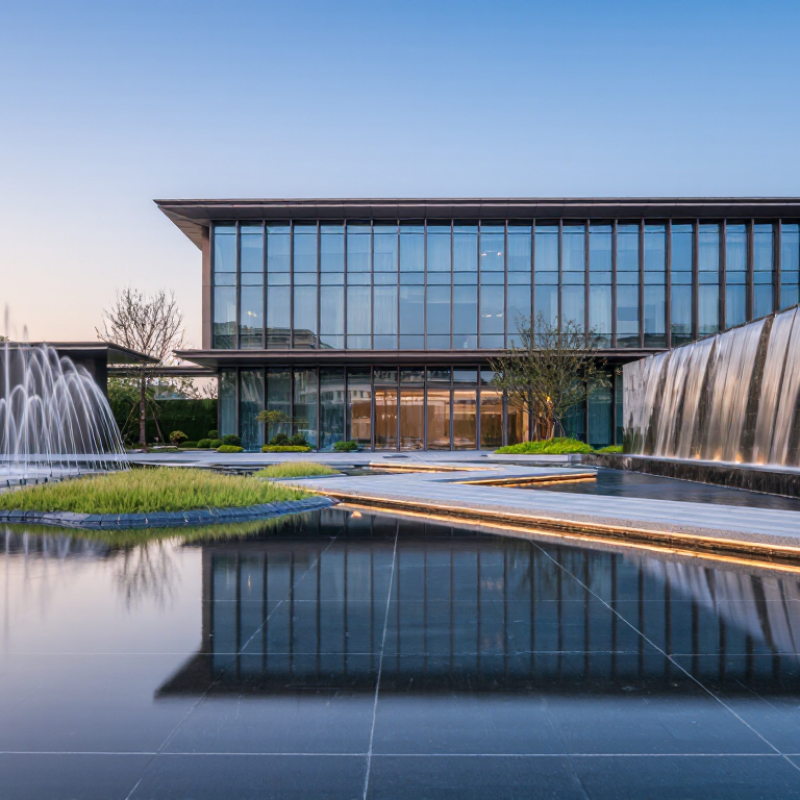
The 2023 Global Wellness Economy Monitor valued the global wellness economy at $5.6 trillion in 2022. That growth supports sensory spaces, but water must remain practical.
Jets create movement and sound in plazas. Their nozzles need adjustable pressure and wind protection. Otherwise, spray reaches nearby paving and creates slip risks.
Designers should specify accessible maintenance zones behind the panel. Basins suit courtyards and hospitality entrances, especially with quiet circulation pumps.
They also expose problems quickly. Stagnation, algae, and mineral staining can damage the intended experience.
Mist systems cool terraces, yet local humidity, wind, and water quality determine performance. They need fine filtration and regular sanitation controls.
UNESCO’s 2024 World Water Development Report highlights increasing water stress across many regions. Recirculation, leak detection, timed operation, and rainwater strategies therefore deserve early design attention.
I have seen beautiful features fail because maintenance access was treated as an afterthought. That mistake is expensive.
A smaller basin may perform better than a grand pool. Jets, walls, basins, mists, and pools should respond to climate, users, acoustics, and lifecycle costs, not fashion alone.
The WHO and UNICEF Joint Monitoring Programme reported that 2.2 billion people lacked safely managed drinking water in 2022. This figure changes how global buyers should evaluate architectural water features. A fountain is not only a visual object. It consumes water, energy, maintenance time, and public attention.
Responsible specifications begin with closed-loop circulation, leak detection, efficient pumps, and weather-aware controls. In dry regions, captured rainwater may support non-potable display systems, subject to local safety requirements. However, recycled feature water must never be presented as drinking water without verified treatment. Clear signage matters. So does access.
Design teams should examine refill frequency, evaporation, filtration, cleaning routines, and end-of-life materials before approving a feature. A shallow basin may reduce fall risks, yet it can heat quickly under intense sunlight. Dark stone looks dramatic, but it may increase surface temperatures. Small details matter.
Some projects still prioritize photographs over long-term water performance. That is uncomfortable, but worth admitting. Buyers should request measured consumption data, maintenance records, and realistic climate assumptions. A beautiful installation that becomes stagnant, noisy, or expensive within one season is not professional design. It is an avoidable lesson. Safety, dignity, and resource responsibility should shape the feature from the earliest sketch.
Flow and head define the real performance of an architectural water feature. Flow shows how much water moves, while head measures the pressure height the pump must overcome.
A 20 L/s flow at 8 m head requires about 2.4 kW at 65% pump efficiency.
The calculation is simple. Site friction is not.
The U.S. Department of Energy’s Pumping Systems Sourcebook reports that pumping systems can represent about 25% of industrial electricity use. It also identifies 20–50% energy-saving potential through better sizing and control. Buyers should request pump curves, operating points, and measured efficiency, not only rated motor power. Variable-speed control can reduce energy during quiet periods, but poor programming may create unstable jets or visible pulsing. That detail is often missed.
Noise needs field verification. ASHRAE Handbook guidance commonly places occupied public areas near NC 30–40, depending on use and acoustic design. A pump room may seem quiet, yet vibration can travel through pipe supports and stone panels.
Specify sound pressure at a stated distance, operating flow, and background level. Duty cycles also matter.
IEC 60034-1 distinguishes continuous duty, S1, from intermittent periodic duties such as S3. A feature designed for 12 hours daily should not be judged only by a short showroom test.
Real projects are messier. Seasonal temperatures, clogged strainers, and partial water loss can change head and energy use. A spreadsheet can still lie.
Global buyers are specifying architectural water features for hotels, plazas, airports, and healthcare campuses. Yet visual drama must not outrun water safety. EN 1717 backflow control should shape the hydraulic design from the beginning.
Use suitable protection, such as an air gap or reduced-pressure device, after a competent risk assessment. Keep make-up lines separated from contaminated basins. Protect against cross-connections.
That detail matters. ECDC’s 2022 surveillance report recorded 10,722 Legionnaires’ disease cases and 1,012 deaths in the European Union and European Economic Area. CDC surveillance for 2015–2018 reported 7,157 cases and 552 deaths in the United States.
Decorative features can generate aerosols, especially when spray nozzles, warm water, and poor circulation meet.
ASHRAE Standard 188-2021 supports a documented water management plan.
It should identify risks, responsible personnel, control measures, verification tasks, and corrective actions.
The plan needs practical evidence.
Record disinfectant readings, cleaning dates, filter changes, stagnation periods, and maintenance access.
Test where the risk assessment justifies it.
Design drain points and isolation valves for real technicians, not only for drawings.
Avoid hidden pipe branches and oversized dead legs. A perfect basin can still conceal stagnant water.
I would not assume every project needs identical controls.
Climate, occupancy, water source, and local code change the risk. That uncertainty deserves review.
Weak documentation is often the weakest component.
2026 Best Architectural Water Features for Global Buyers
2026 Buyer Matrix: CAPEX, OPEX, Climate Fit, Service, and Lifecycle ROI
For global buyers, an architectural water feature should be priced as a five-year system, not a decorative object. The buyer matrix begins with CAPEX: basin construction, pumps, filtration, controls, lighting, freight, and installation. Request itemized quotations, commissioning requirements, and replacement-part assumptions. Low entry cost can hide expensive civil work. That happens often.
OPEX deserves equal weight. Estimate electricity, makeup water, treatment chemicals, cleaning labor, and seasonal draining. Climate fit changes every calculation. Hot, dusty sites need stronger filtration and more frequent maintenance. Freezing regions need drainage and protected pipework. Humidity may accelerate corrosion, while water scarcity can restrict operating hours. Use local utility prices and weather data, not generic averages. An independent engineer should verify the assumptions.
Service capacity should be tested before purchase. Ask who responds after a pump alarm, how quickly parts arrive, and which technicians are locally trained. Lifecycle ROI should include uptime, visitor value, energy efficiency, refurbishment, and end-of-life removal. A five-year model is useful, but ten years may expose hidden costs. Be honest about uncertainty. Forecasts can fail when tariffs, water rules, or visitor patterns change. No matrix predicts every failure.
The buyer score is an indicative 0–100 benchmark derived from typical installed CAPEX, annual OPEX, climate resilience, service complexity, and 20-year lifecycle value. Higher scores indicate stronger overall suitability for international projects. Costs vary by country, specification, site conditions, water treatment requirements, and local labor.
Benchmark assumptions: commercial or civic projects, recirculating systems where applicable, efficient pumps, standard water-treatment controls, and normal preventive maintenance.
A basin or water wall usually needs less space than a pool. Quiet circulation pumps can support entrances and courtyards. Provide clear maintenance access behind panels. Small spaces still need careful drainage.
Jets create movement, sound, and visual focus in plazas. Adjustable pressure helps manage changing conditions. Wind protection keeps spray away from nearby paving. Wet paving can become dangerously slippery.
Water walls save floor space but require reliable access behind the surface. Technicians need room for pumps, filters, valves, and cleaning tools. Mineral stains may appear on dark panels. The dramatic surface is not maintenance-free.
Mist performance depends on humidity, wind, temperature, and water quality. Fine filtration supports consistent nozzle operation. Regular sanitation controls remain important. Wind can erase the cooling effect quickly.
Pools require more water, energy, cleaning, monitoring, and operational attention. They also create greater exposure to leaks and water loss. Recirculation and timed operation can reduce waste. A smaller basin may perform better.
Specify closed-loop circulation, leak detection, efficient pumps, and weather-aware controls. Captured rainwater may support non-potable displays when local rules allow it. Never treat feature water as drinking water without verified treatment. Clear signage helps prevent confusion.
Request flow, head, pump curves, operating points, and measured efficiency. A 20 L/s flow at 8 m head may require about 2.4 kW at 65% efficiency. Variable-speed control can reduce energy during quiet periods. Poor programming may cause pulsing jets.
Verify sound pressure at a stated distance, flow rate, and background level. Vibration may travel through pipe supports and stone panels. Check the intended duty cycle, not only a short showroom test. Real conditions are messier.
Ask for consumption data, maintenance records, refill frequency, and climate assumptions. Review evaporation, filtration, cleaning routines, and material replacement needs. Photographs cannot show long-term performance. That lesson is expensive.
This 2026 guide to Architectural Water Features helps global buyers compare jets, water walls, basins, mist systems, and pools according to project goals, climate, and operating conditions. It also places design decisions within the wider global water context, noting that WHO reported approximately 2.2 billion people lacked safely managed drinking water in 2022. Responsible projects should therefore prioritize efficient circulation, suitable water treatment, and practical maintenance rather than visual impact alone.
The guide explains key performance metrics, including flow rate, pump head, energy consumption, operating noise, and duty cycles. It also highlights safety planning, such as EN 1717 backflow protection and risk-management principles aligned with ASHRAE 188. A 2026 buyer matrix compares capital cost, operating cost, climate suitability, service requirements, and lifecycle return on investment, helping purchasers select resilient water features that balance aesthetics, safety, resource efficiency, and long-term value.