
Choosing among 2026 Best Floating Granite Ball Fountains for Sale takes more than judging a product photo. A polished sphere should rotate smoothly, sit securely, and keep water moving evenly across its surface. Imagine the detail up close: a thin sheet of water catching afternoon light, with the pump concealed beneath the basin. Small flaws show quickly. Uneven flow, rough drilling, or a poorly sized pump can spoil the effect.
For a grounded design perspective, the American Society of Landscape Architects’ Residential Landscape Architecture Trends Survey tracks homeowners’ outdoor priorities. It offers useful context for evaluating fountains alongside broader landscape design, though it does not rank granite-ball models or verify product performance. Buyers should also compare stone dimensions, basin capacity, pump specifications, installation requirements, and written warranty terms. Ask sellers for close-up photographs and operating guidance. A showroom video can help, but it cannot replace confirmed measurements.
A sourcing note matters here: I could not verify a named fountain specialist’s published quotation specifically about floating granite ball fountains. Inventing one would weaken trust. Instead, this guide uses practical checks that buyers can confirm directly with manufacturers and installers. Treat claims such as “maintenance-free” with care; water quality, debris, and seasonal weather still affect upkeep. The right fountain is not merely dramatic. It should fit the site, run reliably, and feel proportionate beside the planting, paving, and seating around it.
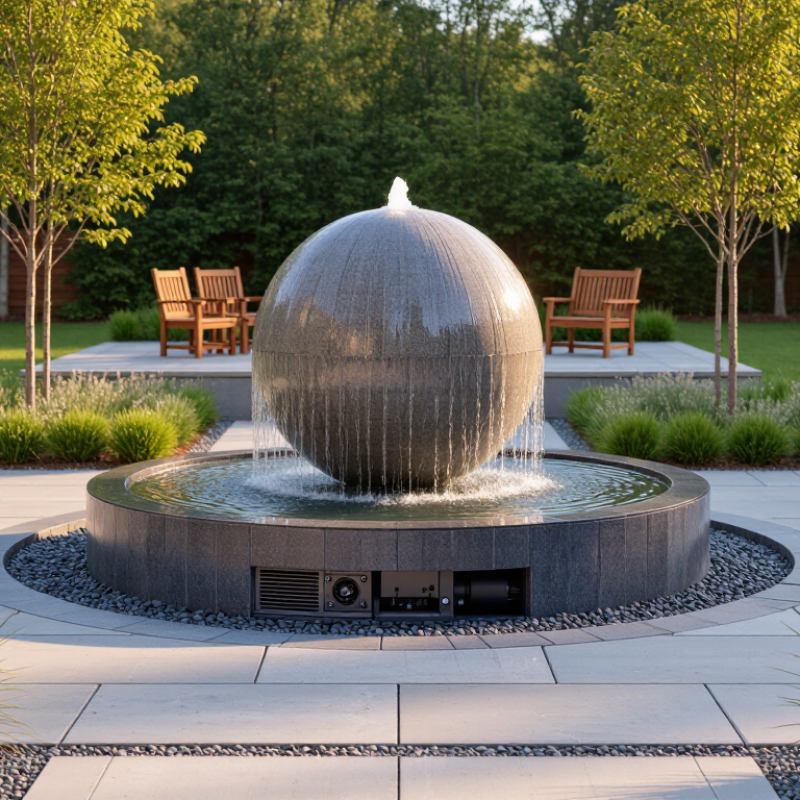
2026 Best Floating Granite Ball Fountains for Sale
How Floating Granite Ball Fountains Work
A floating granite ball fountain uses a recirculating pump to push water through a central outlet beneath the sphere. The pressurized water forms a thin film between the ball and its shaped stone seat. That film reduces friction and supports the ball, allowing it to rotate with a gentle push. Gravity still matters: the pump must provide enough pressure to balance the sphere’s weight. Too little flow, and the ball may drag or stop. Too much, and water splashes over the basin. I would not assume every sphere turns smoothly; stone fit and pump flow vary.
The U.S. Environmental Protection Agency’s WaterSense guidance reports that outdoor use accounts for more than 30% of household water use in the United States, and can reach 60% in some arid areas. That figure covers outdoor use broadly, not fountains alone. Still, it makes regular leak checks worthwhile. Watch the waterline, especially on hot, windy days, and use a pump sized for the fountain’s design.
Tips: Keep the intake clear. Check the ball’s rotation after cleaning. Small adjustments to flow can help, though a perfectly smooth spin is not guaranteed.
Estimated granite sphere mass by diameter
Estimates assume a solid spherical shape and a granite density of 2,700 kg/m³; actual stone density and dimensions vary. A pump sends water through the fountain’s support, creating a thin film that reduces friction and lets the ball rotate. The ball is supported by the fountain assembly and water pressure rather than floating freely like an object in a pool.
Granite type shapes both the look and upkeep of a floating ball fountain. Fine-grained black granite gives water a sharp, mirror-like contrast, while gray salt-and-pepper stone softens the effect. Pink or warm-toned granite can suit courtyards with brick or timber. Each block has its own mineral pattern. Small differences are normal.
A polished surface helps water form an even film, but inspect the sphere for chips or uneven patches before purchase. Ask for close-up photos in natural light. They reveal more than a catalog image. Ball size should suit the basin and viewing distance. An 8- to 12-inch sphere can fit a compact patio; larger spaces may handle 16 to 24 inches. These are starting points, not rules. Measure the basin carefully, since a ball that looks modest online may feel oversized at home.
Design affects installation and maintenance. A single sphere over a shallow basin creates a clean focal point, while several smaller balls add movement but need balanced water flow. A pedestal can raise the feature and make cleaning easier; a recessed basin keeps the profile low. The pump, socket, and base must match the ball’s weight and diameter. Leveling matters. Even a slight tilt can make the water spill unevenly, and correcting it later is awkward. I would compare the stone finish in person when possible; photographs can hide texture.
When comparing floating granite ball fountains in 2026, look beyond polished product photos. The ball should sit steadily on its water-supported socket and turn with gentle pressure. A pump with adjustable flow helps prevent splashing and keeps rotation controlled. Details matter.
Granite varies in color, grain, and finish, even within the same stone type. Ask for the ball’s diameter and weight, then check that the basin and pump are sized to match. A broad basin can catch more spray, but it also needs more water and space. Smaller models may suit patios, though their movement can feel less dramatic.
Compare installation needs as carefully as appearance. A level, firm surface helps the ball rotate evenly; leaves and grit can interrupt the water film. The pump may need periodic cleaning, especially in outdoor settings. Check whether replacement parts are available and whether the fountain can be drained before freezing weather. One detail is easy to overlook: granite can show natural marks that differ from sample images. That is not necessarily a flaw, but it may disappoint buyers expecting an exact match. A quiet pump and accessible basin are practical advantages worth weighing against size and finish.
A floating granite ball fountain can suit a compact courtyard or anchor a larger patio, but the site should guide the purchase. Measure the basin, walking clearance, and route for moving the stone. Measure twice. Granite is heavy, so confirm the base is level and structurally suitable before ordering. A tight access path can add delivery or installation costs that a listing price may not show.
Set a total budget, not just a stone budget. Angi’s fountain installation cost guide puts many installations around $1,000–$5,000, with site work and fountain size affecting the price. Ask for separate quotes covering the granite sphere, basin, pump, delivery, and electrical work. A smaller sphere with a quiet recirculating pump may be a better fit than a dramatic feature that overwhelms the space. I would still leave a contingency; hidden groundwork is easy to underestimate.
Check how the water moves, how the pump is accessed, and whether splashing reaches nearby paving. The U.S. Environmental Protection Agency reports that outdoor water use accounts for about 30% of household water use. That figure is not specific to fountains, but it makes evaporation and routine top-ups worth considering. Choose a basin with enough depth and a recirculating system, then plan to clean it regularly. A little maintenance. Before buying, compare pump replacement access and winter care instructions, too.
A floating granite ball fountain needs a stable, level base before water ever runs. Set it on compacted ground or a load-rated pad, since the stone and filled basin can be surprisingly heavy. Check level in more than one direction; a slight tilt can make water spill unevenly. Leave room to reach the pump and drain, and direct splash away from walls and slippery walkways. Small details matter.
During setup, rinse dust from the granite and basin, then fill the reservoir before starting the pump. Adjust the flow until water sheets smoothly over the sphere without splashing out. Keep the pump fully submerged. Check the water level regularly, especially in hot or windy weather, and clear leaves from the intake. A soft brush and clean cloth usually handle routine surface deposits; avoid abrasive tools that may scratch the stone.
Long-term care is simple, but not effortless. Once a week, inspect the pump and listen for unusual rattling or changes in flow. Mineral buildup varies with local water, so clean sooner if a rough film appears. Before freezing weather, drain the basin and follow the pump’s storage instructions; trapped water can damage components. Even careful owners may need to adjust the flow again after cleaning. That is normal, not a flaw.
A pump sends water through an outlet beneath the ball. A thin water film supports it and reduces friction. A gentle push can start it turning.
Not always. The stone’s fit and pump flow both matter. A little unevenness can remain.
Choose a pump with adjustable flow and tune it gradually. Too much water can spill over the basin. Watch the paving nearby.
Measure the basin area, walking clearance, and delivery route. Granite is heavy. Check that the base is level and sturdy.
Check the ball’s diameter and weight, basin size, pump access, and replacement-part availability. Natural grain may differ from sample photos.
Many installations fall around $1,000–$5,000, depending on size and site work. Ask for separate costs for delivery, groundwork, and electrical work. Leave a buffer.
Clear leaves and grit from the pump intake. Clean the basin regularly, then check the ball’s rotation. Small adjustments may help.
Yes. Wind and heat can increase evaporation, so watch the waterline. Outdoor water-use figures cover many uses, not fountains alone.
Check whether the fountain can be drained and review its winter-care instructions. Freezing weather can complicate maintenance. I might miss a detail.
Floating Granite Ball Fountains bring movement and a natural stone feature to gardens, patios, and public spaces. This guide explains how water flowing over a carefully balanced granite sphere creates the illusion that the ball is floating, while a concealed basin recirculates the water. It also explores how granite color, texture, sphere size, and fountain design influence appearance, water flow, and suitability for different settings.
A comparison of options for 2026 considers factors such as construction, dimensions, performance, and overall value. To choose the right fountain, consider the available space, desired visual impact, installation requirements, and budget. The guide also covers practical care, including keeping the basin clean, checking the pump and water level, and protecting the stone and equipment through seasonal changes. With thoughtful selection and routine maintenance, a granite sphere fountain can remain an attractive, soothing feature for years.